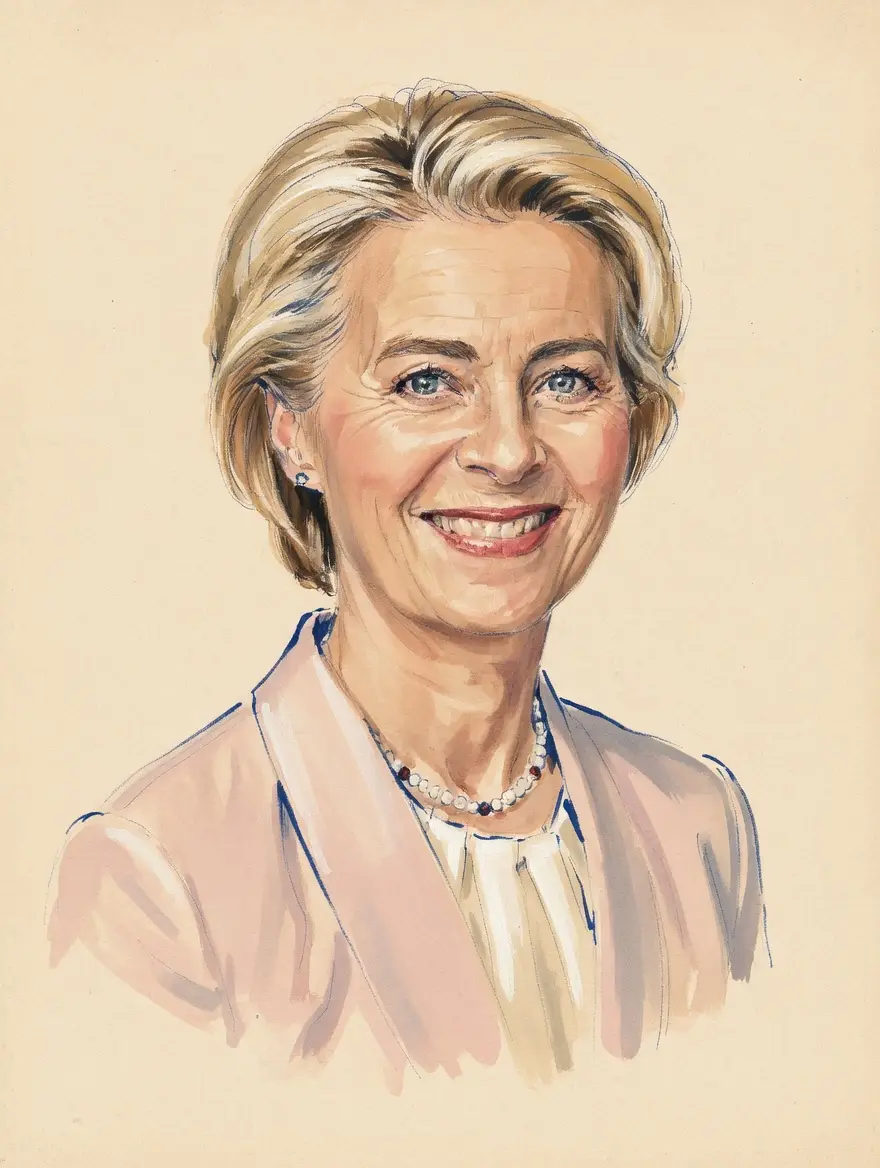
Ursula von der Leyen on European Union
TL;DR
Ursula von der Leyen firmly believes that joint action through Union is the only way to solve Europe's greatest challenges.
Key Points
She was re-elected to lead the European Commission for a second mandate in July 2024.
She has called for massive investment in digital and clean tech, viewing it as essential for Europe's independence.
She advocates for moving away from unanimous voting in the Council for foreign policy decisions to ensure quicker action.
Summary
Ursula von der Leyen views the European Union as the essential mechanism for solving the continent's most significant challenges, asserting that her era's major issues—spanning security, climate change, and competitiveness—can only be addressed through united action. She has repeatedly framed her mandate as ensuring Europe achieves its "independence moment" by building strength, autonomy, and preparedness across defence, technology, and economy. This vision requires a deeper integration, exemplified by her push for completing the Single Market and presenting roadmaps to remove barriers across key sectors.
In the context of geopolitical shifts, she emphasizes the need for the EU to become a genuine geopolitical power capable of determining its own destiny, especially given dependencies that are being weaponised globally. This involves massive investment in digital and clean technology to secure independence and taking more responsibility for its own defence capabilities. Her approach centers on unity as a necessary foundation for resilience, as she stated that "without unity, Europe is in a dead-end street."
Key Quotes
My view is that our era's greatest challenges – from security to climate change to competitiveness - can only be solved through joint action. Against this backdrop, I believe Europe must choose its best option: Union.
“Europe is in a fight.”
Frequently Asked Questions
Ursula von der Leyen's core vision is for a stronger, more united Europe capable of taking joint action on global challenges. She sees the Union as the best option to address issues like security, climate change, and competitiveness. This requires building strategic autonomy and reducing external dependencies.
Yes, her past statements indicate a consistent support for deeper European integration, including expressing a preference for a "united states of Europe" in 2011. As President, she has focused on concrete steps like strengthening the Single Market and bolstering EU defence capabilities.
The President has recently announced initiatives focused on competitiveness, such as the Single Market Roadmap to 2028 and doubling the budget of Horizon Europe. Furthermore, she has proposed major steps on defence, including the 'ReArm Europe' investment plan, to enhance the Union's preparedness.
Sources7
President von der Leyen | European Commission
Ursula von der Leyen
Von der Leyen's stirring message to Europe: Fight to survive
Europe's independence hinges on innovation - von der Leyen ...
Von der Leyen's State of the Union - Europe's Defence ...
Audiovisual Service - Statement by Ursula von der Leyen ...
* This is not an exhaustive list of sources.