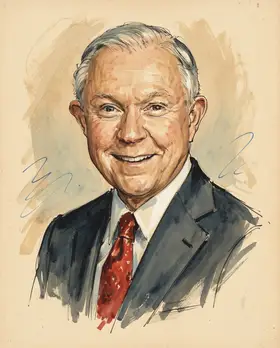
Jeff Sessions on Donald Trump
TL;DR
Jeff Sessions, once an early supporter, became a fierce critic of Donald Trump after his contentious firing in 2018.
Key Points
He was fired by the president in November 2018 following months of public conflict, primarily over his recusal from the Russia investigation.
During his 2020 Senate primary bid, he defended his recusal by stating it protected the rule of law and resulted in the president's exoneration.
The president endorsed his opponent, Tommy Tuberville, in the 2020 Republican primary, telling Alabama voters not to trust Sessions.
Summary
Jeff Sessions initially served as an enthusiastic early supporter of Donald Trump’s 2016 presidential campaign, becoming the first sitting Senator to endorse him, and subsequently served as his first Attorney General. This alliance, largely forged over hardline immigration stances, soured dramatically when Sessions recused himself from investigations into Russian interference in the 2016 election. The president subsequently expressed constant public and private fury over this recusal, viewing it as an abdication of loyalty, which culminated in the president requesting Sessions' resignation following the 2018 midterm elections.
Following his departure, Sessions' position shifted to one of vocal criticism, especially when he ran for his old Senate seat in 2020, often defending his controversial recusal as necessary to protect the rule of law while simultaneously claiming his actions protected the president from further scrutiny. The former president responded by publicly campaigning against Sessions, endorsing his primary opponent, and repeatedly deriding the former Attorney General for his perceived disloyalty. Despite the breakdown, Sessions has occasionally defended the former president’s actions, indicating a complex and evolving relationship marked by deep professional conflict.
Frequently Asked Questions
Jeff Sessions's position is complex; while he defended his initial loyalty and actions as Attorney General, he became a critic of Donald Trump after being fired. He has maintained that his recusal was legally required, a move which antagonized the former president. Sessions continues to draw public criticism from Trump, particularly regarding the 2020 Senate race.
The core conflict stemmed from Jeff Sessions's decision to recuse himself from the investigations into Russian interference in the 2016 election. Donald Trump viewed this as a profound act of disloyalty. This led to months of public criticism from the president and ultimately resulted in the president asking for Sessions's resignation as Attorney General in November 2018.
No, Jeff Sessions was an early and crucial supporter of Donald Trump's presidential campaign, becoming the first sitting Senator to endorse him. He was nominated by Trump to be Attorney General based on this support. The relationship soured only after Sessions recused himself from the Russia-related probes.
Sources8
Jeff Sessions’s Defeat in Alabama: A Final Insult From Donald Trump
Jeff Sessions - Wikipedia
Jeff Sessions breaks silence to support Trump’s DOJ, says he’s better off without him
Flashback: How Jeff Sessions & Donald Trump's Relationship Soured | FRONTLINE | PBS | Official Site | Documentary Series
Jeff Sessions snaps back after Trump tells Alabama not to trust him
Jeff Sessions out as attorney general
Jeff Sessions once mocked by Trump, says rally shooting won’t stop ‘the powerful leader’
Trump fires attorney general Jeff Sessions
* This is not an exhaustive list of sources.