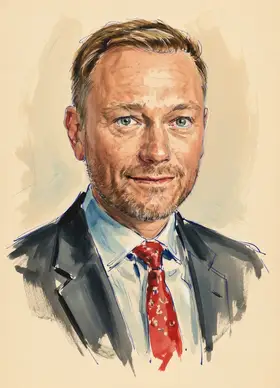
Christian Lindner
- Known for
- Federal Minister of Finance, FDP party leader
- Born in
- Wuppertal, West Germany
- Education
- Magister Artium (M.A.), University of Bonn
Christian Lindner is the long-serving former leader of the Free Democratic Party (FDP) and was Germany's Federal Minister of Finance (2021–2024). Known for his unwavering commitment to fiscal conservatism, his tenure was defined by strict adherence to the constitutional Debt Brake.
His abrupt dismissal in late 2024 precipitated the collapse of the 'Traffic Light' coalition and the subsequent FDP exit from parliament, marking the end of his active political career.
Signature Positions
Lindner's fiscal and economic stance shaped his ministerial tenure and political platform:
- Debt Brake (Schuldenbremse): Staunch defender of the constitutional rule, frequently blocking new debt to finance spending.
- Tax Policy: Criticized his predecessor for not cutting income taxes for the middle class; ruled out new debt to fund tax cuts and digital infrastructure.
- Entrepreneurship: A vocal champion for startup culture, famously defending entrepreneurs who face failure and mockery.
- Ukraine conflict/policy: Initially opposed arms supplies and SWIFT disconnection, later advocated halving aid and funding reconstruction via frozen Russian central bank reserves.
- Asylum/Migration: Supported FDP positions proposing cuts to social benefits for asylum seekers and designating some North African states as 'safe' for easier repatriation.
Notable Tensions
Lindner’s tenure was marked by significant political friction within the coalition:
- Economic Critics: Economists like Joseph Stiglitz criticized his fiscal positions as obsolete 'conservative clichés' threatening Germany's economic future.
- Ukraine Aid Stalemate: His insistence on fiscal prudence directly clashed with coalition partners' calls for robust Ukraine support, ultimately leading to the halt of promised German aid systems.
- Anti-Money Laundering: His proposed Federal Financial Criminal Investigation Office faced warnings from experts that it lacked necessary seizure authority and jurisdiction clarity, failing to materialize as planned.
Lindner successfully rebuilt the FDP after its 2013 exit from parliament, leading it back to prominence with a 10.7% showing in 2017. His political style is often characterized by principled, sometimes rigid, adherence to liberal principles, contrasting sharply with the more pragmatic 'Merkelism' that preceded his coalition participation.
His resignation as Minister of Finance was the catalyst for the 2024 government crisis, highlighting his pivotal, if ultimately destructive, role in the final years of the Scholz government.