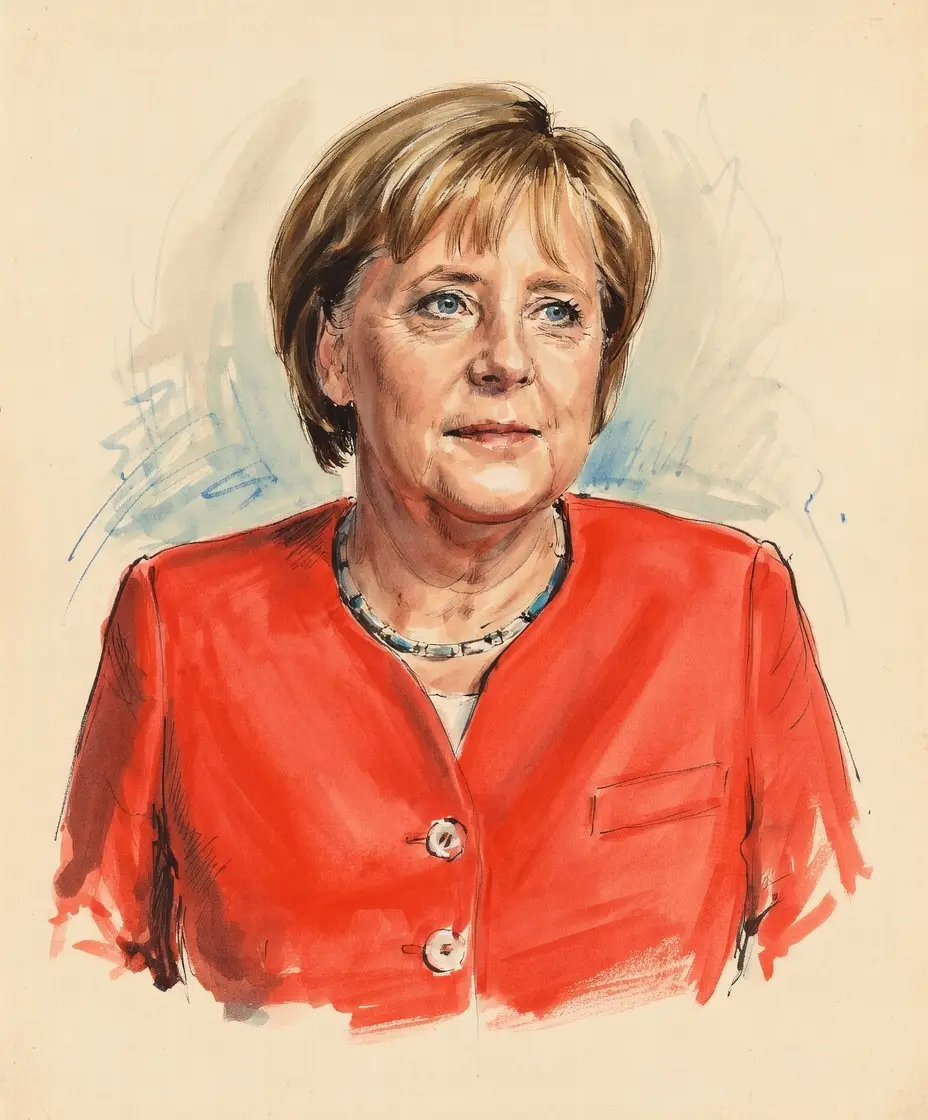
Angela Merkel on China
TL;DR
Angela Merkel sought a pragmatic balance between deep economic engagement and addressing systemic rivalry with China.
Key Points
She met with the Dalai Lama in 2007, which resulted in a temporary suspension of dialogue with Germany by Chinese leaders.
In January 2020, she discussed advancing China-EU relations, upholding multilateralism, and creating a level playing field for Chinese enterprises in Germany via telephone with the Chinese President.
In 2021, she acknowledged that Germany may have been too 'naive' regarding its initial China policy.
Summary
Angela Merkel's core position on China throughout her tenure was characterized by a deep commitment to economic partnership, viewing the country as Germany’s most important trading partner with whom a stable relationship was essential for German industry and multilateralism. She consistently traveled with large business delegations and lobbied for German commercial interests, pushing for deals like the EU-China investment accord, while simultaneously balancing this by acknowledging the need for fair trade and occasionally addressing human rights issues like those in Hong Kong. This balancing act was evident in her willingness to engage directly with Beijing on global issues such as climate change and WTO reform, often advocating for an EU China policy distinct from Washington’s.
However, her approach evolved under pressure, transitioning from an initial, softer stance to a more guarded one, especially following specific corporate takeover attempts that signaled China’s strategic industrial ambition, such as the Kuka acquisition. Although Merkel resisted adopting the label of 'systemic rival' used by some allies and largely avoided explicit criticism on issues like Xinjiang, her later government began to push for EU-level coordination on foreign investment screening, suggesting a growing recognition of China as a competitor. Her final years saw her warn against complete 'decoupling' from China, emphasizing continued cooperation despite acknowledging protectionist tendencies and IP protection challenges.
Key Quotes
...the German side attaches great importance to developing a cooperative partnership with China. Noting that Germany and China have much in common, Angela Merkel hoped that both sides will maintain fruitful dialogue and exchanges at all levels and promote mutually beneficial cooperation.
Frequently Asked Questions
Angela Merkel pursued a pragmatic approach focused heavily on fostering strong economic ties, viewing China as a vital trading partner for Germany. She consistently tried to maintain a cooperative partnership that transcended ideological differences between the two nations. This relationship was characterized by a constant effort to balance commercial needs with concerns about human rights and fair economic competition.
Yes, her stance evolved over her long tenure. While initially maintaining a commitment to engagement, events like the acquisition of German robotics firm Kuka by a Chinese entity served as a wake-up call regarding strategic industrial threats. Towards the end of her term, there was a growing acknowledgment within her government of China as a 'systemic competitor,' although she remained opposed to full decoupling.
Angela Merkel strongly advocated that Europe should maintain a unified China policy distinct from that of Washington, warning against the entire bloc 'decoupling' from the Chinese economy. She stressed the importance of multilateral trade and cooperation, even as she pushed for the conclusion of the EU-China investment treaty.
Sources5
Germany's Merkel warns against Europe 'decoupling' from China
Merkel's Visit to China: Freedom, Trade, but No Europe
Xi Jinping Holds Telephone Talks with Chancellor Angela Merkel of Germany
Merkel – Xi Jinping talk
Rethinking German policy towards China
* This is not an exhaustive list of sources.