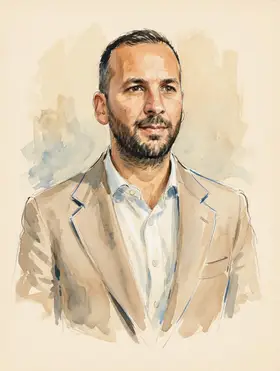
Zack Polanski on Climate Change
TL;DR
Zack Polanski views the climate crisis as inseparable from economic and global inequality, demanding integrated solutions for both.
Key Points
He stated that tackling the climate and nature crisis is the biggest priority, but requires communication framed around people's everyday needs.
He expressed deep skepticism about the Labour government's energy transition plans, particularly demanding the Rosebank oil field be ruled out without condition.
He advocates for the wealthy and fossil fuel companies to fund the just transition, including through loss and damage funds for the Global South.
Summary
Zack Polanski explicitly states that the climate and nature crisis cannot be solved without simultaneously tackling the cost of living and global inequality. He argues that if people cannot meet their everyday needs, the climate crisis feels distant, necessitating the framing of environmental action around everyday needs. He contends that the high-polluting lifestyles of the ultra-wealthy are disproportionately damaging the environment, meaning that tackling inequality is the direct pathway to addressing both the climate and nature crises.
His skepticism regarding the current government's energy transition is evidenced by his demand that the Rosebank oil field be ruled out unconditionally, given its immense potential emissions impact. Furthermore, he suggests measures like a frequent flyer levy for business travelers, while advocating for public ownership of an energy company and prioritizing home insulation to cut emissions and bills. He believes the people who should pay for the transition are the fossil fuel companies responsible for environmental destruction, emphasizing the need for global justice and loss and damage funds.
Frequently Asked Questions
Zack Polanski holds a strong position that the climate and nature crisis is paramount, but stresses that it is fundamentally linked to social and economic inequality. He advocates for solutions that address both dimensions simultaneously, ensuring a just transition.
While the climate crisis is described as his biggest priority in terms of work, his initial communications as leader have heavily focused on economic inequality and social issues. This shift in communication emphasis has been noted by some observers.
He is deeply skeptical of current plans and calls for the definitive rejection of the Rosebank oil field development. Furthermore, he supports creating a nationalised energy company and implementing measures like a frequent flyer levy.
Sources6
Q&A: UK Greens' Zack Polanski - fight inequality to save climate
Zack Polanski's first email as Green Leader: not a word about Climate Change
The Polanski effect? These charts reveal how much the Greens have advanced
Zack Polanski the ethical Machiavelli?
Why The Media Is Looking At Economics All Wrong | James Meadway | Zack Polanski
Zack Polanski: 'I'm going to confess I haven't finished The Climate Book by Greta Thunberg' | Life and style
* This is not an exhaustive list of sources.