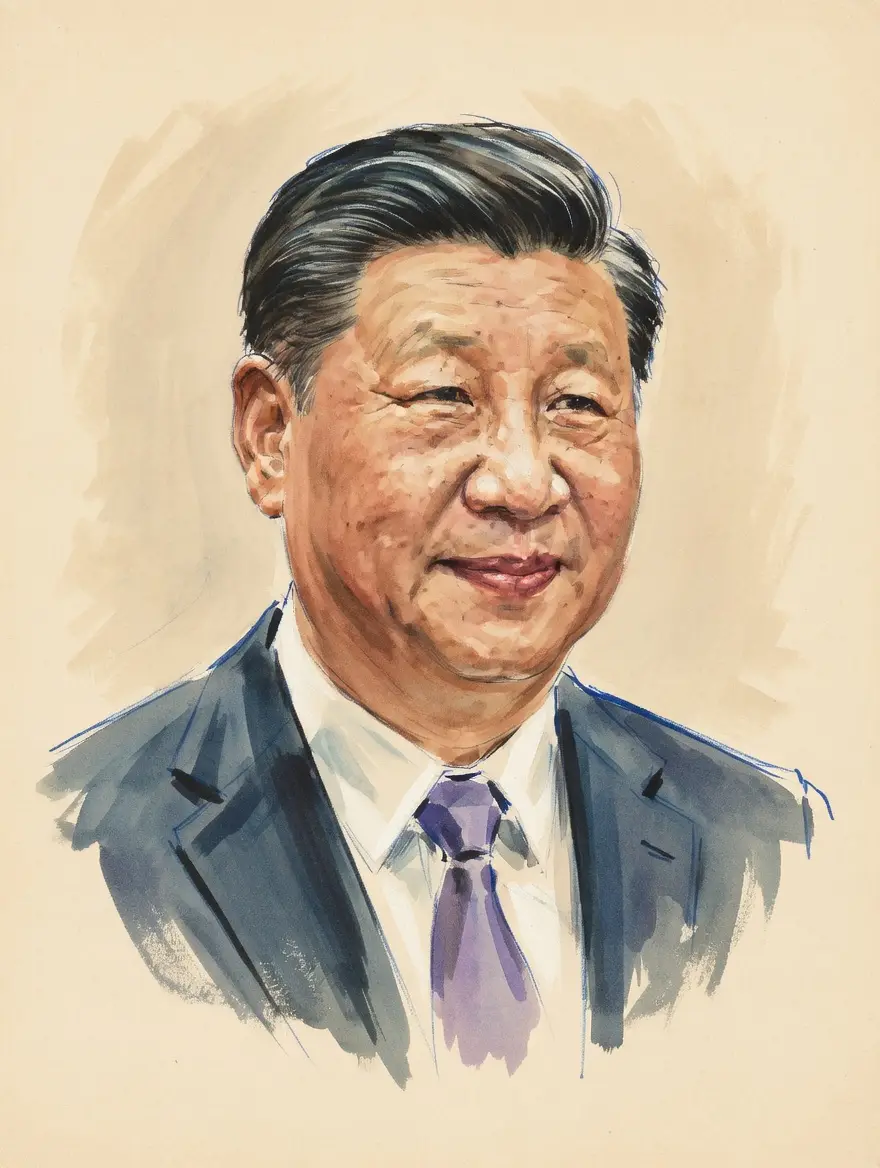
Xi Jinping on Europe
TL;DR
Xi Jinping seeks to engage Europe as a strategic partner while actively trying to foster divisions among member states.
Key Points
He met German Chancellor Friedrich Merz on February 25, 2026, emphasizing mutual respect and a pragmatic policy toward China.
Chinese Foreign Minister Wang Yi declared at the Munich Security Conference that China and the EU are "partners, not rivals" in February 2026.
China's diplomatic efforts targeted specific states, like Hungary, to advance its interests and try to reverse the EU's 'de-risking' push.
Summary
Xi Jinping views Europe as a highly significant, though complex, entity, one that must be courted as a strategic partner capable of working with China on global issues like multilateralism and development. He advocates for mutual respect, open cooperation, and steady growth in China-Europe relations, often framing the relationship as having a significant impact on the world stage due to the respective economic sizes of China and the EU. This stance was recently evident in meetings where he called for sharing development opportunities and adhering to principles like free trade and UN centrality, while also voicing support for Europe seeking greater autonomy and strength.
However, his engagement strategy is simultaneously focused on exploiting existing fissures within the continent to counter unified Western approaches, particularly the de-risking strategy. The Chinese leadership's diplomatic approach has targeted specific nations to cement relationships and counter unified EU action, such as welcoming leaders who praise cooperation while avoiding a confrontational stance. This dual approach implies that while he values the economic and strategic relationship with Europe as a whole, he prioritizes weakening any collective stance that challenges China's interests, viewing individual member states as secondary targets for influence.
Frequently Asked Questions
Xi Jinping sees Europe as an important strategic partner whose relationship with China has a significant global impact. He publicly calls for bolstering the China-Europe partnership based on mutual respect and win-win cooperation. However, his strategy also involves trying to divide the bloc to mitigate collective action against Beijing's interests.
His core position of seeking partnership while exploiting divisions appears consistent, but the emphasis has shifted based on current geopolitical realities. Following the strengthening of the EU's de-risking strategy, his recent focus has involved high-level bilateral visits to key nations to reaffirm partnership while countering unified policy trends.
During a meeting with the German Chancellor, Xi Jinping expressed support for Europe in seeking to increase its autonomy and strength. He hopes that Europe will work toward the same goal as China by adhering to strategic partnership, openness, and inclusiveness.
Sources5
President Xi Jinping Meets With German Chancellor Friedrich Merz
China in Europe: February 2026
Xi Jinping visited Europe to divide it. What happens next could determine if he succeeds.
China's turn towards the 'Global South': Europe is not Beijing's priority
Still Muddling Through
* This is not an exhaustive list of sources.