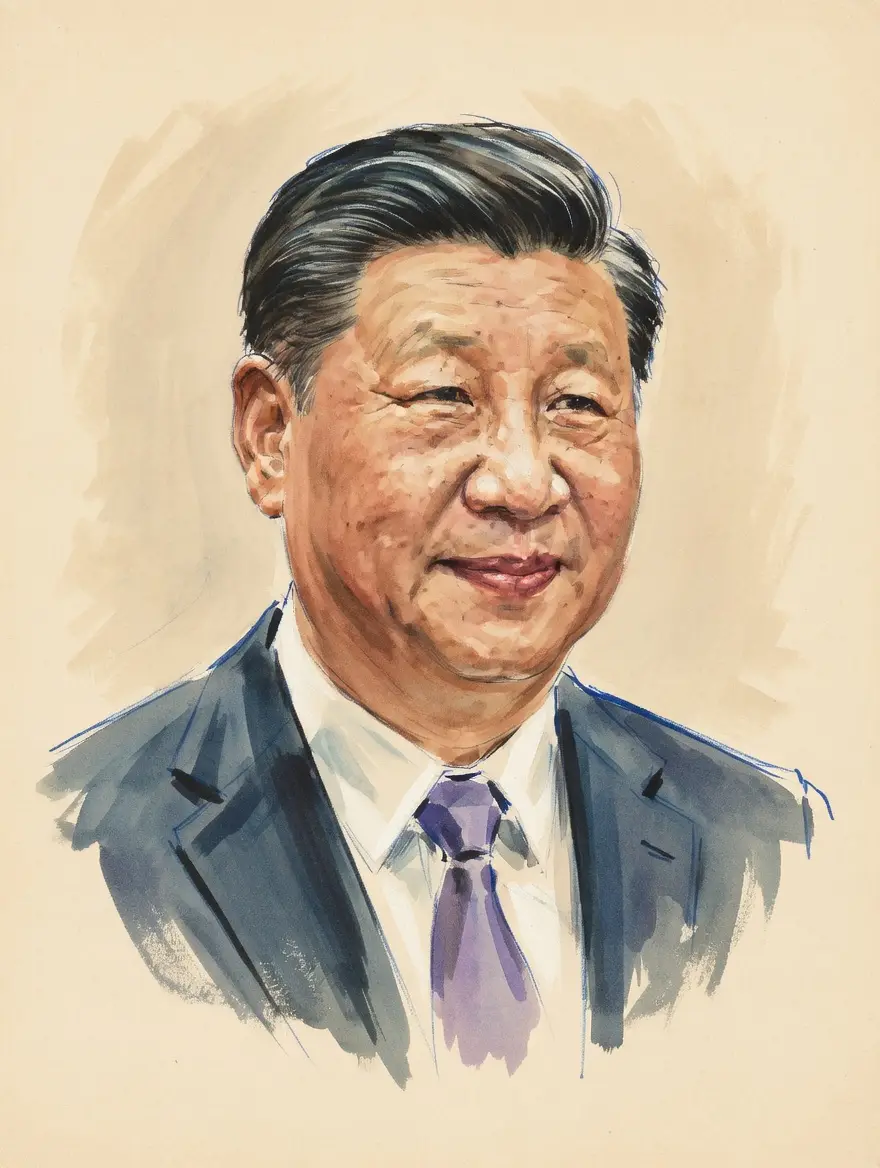
Xi Jinping on Climate Change
TL;DR
Xi Jinping strongly advocates for multilateral climate governance while committing China to substantial, yet sometimes domestically scaled, national emissions reduction targets.
Key Points
In September 2025, he announced an updated commitment to cut China's total greenhouse gas emissions by 7–10 per cent by 2035 from a peak expected before 2030.
He stated that China has built the world's largest and fastest-growing renewable energy system since announcing carbon peaking and neutrality goals five years prior to 2025.
He emphasized that developed countries must fulfill their commitments to provide funds and technology to developing countries to support their green transition.
Summary
Xi Jinping asserts that confronting climate change and reviving the world economy are essential contemporary challenges, positioning China as a steadfast actor in promoting global green development. His core stance is rooted in adhering to multilateralism, championing the UN Framework Convention on Climate Change and the Paris Agreement as the legal cornerstone for international cooperation. He advocates for the principle of common but differentiated responsibilities, demanding that developed nations provide financial and technological support to developing countries for their green transition. The leader views green transformation not just as a climate necessity but as a new engine for economic and social development, emphasizing that such a transition must be people-centered, balancing environmental protection with economic growth, job creation, and poverty alleviation.
Since announcing goals for carbon peaking and carbon neutrality five years prior to 2025, China has built the world's largest and fastest-growing renewable energy system, simultaneously leading in the speed and scale of afforestation efforts. While observers note that China often under-promises and over-delivers, recent updated targets, such as cutting total greenhouse gas emissions by 7–10 per cent by 2035 from a peak expected before 2030, have been assessed by some analysts as falling short of the highest possible ambition required by the Paris Agreement. This perceived recalibration reflects domestic economic pressures and a perceived weakening of global cooperation, though the commitment to rapid clean energy expansion continues to drive significant domestic emissions reductions.
Frequently Asked Questions
Xi Jinping's core position strongly favors multilateralism, asserting that the UN Framework Convention on Climate Change and the Paris Agreement are the fundamental legal basis for global climate cooperation. He insists that all nations must uphold the rule of law and honor their commitments within this framework.
The stance shows an evolution from focusing solely on emission intensity targets to setting absolute emission reduction targets, which is seen as a politically significant step. However, the ambition level of the 2035 targets has been described by some analysts as a 'quiet recalibration' that falls short of the highest possible ambition under the Paris Agreement.
He stated that developed countries have an obligation to provide assistance and support to developing nations to drive the global shift toward green and low-carbon development. This support must include fulfilling commitments regarding climate financing, technology transfer, and capacity building.
Sources5
China's new climate targets show progress but lack ambition | East Asia Forum
Remarks by H.E. Xi Jinping President of the People's Republic of China at the Leaders Meeting on Climate and the Just Transition_Ministry of Foreign Affairs of the People's Republic of China
Key Quotes From President Xi Jinping on Climate Change (II)
China eases climate target but clean energy could still cut emissions, experts say
China updates its climate commitments, in disappointing fashion
* This is not an exhaustive list of sources.