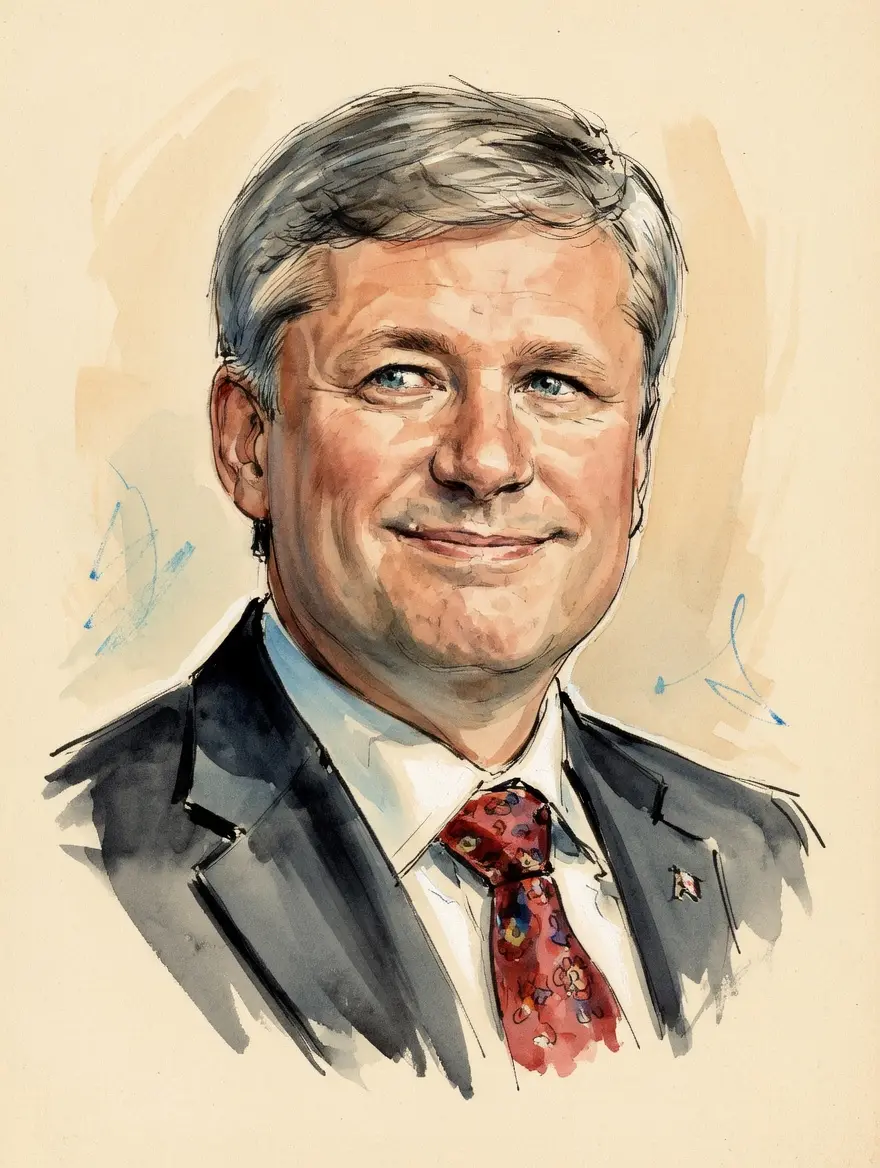
Stephen Harper on Israel
TL;DR
Stephen Harper is a vocal, unwavering supporter of Israel, viewing it as a vital democratic ally in the Middle East.
Key Points
During his tenure, he maintained robust trade and security agreements with Israel, including the Canada-Israel Free Trade and Security Agreement.
He publicly defended Israel’s right to self-defense, arguing that its military actions are always reactive to threats, not acts of aggression.
He characterized opposition to Israel among critics as being rooted in anti-Semitism, especially when democratic nations are singled out for condemnation.
Summary
Stephen Harper has consistently maintained a strong, supportive position toward Israel, both during and after his time as Prime Minister of Canada. He frequently cites shared democratic values, such as free elections, free speech, and an independent judiciary, as fundamental reasons for this staunch alignment. He views the nation as a critical trading partner and a key ally in the international struggle against terrorism, often asserting that its military actions are fundamentally defensive measures taken in response to existential threats from neighboring states and terror groups.
His advocacy has extended to explicitly defending Israeli military campaigns, labeling them as just wars that necessitate the surrender or elimination of entities like Hamas. He has characterized intense international criticism directed at Israel as often stemming from anti-Semitism, contrasting the condemnation of Israel with the lack of similar scrutiny toward other authoritarian regimes. Furthermore, he linked support for Israel with Canada's own national security, arguing that Israel's enemies are inherently Canada's enemies.
Key Quotes
Why wouldn't I support a fellow democratic nation where open elections, free speech, and religious tolerance are the everyday norm?
Hamas must surrender or be eliminated
Frequently Asked Questions
Stephen Harper holds a position of strong and proud support for Israel. He consistently frames the relationship based on shared democratic values and Israel's status as a key ally in the Middle East.
Yes, he has vocally supported Israel’s recent military operations, arguing that its war is just and demanding that entities like Hamas must surrender or be eliminated. He has written extensively to justify these actions.
He frequently highlights Israel's commitment to democracy, citing its open elections, free press, and independent judiciary. He contrasts this favorably with the surrounding region's authoritarian regimes.
Sources5
Stephen Harper, a proud pro-Israel Canadian PM
Former Canadian Prime Minister Stephen Harper Defends Israel in Viral Video
Harper tells Winnipeg crowd Israel's enemies are Canada's enemies
Stephen Harper: Israel's war is just, Hamas must surrender or be eliminated | National Post
Former PM Stephen Harper tries to reassure worried conservatives that Israel is waging a “just war”. It’s a difficult task.
* This is not an exhaustive list of sources.