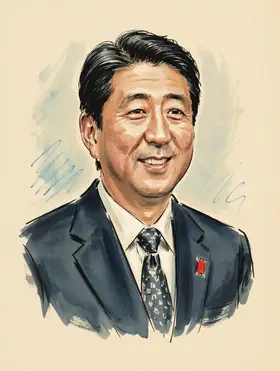
Shinzō Abe on Palestine
TL;DR
Shinzō Abe sought active engagement in the Middle East peace process, promoting economic development in Palestine alongside Israel and Jordan.
Key Points
He visited Israel twice and hosted his Israeli counterpart twice to strengthen bilateral relations, emphasizing shared values as peace-loving democracies.
During his visit to Israel in January 2015, he reaffirmed his intention to visit Palestine the following day.
Japan promoted the 'Corridor for Peace and Prosperity' initiative in cooperation with Israel and Jordan for Palestinian socioeconomic development.
Summary
Shinzō Abe detailed Japan's position regarding the Middle East during a discussion, emphasizing the critical importance of regional stability to Japan's energy security, as the nation depended on the region for nearly 90 percent of its crude oil imports. He positioned Japan as having a unique diplomatic role, maintaining deep historical ties with Israel while also sustaining good relations with Palestine and other Arab nations, in addition to traditional ties with Iran. He stated that as a genuine friend, he might offer difficult advice to both Israeli and Palestinian parties.
As part of Japan's engagement, Abe highlighted an initiative called the Corridor for Peace and Prosperity. This involved a four-party cooperation among Japan, Palestine, Israel, and Jordan, specifically aimed at realizing the socioeconomic development of Palestine through job creation and ensuring local economic activity, particularly in the Jordan Valley area. His stated belief was that mutual confidence and consistent perseverance among the four parties were key to this joint endeavor for regional stability.
Key Quotes
Japan will continue up our active engagement for the purpose of regional stability in the Middle East peace process and other efforts with the understanding on the difficult environment of Israel.
The key will be the mutual confidence between the four parties (Japan, Palestine, Israel, and Jordan), and we have to maintain perseverance and consistency [in this] joint endeavor,” Abe said.
Frequently Asked Questions
Shinzō Abe considered stability in the Middle East critically important to Japan's national interest because Japan depended on the region for almost 90 percent of its crude oil imports. He was active in seeking regional stability and peace through diplomacy.
Yes, Shinzō Abe maintained active engagement with both parties, stating he would offer advice as a 'genuine friend' to both sides. He visited Israel and Palestine during his trip in January 2015.
He promoted the 'Corridor for Peace and Prosperity,' an initiative involving Japan, Palestine, Israel, and Jordan. Its goal was to foster the socioeconomic development of Palestine, particularly in the Jordan Valley area.
Sources6
Statements by Prime Minister Benjamin Netanyahu and Japanese Prime Minister Shinzō Abe
Japan: The Legacy Of Japan's Longest Serving Prime Minister | Hoover Institution
Japanese Minister, Shinzō Abe, met with Ayatollah Khamenei
BNC letter to Japanese Prime Minister on arms export to Israel
Statement made on 8 July 2022 by Chair of the Delegation, Christel Schaldemose
* This is not an exhaustive list of sources.