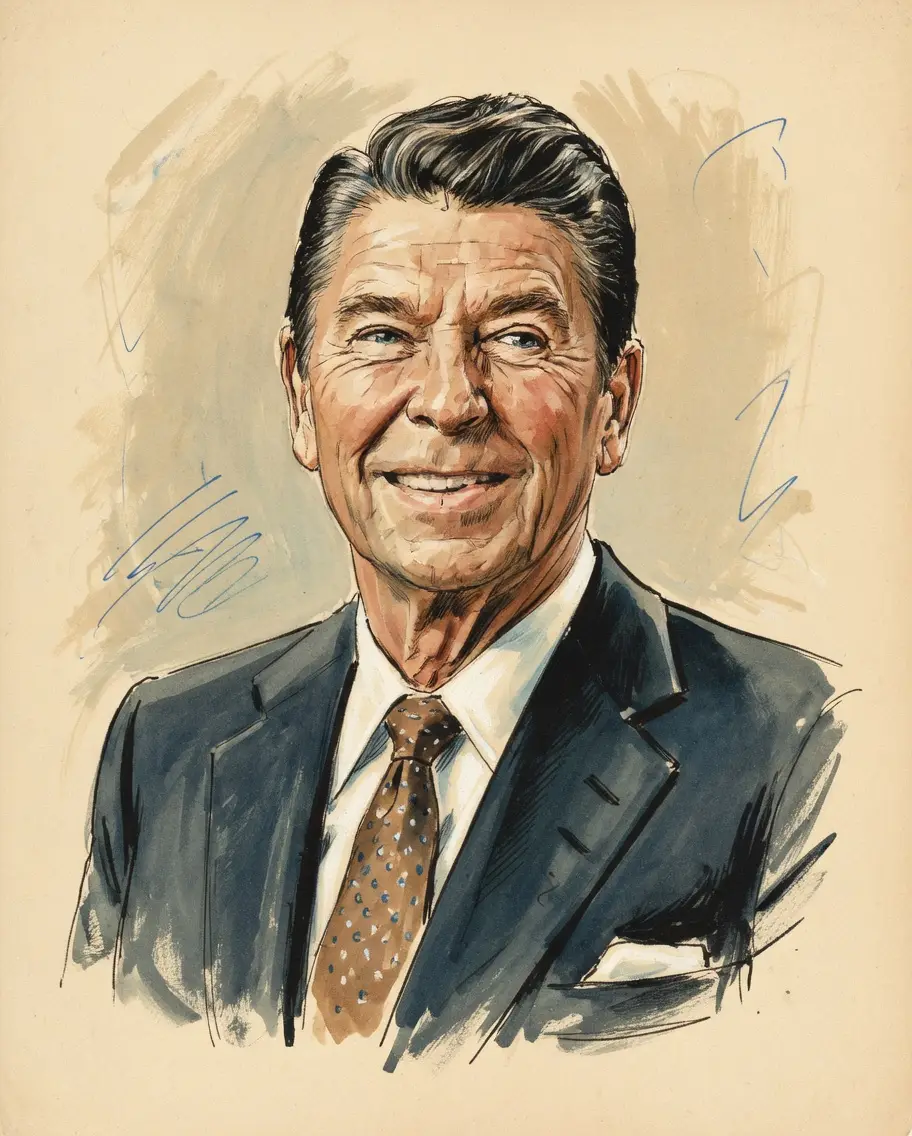
Ronald Reagan on Democracy
TL;DR
Ronald Reagan strongly promoted democracy globally as the most honorable form of government worth defending with one's life.
Key Points
He inaugurated the National Endowment for Democracy on December 16, 1983, as a private, non-profit corporation funded by Congress to assist democratic development overseas.
He maintained that democratic governments are less likely to engage in wars of aggression, making the promotion of democracy a fundamental foreign policy objective as of October 7, 1987.
During his 40th Anniversary of D-Day address on June 6, 1984, he stated that democracy is the most deeply honorable form of government ever devised by man.
Summary
Ronald Reagan viewed democracy as the most deeply honorable form of government ever devised by man, asserting that it was worth dying for. His core position was one of unwavering support for democratic ideals and institutions, viewing them as intrinsically linked to human rights, individual liberty, and the rule of law. He believed that democracies were less prone to wars of aggression, making their promotion a key foreign policy objective. This conviction fueled his administration's efforts to assist democratic development worldwide through initiatives like the National Endowment for Democracy, which he helped inaugurate in 1983.
His advocacy often involved contrasting democratic systems with totalitarianism, which he famously labeled an "evil empire" because it suppressed individual spirit and freedom. While promoting democratic principles as universal, Reagan acknowledged that democratic development must adapt to local historic, cultural, and social conditions, rejecting a simplistic, one-size-fits-all approach. He framed the global struggle as a moral and spiritual contest where the success of freedom was dependent upon the virtue and dedication of its adherents at home and abroad.
Key Quotes
We want to promote democracy, because it is right, and because democratic governments are less likely to become involved in wars of aggression.
While democratic principles and basic institutions are universal, democratic development must take into account historic, cultural, and social conditions.
Frequently Asked Questions
Ronald Reagan was a strong advocate for democracy, viewing it as the most honorable form of government and a universal human right. He believed it was essential to actively foster democratic institutions worldwide as a bulwark against totalitarianism.
The former president explicitly stated that democracy is worth dying for, calling it the most deeply honorable form of government devised by man. He linked this conviction to the sacrifices made by Allied forces to reclaim Europe for liberty.
He promoted democracy through both moral conviction and active resource commitment, exemplified by establishing the National Endowment for Democracy. He also believed that while principles are universal, the practical development of democracy must respect local history and culture.
Sources7
We’re still a nation comprised of good and decent people whose...
Text of President Ronald Reagan's Westminster Address - NED: Text of President Ronald Reagan's Westminster Address - NATIONAL ENDOWMENT FOR DEMOCRACY
Ronald Reagan Normandy Speech Point du Hoc - Voices of Democracy
Remarks at a White House Ceremony Inaugurating the National Endowment for Democracy
* This is not an exhaustive list of sources.