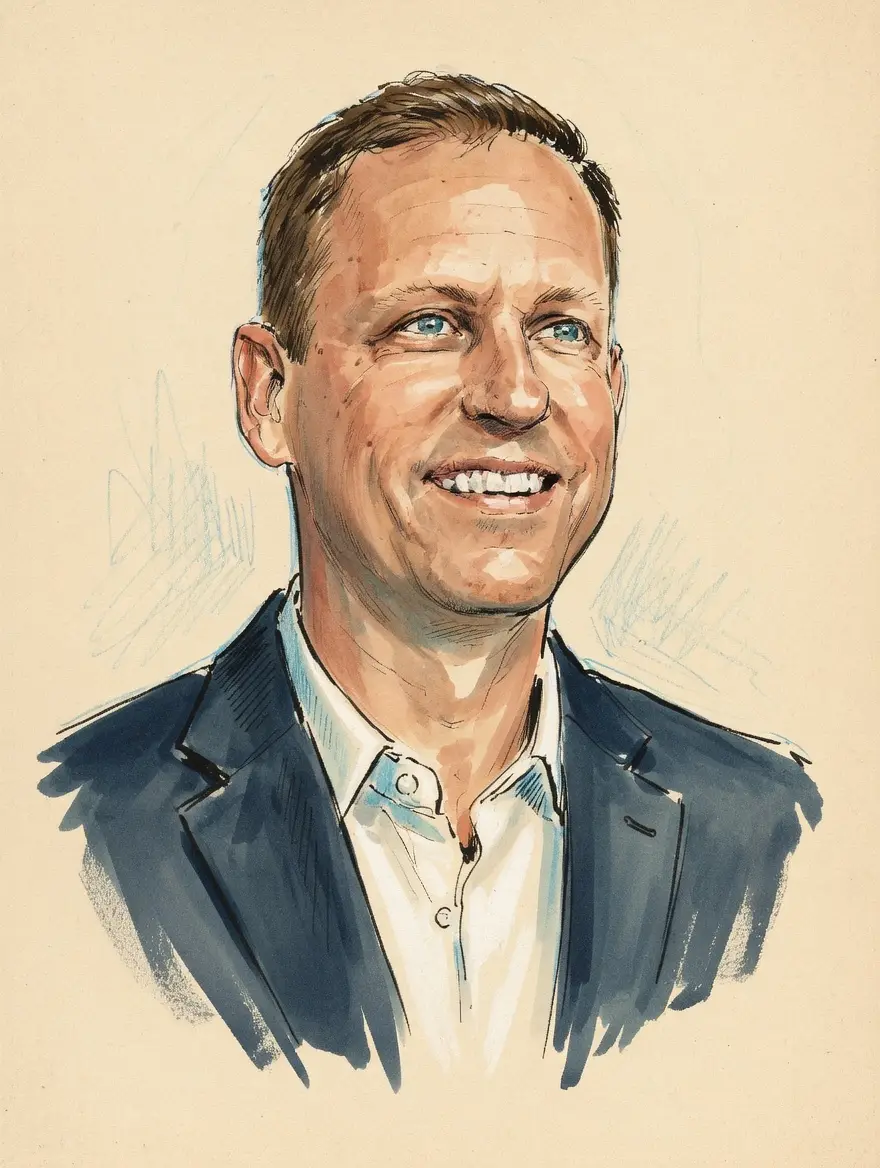
Peter Thiel on China
TL;DR
Peter Thiel strongly advocates for a drastic, adversarial reset in America's economic and geopolitical relationship with China.
Key Points
He believes the U.S. needs a "very drastic reset with China" regarding trade and economic relations as of April 2025.
Thiel observed in 2021 that China's success in leveraging AI, developed partially by Western companies, is a key component of the geopolitical contest.
He argued in February 2020 that narratives portraying China as either extremely weak or overwhelmingly strong both lead to the West doing nothing.
Thiel suggested that China's takeover of Hong Kong in 2020 was a test of the world's reaction, potentially advancing the timetable for action concerning Taiwan.
Summary
Peter Thiel asserts that the United States urgently requires a comprehensive overhaul of its economic relationship with China, viewing it as both an economic and geopolitical challenge. He noted that a significant portion of the U.S. trade deficit, about a quarter directly and another quarter indirectly, is tied to China, arguing that economists often fail to properly factor in the background geopolitical rivalry. Thiel suggests that while shifting production to other nations might curb Chinese influence, this necessitates careful coordination and improved U.S. industrial policy.
He expressed concern that China is leveraging technology like Artificial Intelligence, potentially using state-sponsored research collaborations after major U.S. tech companies refused work with the U.S. military. Furthermore, Thiel posits that the narrative around China is often framed in extremes—either as being too far behind or too far ahead—both of which lead to inaction, suggesting the reality is a close, ongoing fight where other nations may align with the U.S. out of fear of Chinese dominance. He also linked the necessity of a reset to concerns over the future of U.S. global leverage, particularly concerning reserve currency status.
Frequently Asked Questions
Peter Thiel's core position is that the United States must pursue a "drastic reset" in its relationship with China, viewing the competition as fundamentally geopolitical, not just economic. He believes American policy makers have historically engaged in self-deception about China's trajectory, either being overly optimistic or overly pessimistic.
He sees the competition in Artificial Intelligence as a critical race, noting China's willingness to deploy AI for totalitarian surveillance methods. Thiel suggested that in the AI race, China may have an ideological advantage in data acquisition, making the U.S. need to compete aggressively.
Thiel has suggested that the U.S. long ignored the threat of China not becoming a liberal democracy because of perceived commercial interests in the large market. He believes that historical events, like the Tiananmen Square Protests in June 1989, illustrate the difference in how China and the West learned lessons from historical turning points.
Sources6
Palantir Co-Founder Peter Thiel Says America Needs 'Drastic Reset' With China, But So Do Others
Thiel on AI & Racing with China — LessWrong
Peter Thiel missed out on China. Now he’s betting on American patriotism - Los Angeles Times
Peter Thiel on China
A Peter Thiel Protégé Is Leading Trump's AI Strategy Against China — OODAloop
The World According to Thiel | Hoover Institution
* This is not an exhaustive list of sources.