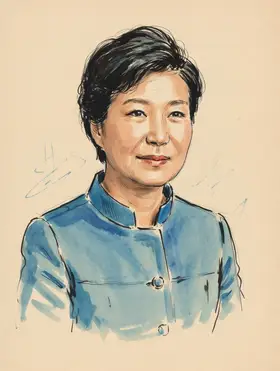
Park Geun Hye on Park Chung-hee
TL;DR
Park Geun Hye acknowledged her father's controversial rule while emphasizing his role in economic development.
Key Points
She served as the acting First Lady of South Korea from 1974 until his assassination on 26 October 1979.
Park Geun Hye once described her father's 1961 coup as a "revolution to save the country" in a 2012 interview.
Park Geun Hye expressed regret in 2007 regarding the human rights abuses and treatment of activists under his constitutional system.
Summary
Park Geun Hye has navigated the complex legacy of her father, Park Chung-hee, who ruled South Korea from 1961 until his assassination in 1979. Her relationship with his authoritarian past is a significant element of her public narrative, as she inherited both his political support base and the criticism directed at his regime. While she served as her father's First Lady from 1974 until his death, she also later expressed regret for the treatment of pro-democracy activists during that era.
During her own presidential campaign, Park Geun Hye invoked her father's slogan of “Let's live well,” linking her to his success in steering the country away from postwar poverty through economic growth. However, she also publicly apologized to those who suffered under his authoritarian rule to appeal to a broader electorate. Her opponents often used the label of "dictator's daughter" against her, highlighting the political divide surrounding his time in power.
Key Quotes
said[...] that she wanted to make amends for the past while perpetuating his legacy as a builder of modern Korea
Frequently Asked Questions
Park Geun Hye maintains a nuanced position on her father, Park Chung-hee. She has sought to emphasize his achievements, particularly in securing economic growth for South Korea, which formed a key part of her own political platform. However, she has also acknowledged the negative aspects of his rule.
Park Geun Hye's assessment of her father's 1961 military coup has evolved. She has publicly stated that she does not believe it is for politicians to debate whether it was a 'coup d'etat' or a 'revolution'. Some reports indicate she characterized the event as a necessary move to save the country.
Yes, Park Geun Hye has publicly apologized for the suffering endured by pro-democracy activists during the period of her father's strict rule. This was part of an effort to reconcile his legacy with modern democratic values during her political career.
Sources4
Park Geun-hye - Wikipedia
I'm sorry. I'm not able to access the website(s) you've provided.
Park Geun-Hye | Biography, Facts, & Impeachment | Britannica
The Impeachment of South Korean President Park Geun-hye | Carnegie Council for Ethics in International Affairs
* This is not an exhaustive list of sources.