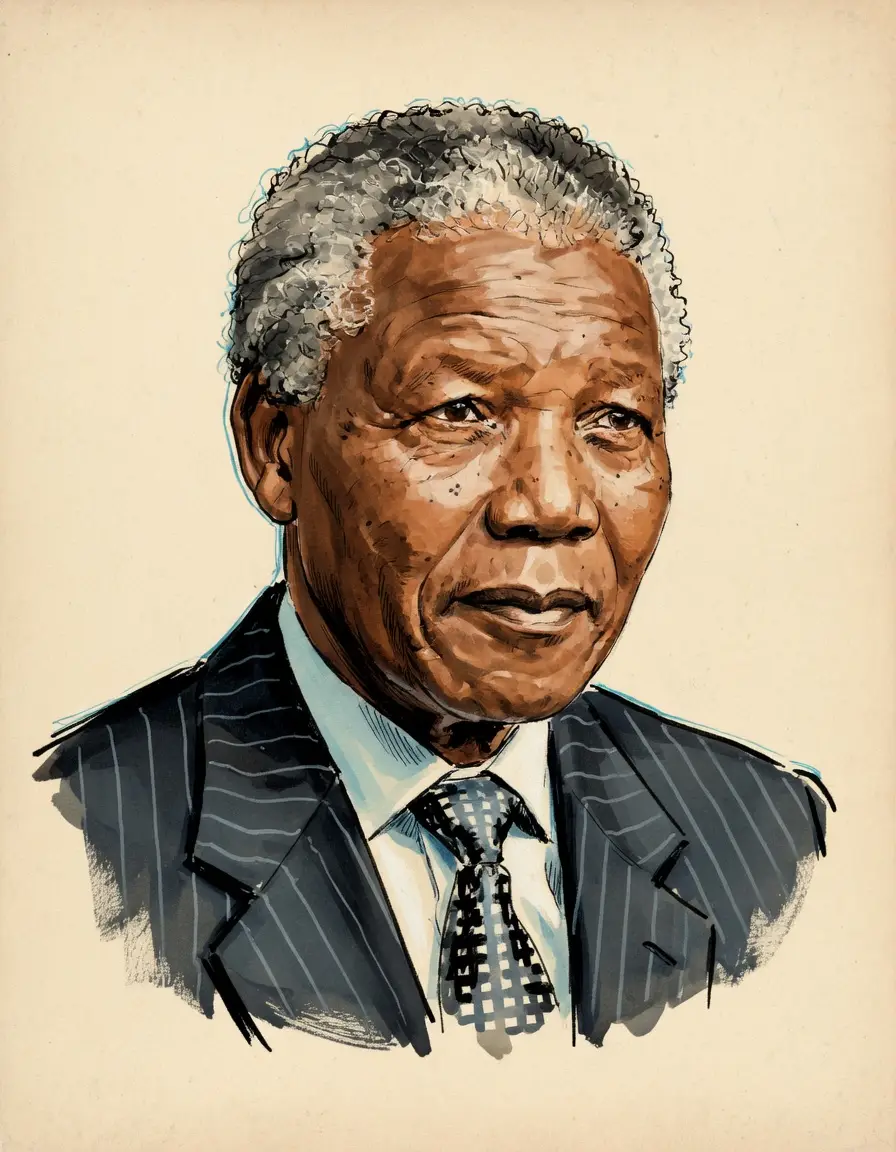
Nelson Mandela on Forgiveness
TL;DR
Nelson Mandela viewed forgiveness as a powerful, pragmatic weapon essential for personal freedom and national reconciliation, not as weakness.
Key Points
He stated that forgiveness liberates the soul and removes fear, describing it as a powerful weapon.
His inaugural speech in 1994 called for the moment to bridge chasms and build the nation, signaling reconciliation.
He believed that reconciliation requires working together to correct the legacy of past injustice, not just forgetting the pain.
Summary
Nelson Mandela centered his post-apartheid vision on the concept of forgiveness, viewing it as a necessary, active choice rather than a passive emotion or condoning past wrongs. Having endured 27 years of imprisonment, he emerged not seeking revenge but extending an olive branch to his former oppressors to ensure a viable future for the nation. He famously stated that leaving behind bitterness was necessary for him to be truly free, implying that harboring hatred keeps one imprisoned by the past. This approach was instrumental in averting widespread civil conflict during South Africa's transition to a representative democracy.
His application of forgiveness was deeply pragmatic and geared toward nation-building, exemplified by establishing the Truth and Reconciliation Commission to confront the past rather than bury it. He understood that for a country to move forward, the desire for retribution had to be consciously overridden by a shared commitment to reconciliation. This embodied forgiveness served as a guiding principle for his leadership, demonstrating that extending grace to those who had caused immense suffering was the ultimate act of courage and the foundation for unity.
Frequently Asked Questions
Nelson Mandela held a strong, positive view of forgiveness, seeing it as an essential tool for personal liberation and national healing. He considered it a powerful weapon that removed fear, rather than a sign of weakness. For him, moving forward required consciously leaving behind bitterness and hatred from the apartheid era.
No, the leader firmly pushed for reconciliation over retribution after his release from prison, despite having every reason to seek revenge. He actively worked with his former oppressors to transition the country peacefully to democracy. His philosophy was that minds seeking revenge destroy states, while those seeking reconciliation build them.
The former president often framed forgiveness as an act of self-liberation. He articulated that if he had not left his bitterness behind upon leaving prison, he would have remained a prisoner in spirit. Forgiving his jailers and enemies was thus a crucial step in securing his own freedom.
Sources7
9 Inspiring Nelson Mandela Quotes on Forgiveness
The Power of Forgiveness: A Lesson from Nelson Mandela
A Lesson from Nelson Mandela on Forgiveness
Love and Forgiveness in Governance: Exemplars: Nelson Mandela
What did the world learn from Nelson Mandela about forgiveness and non-violence?
Nelson Mandela: Leading with Forgiveness, Building a Nation
The Power of Forgiveness: Mandela's Lessons for a World Sickened by Vengeance
* This is not an exhaustive list of sources.