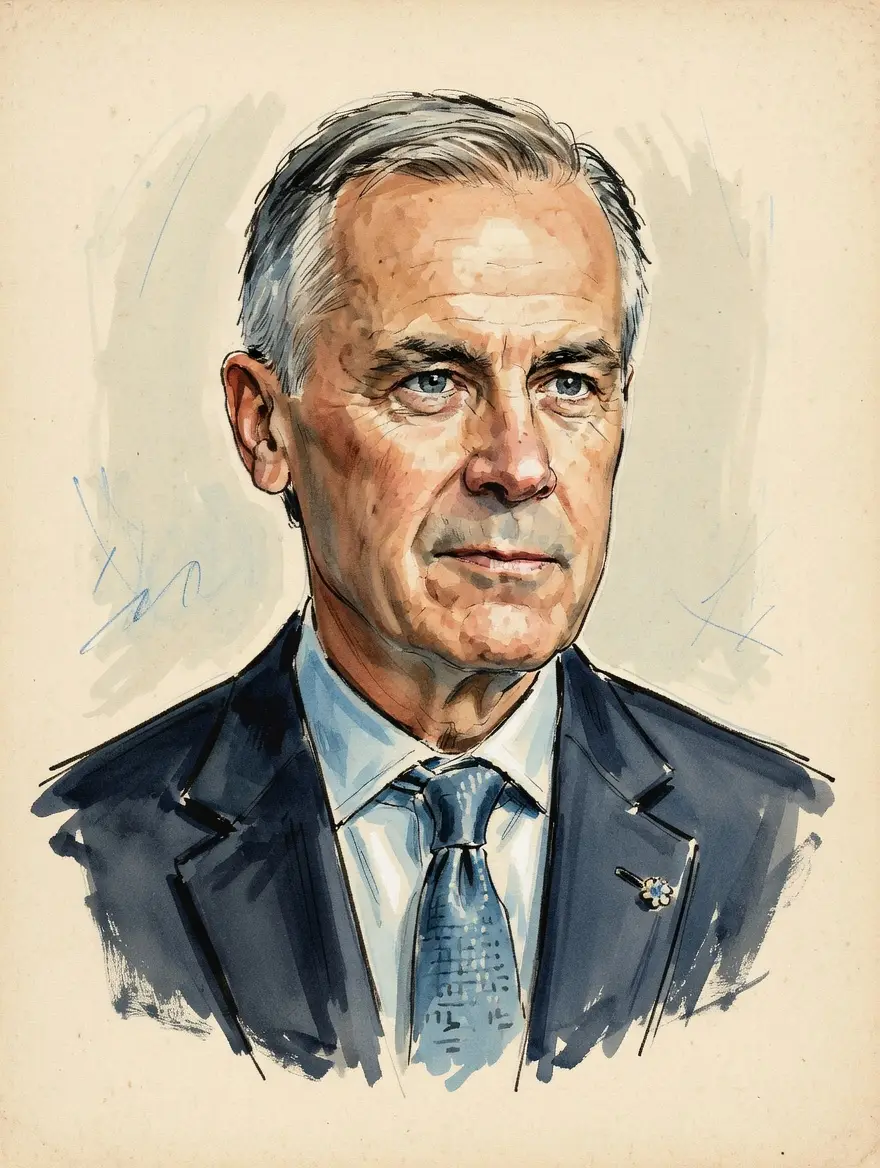
Mark Carney on Bank of England
TL;DR
Mark Carney's tenure as Bank of England Governor was marked by modernizing efforts, forward guidance policy, and engagement on Brexit and climate issues.
Key Points
He served as Governor of the Bank of England from July 1, 2013, until March 15, 2020.
He introduced 'forward guidance' as a policy tool to commit to low interest rates contingent on unemployment falling below 7%.
Carney extended his term beyond the initial five years to support the UK's exit negotiations following the 2016 Brexit vote.
Summary
Mark Carney served as the Governor of the Bank of England from July 1, 2013, to March 15, 2020, being the first non-British citizen appointed to the role. A core aspect of his policy was breaking the previous taboo on discussing future interest rates by introducing "forward guidance," a conditional commitment to keep the Bank Rate low if unemployment remained above a 7% threshold. His leadership also involved modernizing the institution by increasing media appearances and changing operating procedures, such as altering the schedule and transparency of interest rate meetings.
The second part of his time at the Bank was heavily defined by the political controversy surrounding the 2016 Brexit referendum. He publicly warned of the negative economic consequences of leaving the European Union, which led to accusations from some, particularly Eurosceptics, that he had compromised the Bank's political impartiality. Furthermore, he significantly increased the Bank's resources and public commentary regarding climate change risks to financial stability, which some observers felt ventured beyond the central bank's immediate remit.
Frequently Asked Questions
Mark Carney's most notable policy initiative was the introduction of 'forward guidance,' which involved publicly committing to keeping interest rates low based on specific economic conditions, such as unemployment levels. This was a break from the Bank's previous reluctance to discuss future policy openly.
Yes, Mark Carney's tenure became controversial, primarily due to his vocal commentary on the potential economic fallout from Brexit, which led to accusations of political bias. His focus on climate change risks also pushed the Bank into areas seen by some as outside its traditional remit.
Mark Carney did not serve a full standard eight-year term; he initially intended to serve five years, stepping down in 2018. However, he agreed to extend his tenure twice to help manage the transition period around the UK's departure from the European Union.
Sources5
Mark Carney | Bank of England
Mark Carney, BoE Governor, 2013–2019 | by Monetary Policy Institute Blog | Medium
Mark Carney - Wikipedia
A marked man: Carney's BoE departure | World Finance
What can Canada expect from its next PM? The Mark Carney I knew | Larry Elliott | The Guardian
* This is not an exhaustive list of sources.