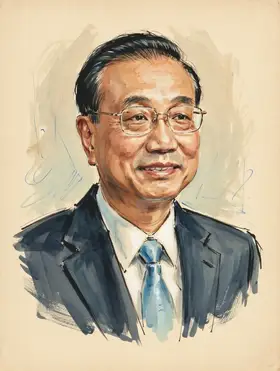
Li Keqiang on Economic Policy
TL;DR
Li Keqiang strongly advocated for market-oriented economic policies, emphasizing reform, innovation, and openness during his tenure as Premier.
Key Points
He championed "Likonomics," a platform focusing on stimulating the economy by cutting red tape and taxes on businesses early in his tenure.
His policy orientation significantly favored market mechanisms over state-centric strategies, a difference that was most pronounced between 2016 and 2017.
He promoted innovation through start-ups via the annual “Mass innovation week” campaigns, which involved a significant shift toward market-oriented rhetoric during those periods.
Summary
Li Keqiang, as Premier, consistently favored market-oriented policies, contrasting at times with the more state-centric strategies of the Party leadership. Empirical analysis of his speeches revealed a distinct preference for market mechanisms, lean government, and promoting small start-ups, which was notably visible during his annual “Mass innovation week” initiatives. He championed the platform dubbed “Likonomics,” which focused on cutting red tape and taxes to stimulate the economy, even while steering the nation through crises like the US-China trade war and the COVID-19 pandemic.
His market-oriented rhetoric, however, experienced a trend of convergence toward the general secretary’s state-centric preferences, particularly in the latter half of his tenure, suggesting an erosion of his policy influence over time. This perceived policy divergence between the two leaders was reportedly associated with increased political uncertainty, which negatively impacted firm-level investment, especially within state-owned enterprises. While his market-friendly stances have not been carried forward by his successor, Li Keqiang is remembered for consistently expressing a commitment to openness to the global economy.
Frequently Asked Questions
Li Keqiang's main economic policy stance centered on promoting market-oriented reforms, often referred to as "Likonomics," which included efforts to reduce bureaucracy and foster innovation through private enterprise. He emphasized the role of market mechanisms in governance.
Yes, analysis indicates his market-oriented rhetoric gradually converged toward the state-centric preferences of the Party leader during his second term. While his initial divergence was significant, this later convergence suggests an evolution of his public economic focus.
Discrepancies between Li Keqiang's market-oriented signals and the more state-centric messages from the top leadership were interpreted by the market as mixed signals. This perceived policy divergence created political uncertainty that was associated with a decline in firm-level investment.
Sources6
Remarks at China's 1+6 Roundtable with Premier Li Keqiang
What are the key drivers of Xi's economic policy in 2025?
Remembering Li Keqiang: Policy Divergence in Zhongnanhai and Its Economic Consequences
Li Qiang's Quiet Rise
Li Keqiang Discusses Measures to Meet Global Economic Challenges with Heads of Major International Economic and Financial Institutions
China's Ex-Premier Li Keqiang, a Reformer Sidelined by Xi, Dies
* This is not an exhaustive list of sources.