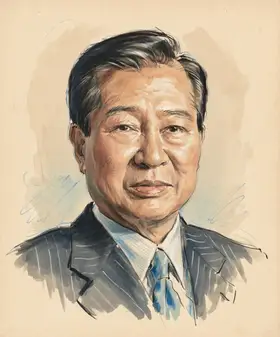
Kim Dae Jung on Democracy
TL;DR
Kim Dae Jung steadfastly believed that democracy was the inevitable and necessary foundation for South Korea's prosperity, justice, and peace.
Key Points
He advocated for the parallel development of democracy and market economics as the basic mission of his government, from 1998 to 2003.
He countered the argument that Western-style democracy was unsuited for Asia by pointing to deep-rooted democratic philosophies present in the region's history.
For his work promoting democracy, human rights, and reconciliation with North Korea, he was awarded the Nobel Peace Prize in 2000.
Summary
Kim Dae Jung was a lifelong and persistent voice for the democratization of South Korea, enduring imprisonment, exile, and even a death sentence for his beliefs. He fundamentally believed that the triumph of democracy over dictatorship was the key global trend following the collapse of socialism, asserting that democracy was applicable and achievable in Asia despite authoritarian claims to the contrary. He argued that his nation, and Asia generally, possessed deep philosophical and institutional roots that supported democratic ideals, such as the concept of 'people-based politics' predating Western enlightenment figures.
His presidency was dedicated to the parallel development of democracy and market economics, viewing the former as essential for preventing corruption and collusive ties between business and government. While he had to navigate the practical constraints of establishing a new democratic system, often resorting to executive action which drew criticism, his ultimate goal remained the consolidation of democratic values. He viewed democracy as an absolute value tied to human dignity and the only true path to sustained economic development and social justice for his people.
Frequently Asked Questions
Kim Dae Jung held a strong, positive position on democracy, viewing it as the ultimate guarantor of human dignity and the essential prerequisite for lasting economic prosperity and social justice. Throughout his life, he actively struggled against authoritarian regimes to establish this system in South Korea.
Yes, Kim Dae Jung faced extreme opposition from authoritarian leaders, including being jailed, placed under house arrest, and even sentenced to death in 1980 for his pro-democracy activities. He was widely regarded as a subversive by the ruling establishments for decades.
He believed that a national economy lacking a democratic foundation was inherently unstable due to the risk of corruption and collusive ties between politics and business. Therefore, he saw reforming the economy in parallel with political democratization as crucial for long-term success.
Sources4
Kim Dae-jung's Role in the Democratization of South Korea
Kim Dae-jung – Nobel Lecture
Kim Dae Jung: A Future Leader's Moment of Truth
Kim Dae-Jung and the Consolidation of Democracy in South Korea
* This is not an exhaustive list of sources.