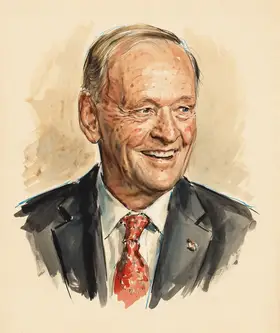
Jean Chrétien
- Known for
- 20th prime minister of Canada, Patriation of Constitution, Defeating Quebec sovereignty
- Born in
- Shawinigan Falls, Canada
- Education
- Université Laval
Jean Chrétien, the 20th Prime Minister of Canada (1993–2003), emerged from humble Quebec roots to lead the Liberal Party through a transformative decade. His tenure was defined by a pragmatic Third Way approach to fiscal management and an unyielding defense of Canadian unity against Quebec sovereignty.
Signature Positions
Chrétien’s legacy is built on several key policy achievements and contentious stances:
- Fiscal Austerity: Implemented sharp spending cuts following an economic crisis, leading to Canada’s first budget surplus in nearly three decades.
- Quebec Sovereignty: Led the federalist 'No' campaign to a narrow victory in the 1995 Quebec referendum and later championed the Clarity Act to set secession rules.
- Environmental Policy: Enacted significant environmental legislation, including the Species at Risk Act, while signing the Kyoto Protocol internationally.
- Foreign Policy: Strongly opposed the Iraq War due to lack of UN sanction, but supported military intervention in Yugoslavia and Afghanistan.
- Social Issues: Introduced the long-gun registry and later supported the legalization of same-sex marriage.
How Views Have Evolved
Chrétien’s economic philosophy shifted notably from his earlier career. As a minister under Trudeau, he supported economic nationalism and protectionism.
Upon returning to politics as Liberal leader, he embraced globalization and supported the free trade agreement with the United States, a stark contrast to the party's prior anti-free-trade stance.
Notable Tensions
His leadership was frequently challenged by internal and external conflicts:
- Shawinigate and Sponsorship Scandal: Accusations of corruption and patronage marked the later years of his government, though he consistently denied personal wrongdoing.
- Chrétien vs. Martin: Engaged in a prolonged, bitter leadership feud with Finance Minister Paul Martin, which ultimately forced his early resignation in 2003.
- Constitutional Compromise: While vital to patriating the Constitution, his role in negotiating the notwithstanding clause was politically unpopular in Quebec.
Chrétien governed with a highly centralized, managerial style, often critiqued as a 'friendly dictatorship.' His ability to achieve consecutive majorities (1993, 1997, 2000) allowed him to navigate major national crises, leaving an economic legacy of balanced budgets and debt reduction.