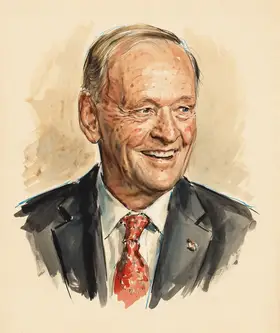
Jean Chrétien on United States Relations
TL;DR
Jean Chrétien prioritized pragmatic economic ties with the US while taking notable, sometimes contentious, independent foreign policy stances.
Key Points
He phoned the U.S. President in November 1993 to ask for renegotiation of NAFTA aspects, which was refused.
He supported Canada's involvement in the 2003 Iraq War because it lacked UN Security Council sanction.
He authorized a larger deployment of Canadian troops to Afghanistan in February 2003 to demonstrate alliance despite opposing the Iraq War.
Summary
Jean Chrétien's approach to United States Relations was marked by a dual focus: maintaining strong economic integration, especially concerning the North American Free Trade Agreement, and asserting Canadian sovereignty on the international stage. His early tenure saw him attempt to renegotiate aspects of NAFTA with the sitting U.S. President, though this effort was rebuffed, leading him to accept cosmetic concessions. Following the September 11, 2001 attacks, he ensured robust cooperation in Afghanistan while simultaneously taking the principled, though straining, decision to refuse participation in the 2003 invasion of Iraq, which lacked a UN Security Council sanction.
This relationship was characterized by significant friction, particularly between Chrétien and the administration of the succeeding U.S. President, as Canada no longer shared the same governing philosophy as its southern neighbor. The disagreement over Iraq meant Canada likely lost the 'benefit of the doubt' from Washington until Chrétien left office, impacting consultation on international issues. Despite moments of tension, such as the initial diplomatic handling of the Iraq War decision, the deep economic integration via free trade created a strong incentive for businesses on both sides to lobby against significant economic disruptions.
Frequently Asked Questions
Jean Chrétien maintained a position of pragmatic engagement with the United States throughout his tenure as Prime Minister. He sought to preserve the close economic relationship, particularly through NAFTA, while asserting Canada's independent foreign policy when vital national interests or international law were at stake, according to historical accounts. This balance sometimes led to friction with successive U.S. administrations.
Yes, Jean Chrétien contacted the U.S. President shortly after taking office in 1993 to request renegotiation of parts of NAFTA. However, the President refused, stating he would not risk ratification by submitting a renegotiated treaty to the U.S. Congress, as documented in political histories. Chrétien ultimately accepted non-binding assurances instead.
The Prime Minister announced that the government did not support the US-led 2003 invasion of Iraq primarily because it lacked sanction from the UN Security Council. This decision strained relations, but he attempted to mitigate the damage by agreeing to a larger Canadian deployment to Afghanistan, as reported at the time.
Sources5
Jean Chrétien
"Honey, are you still mad at me? I've changed, you know...": Canada-US relations in a post-Saddam/post-Chretien era - ProQuest
You are viewing archived web content
CBC News - Indepth: Canada-U.S. Relations - CBC.ca
* This is not an exhaustive list of sources.