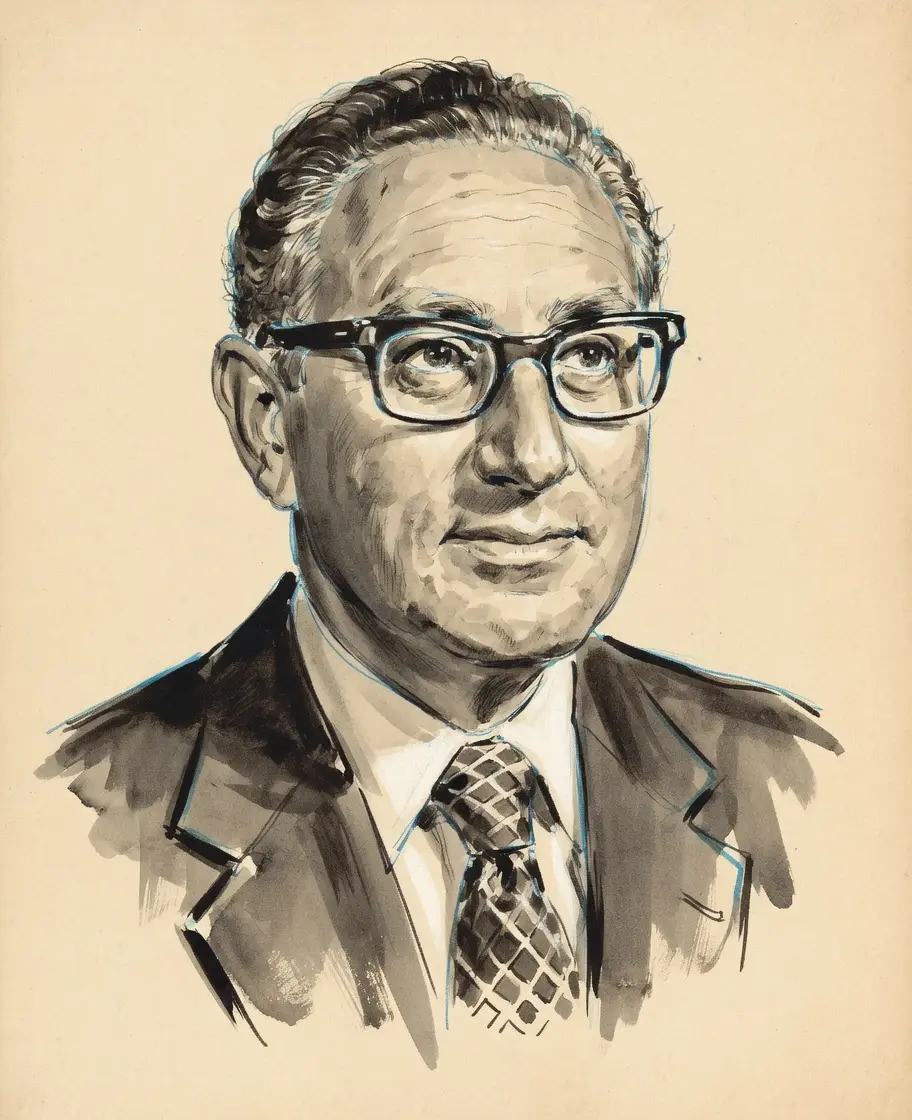
Henry Kissinger on World Order
TL;DR
Henry Kissinger posits that a sustainable world order requires achieving regional balances of power and mutual acceptance, not imposing universal Western ideals.
Key Points
The concept of world order is defined as the shared understanding of just arrangements and power distribution across the globe, a consensus that has historically been absent.
He identified four major historical systems of order: the European Westphalian system, China's central imperial view, political Islam's religious supremacism, and American democratic idealism.
In 2015, he noted the United States lacked a comprehensive grand strategy and needed to adapt to the emerging, contending orders primarily from China and Russia.
Summary
Henry Kissinger, in his seminal work, asserts that a true, shared global world order has never existed, as various civilizations historically defined order based on their own principles, such as the Westphalian system of sovereign states or China's hierarchical view. He argues that the contemporary challenge is the meeting of these divergent historical concepts—including political Islam and American democratic idealism—leading to mounting global tension because there is no consensus on governing rules. For the former statesman, the ultimate challenge for the twenty-first century is creating a shared international order amid conflict and ideological extremism, acknowledging that no single nation possesses the capacity to arbitrate every dispute globally.
He suggests a realistic path forward involves acknowledging contending frameworks, rather than viewing them as violations of a Western order, and challenging policymakers to develop a comprehensive grand strategy for America's role. While the current liberal order has produced significant human progress, he warns that its continuation is uncertain, fearing that failure to adapt could result in an evolution toward competing spheres of influence defined by local governance structures. The realist diplomat advocates for pursuing an equilibrium that restrains conflict, suggesting progress requires moving through intermediary stages based on mutual regional organization rather than immediate universal harmony.
Key Quotes
"Any system of world order, to be sustainable, must be accepted as just—not only by leaders but also by citizens."
Frequently Asked Questions
Henry Kissinger believes that a sustainable world order requires achieving a balance of power within distinct regions, which then relate to one another. He rejects the idea of imposing one region's principles, such as American democratic idealism, universally.
Over time, Kissinger has accorded a more central role to the concept of justice in his conception of a durable world order, viewing it as interdependent with legitimacy. This marks a shift from an earlier emphasis purely on legitimacy and the balance of power.
The former statesman stated that the United States must play an indispensable role in the search for world order, but warned against taking the mission of spreading democracy too seriously. He suggested the US should aspire to a balance of power rather than hegemony.
Sources8
Kissinger Discusses World Order 2025
World Order by Henry Kissinger
World Order (book) - Wikipedia
The New World Order According to Kissinger and Fukuyama: Who We Are and Who We Could Be
"World Order," by Henry Kissinger | Lawfare
World Order by Henry Kissinger | Goodreads
World Order by Henry Kissinger: 9780143127710 | PenguinRandomHouse.com: Books
Has anyone read both Kissinger's books World Order and Diplomacy? : r/geopolitics
* This is not an exhaustive list of sources.