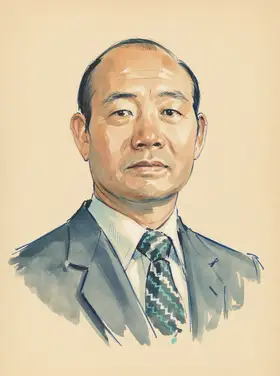
Chun Doo Hwan on Martial Law
TL;DR
Chun Doo Hwan utilized the declaration and expansion of martial law as the central tool to seize and solidify his military dictatorship.
Key Points
He declared Martial Law Decree No. 10 on May 17, 1980, expanding its reach nationwide to suppress dissent.
The expanded martial law closed universities, banned political gatherings, and resulted in the arrest of figures like Kim Dae-jung.
He was later convicted of crimes including unlawfully declaring martial law to subdue the National Assembly and suppress the Gwangju Uprising.
Summary
Chun Doo Hwan's core position regarding Martial Law was to use it as a direct instrument of power consolidation. Following the assassination of the previous president in late 1979, he orchestrated a military coup, seizing control of the army and intelligence apparatus. His successful seizure of power was cemented on May 17, 1980, when he staged another military coup and expanded martial law to cover the entire nation. This expanded martial law closed universities, banned political activities, and severely curtailed the press, allowing him to enforce his authoritarian rule.
The imposition and enforcement of martial law served as the legal and military pretext for Chun's subsequent consolidation of authority, ultimately leading to the dissolution of the National Assembly and his installation as president in September 1980. The military crackdown that followed the expanded martial law in Gwangju resulted in a brutal massacre of hundreds of protesters demanding democracy. Although he later conceded to some democratic reforms under pressure in 1987, his initial rise was inextricably linked to the aggressive use of martial law powers to crush dissent.
Frequently Asked Questions
Chun Doo Hwan used the declaration and expansion of martial law as a key mechanism to overthrow the civilian government. This action, taken in May 1980, allowed him to shut down universities and ban political activities nationwide. His use of martial law was central to his rise as a military dictator.
He forced the Cabinet to extend martial law to the whole nation on May 17, 1980, as part of his coup. This expansion followed his initial seizure of military control in December 1979. The enforcement of this decree led directly to the violent suppression of the Gwangju Uprising.
Yes, Chun Doo Hwan implemented expanded martial law powers to enforce his military dictatorship after his 1980 coup. This allowed him to close political opposition and curb the press, securing his position until the June Struggle demonstrations in 1987. He was ultimately convicted for his actions, including unlawfully declaring martial law.
Sources4
Chun Doo-hwan
Delivering the Mail and Avoiding Martial Law in South ...
Korea's Dark History of Martial Law
* This is not an exhaustive list of sources.