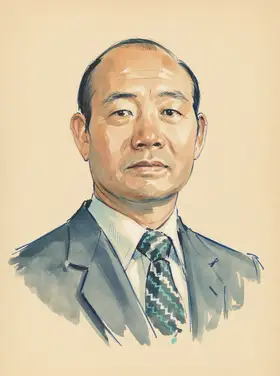
Chun Doo Hwan on Historical Legacy
TL;DR
Chun Doo Hwan's historical legacy is predominantly defined by the violent suppression of democratic movements, particularly the Gwangju Uprising.
Key Points
He seized power via a coup d'état in December 1979, leading to the imposition of nationwide martial law in May 1980.
His regime was responsible for the violent suppression of pro-democracy movements, most notably the Gwangju Uprising in 1980.
His presidency (1980–1987) initiated economic liberalization, transforming the classical developmental state into a new version of state-led developmentalism.
Summary
Chun Doo Hwan's position regarding his own historical legacy is largely shaped by the memory of the events surrounding his ascent to power and subsequent rule. His regime is most infamously associated with the bloody suppression of the 1980 Kwangju Uprising, where military action led to significant civilian casualties. This episode has permanently tarnished his legitimacy in the eyes of many, becoming a central, negative reference point for his time in office. The use of martial law under his leadership to crush pro-democracy protests consolidated state authority at the expense of civil liberties, a period that contrasts sharply with the later democratization of South Korea.
His authoritarian tenure, which followed a military coup that seized power after the assassination of the former president, has created a deep division in how his legacy is perceived. While his administration pursued economic liberalization, the violent means used to maintain control—including the imposition of nationwide martial law—have ensured that his historical memory remains a rallying cry for opposition forces. The subsequent transition to democracy in 1987 and the continuing efforts to uncover and acknowledge historical truths in South Korea continually frame his actions in a critical, often unforgiving, light.
Frequently Asked Questions
Chun Doo Hwan has not offered a clear, detailed public defense or position on his historical legacy that is widely documented in recent analyses. His legacy, however, is overwhelmingly defined by the violent and authoritarian nature of his rise to power and subsequent rule. The events like the Kwangju Uprising continue to cast a long shadow over his tenure, making any self-assessment a secondary consideration to public memory.
The rule of Chun Doo Hwan is primarily remembered for the brutality used to suppress democratic opposition, particularly the 1980 Gwangju massacre. While his administration oversaw economic shifts toward liberalization, the methods used to consolidate power—such as imposing martial law—have ensured his name remains synonymous with repression for many Koreans. This memory serves as a key point of contrast for later pro-democracy leaders.
The available context primarily details the public and historical consensus surrounding the Gwangju Uprising, which forever marked his legitimacy negatively. Later presidents have engaged in official apologies for past state wrongdoings, but there is no strong evidence indicating a public evolution or detailed change in Chun Doo Hwan's stance on his actions during that period.
Sources6
Martial Law in South Korea: A Constitutional Crossroad
How the war criminals of Imperial Japan shaped modern ...
The Developmental State Timeline | East Asian Studies Center
SOUTH KOREA AT THE CROSSROADS: Autonomy and ...
Wave of Remembrance for May 18... "Came from Japan After ...
Transition I: Liberalization in the Chun Doo-hwan ...
* This is not an exhaustive list of sources.