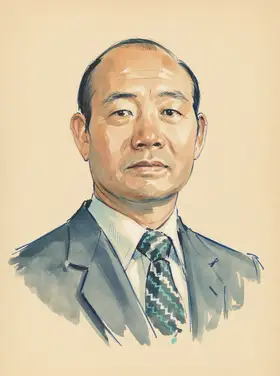
Chun Doo Hwan on Legal Issues
TL;DR
Chun Doo Hwan's legal positions centered on his conviction for insurrection, treason, and corruption following his 1979 coup.
Key Points
He was sentenced to death in 1996 for his 1979 coup, the 1980 Gwangju crackdown, and corruption, a sentence later commuted to life imprisonment.
Chun Doo Hwan and others maintained that their actions to seize power were justified by a need to maintain order, despite being charged with insurrection.
His conviction was upheld following the passage of a Special Act which suspended the statute of limitations for crimes destructive of the constitutional order committed between December 12, 1979, and May 18, 1980.
Summary
Chun Doo Hwan’s engagement with legal issues is defined by the prosecution and conviction for crimes stemming from his military actions in the late 1970s and early 1980s. He was convicted of military insurrection and treason for the December 1979 coup and the subsequent violent suppression of the pro-democracy protests in Gwangju in May 1980. The legal process was highly contentious, involving special legislation to overcome statutory limitations, as critics argued that the coup itself, a successful seizure of power, should not be subject to prosecution or that the subsequent law was unconstitutional retroactive legislation. Despite these arguments, the Constitutional Court ultimately upheld the special act that allowed prosecution to proceed against him.
Following his conviction, Chun Doo Hwan received a death sentence from the trial court for treason and massive corruption, though this was later reduced to life imprisonment on appeal. The basis for the initial conviction and the subsequent sentencing mitigation rested on the view that his actions subverted the constitutional order by grasping power through violence rather than democratic procedure. His defense often centered on the claim that the actions were inevitable to maintain order and that a successful coup establishes a new legal order, arguments which the courts rejected as they sought to rectify past wrongs.
Frequently Asked Questions
Chun Doo Hwan consistently denied the charges of insurrection and treason, claiming his actions, including the expansion of martial law, were inevitable measures to manage social unrest. He asserted that the prosecution of his past actions, which led to a new constitutional order, was politically motivated.
The legal system addressed the expired statute of limitations by enacting the Special Act Concerning the May 18 Democratization Movement, which suspended the running of the limitation period for crimes against the constitutional order. This legislation was specifically designed to allow for the prosecution of former leaders like Chun Doo Hwan.
The trial court initially sentenced Chun Doo Hwan to death, alongside a massive confiscatory fine for corruption. On appeal, the Seoul High Court converted the death sentence to life imprisonment, citing his contribution to economic development and peaceful transfer of power as mitigating factors.
Sources9
Martial Lawlessness: The Legal Aftermath of Kwangju
A Nightmare of Emergency Martial Law in South Korea
Martial Law in South Korea: A Constitutional Crossroad
The Korean Constitutional Court and Kwangju Massacre
Beyond “law vs. politics” in constitutional adjudication
South Korea Awaits Historic Verdict In Yoon Rebellion Case
Former Presidents Stripped of Medals | The DONG-A ILBO
Ex-South Korean president Yoon receives life sentence for ...
* This is not an exhaustive list of sources.