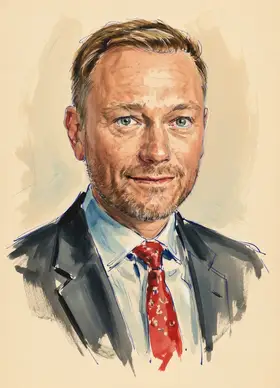
Christian Lindner on German Politics
TL;DR
Christian Lindner champions market-liberal economic policies while navigating complex coalition dynamics within the German political landscape.
Key Points
He advocates for economic reforms including lowering corporate taxes and limiting social benefits, often citing the need to adhere to the debt brake.
His tenure in the 'traffic-light' coalition was marked by high tensions, culminating in his dismissal by the Chancellor after leaking a reform paper in late 2024.
Historically, his Free Democratic Party (FDP) has acted as a kingmaker, capable of forming governments with either the conservative or center-left bloc.
Summary
Christian Lindner’s core position in German politics centers on economic liberalism, advocating for policies such as lower corporate taxes, reducing regulations, and adhering strictly to the national debt brake. He aims to restore Germany's international competitiveness, which he views as having declined due to insufficient investment and structural issues. This stance puts him in frequent tension with more left-leaning coalition partners who favor increased social benefits and climate protection spending over rigid fiscal restraint.
His role has often been characterized by high-stakes negotiation and, at times, outright conflict within governing coalitions, famously leading to the collapse of the traffic-light coalition after a public dispute over budget priorities and economic direction. This behavior is sometimes viewed as him prioritizing his party's ideological purity or self-interest over stable governance, leading to a political atmosphere described as claustrophobic and marked by recrimination, with early federal elections often becoming a consequence of these disagreements.
Key Quotes
...
Frequently Asked Questions
Christian Lindner is a strong advocate for economic liberalism, prioritizing fiscal discipline, lower taxes, and deregulation. His policy focus is on reviving Germany's economy through supply-side measures. However, this approach often pits him against his coalition partners, leading to significant political friction.
While the Free Democratic Party has historically been flexible, Lindner has demonstrated a strong willingness to abandon a coalition if core economic principles, like the debt brake, are threatened. His actions led to the collapse of the ruling alliance, suggesting a hardening of his ideological stance over pragmatic participation.
He played a central role in the collapse of the previous governing coalition when his reform paper, advocating for significant cuts, intensified internal fighting. His subsequent firing by the Chancellor triggered a minority government situation, leading to the announcement of new federal elections.
Sources4
The Return of Germany's Liberals
The claustrophobia of German politics
About Christian Lindner
Risk of the German government collapsing appears higher than ever
* This is not an exhaustive list of sources.