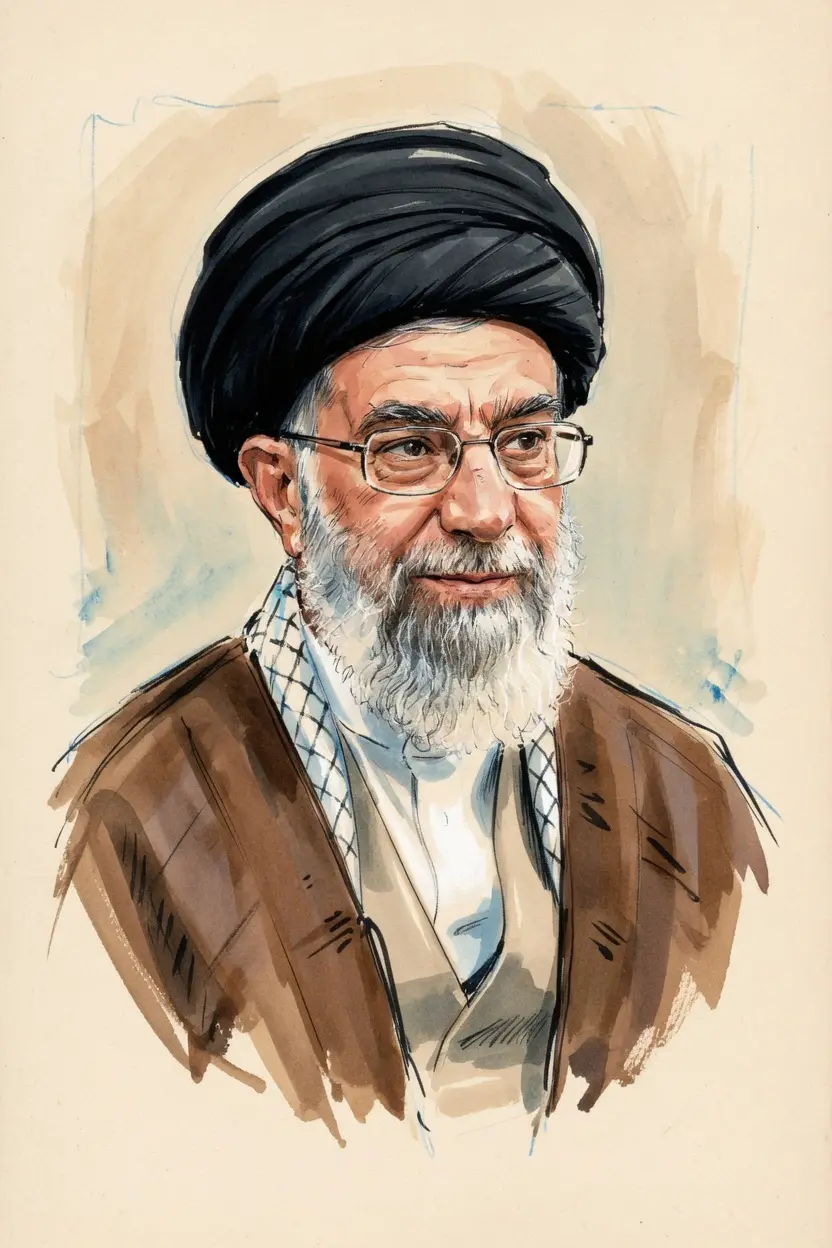
Ayatollah Ali Khamenei
- Known for
- Second supreme leader, Longest-serving head of state, Shia cleric
- Born in
- Mashhad, Iran
- Record
- Longest-serving head of state in the Middle East
Ayatollah Ali Khamenei was the Supreme Leader of Iran from 1989 until his assassination in 2026, holding the ultimate authority over the Islamic Republic. As a Shia cleric, his tenure was defined by staunch anti-Americanism, the expansion of regional influence via the Axis of Resistance, and the consolidation of power within the Supreme Leader's office.
Signature Positions
Khamenei's governing philosophy centered on revolutionary ideals and national strength:
- Foreign Policy: Advocated resolute opposition to the United States and Israel, leading to ongoing proxy conflicts across the Middle East.
- Nuclear Program: Supported civilian nuclear development while issuing a fatwa forbidding the creation of weapons of mass destruction.
- Domestic Control: Heavily relied on the Islamic Revolutionary Guard Corps (IRGC) to maintain domestic stability and project regional power.
- Economic Policy: Pushed for the privatization of state-owned businesses to transform Iran into an energy superpower, despite internal resistance.
- Human Rights: Championed Islamic interpretations of human rights while overseeing severe political repression and restrictions on freedoms, including press and women's rights.
Notable Tensions
Khamenei’s long rule was marked by significant internal and external friction:
- Religious Status: Initially lacked the Grand Ayatollah (Marja') status required by the constitution, necessitating a constitutional amendment to secure his 1989 appointment.
- Economic Austerity vs. Wealth: Cultivated an image of austerity, yet reportedly controlled a massive, non-parliamentary financial empire via entities like Setad.
- Protest Response: While acknowledging economic grievances during the 2025–2026 protests, he authorized a lethal security response against what he labeled 'rioters'.
- Women's Rights: Advocated for women's participation in public life while issuing fatwas against activities like cycling in public and framing gender equality as a Zionist plot.
Khamenei succeeded the revered Ruhollah Khomeini, inheriting immense revolutionary capital but lacking his predecessor's charisma, leading him to build a complex, centralized structure through loyalists. His leadership style transformed the Supreme Leader role into an omnipotent overseer, cementing the system’s resistance to both reformists and external Western pressures until his assassination in 2026.