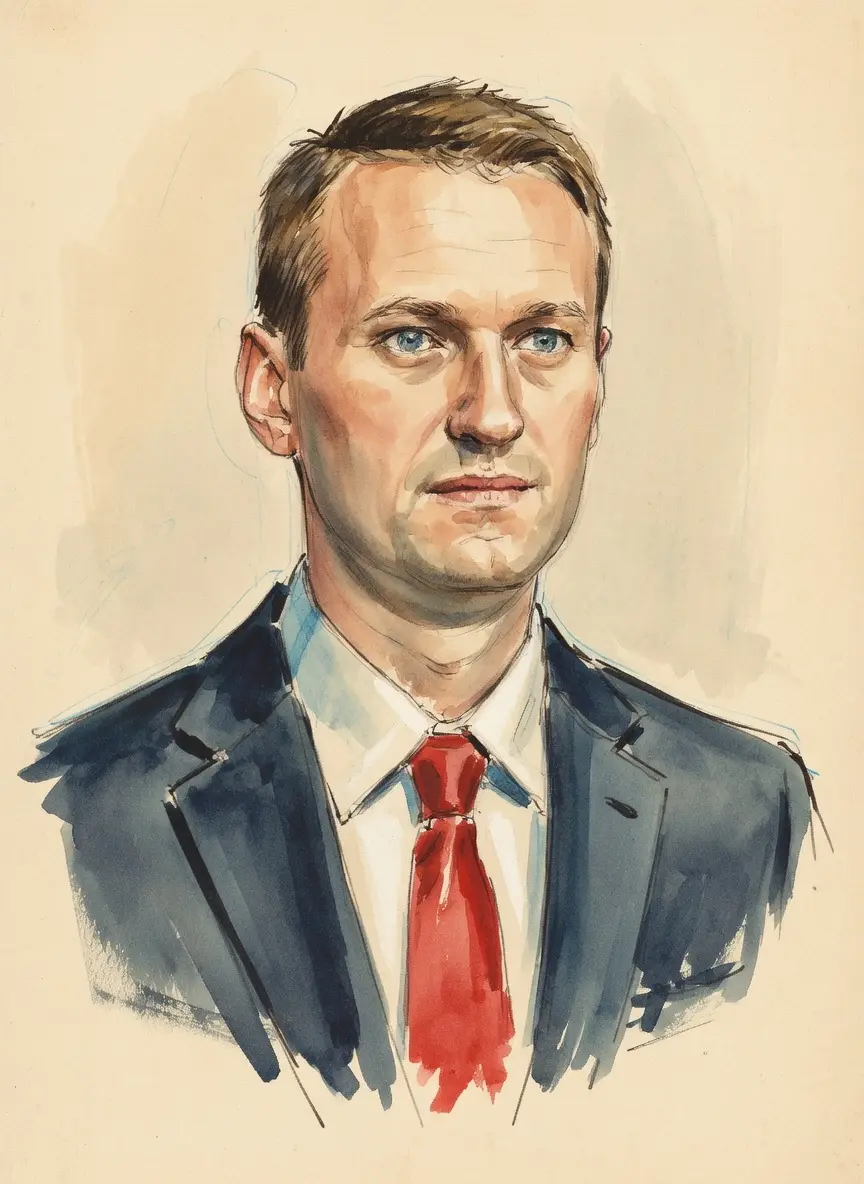
Alexei Navalny
- Known for
- opposition leader, anti-corruption activist, political prisoner
- Born in
- Butyn, Russia
- Education
- securities and exchanges, Yale University
Alexei Navalny was the most prominent face of Russian opposition, defined by his tireless fight against endemic corruption within the Putin regime. As an activist and political prisoner, his primary goal was exposing graft, famously dubbing the ruling party a "party of crooks and thieves."
He operated through investigative journalism via the Anti-Corruption Foundation (FBK), enduring multiple politically motivated arrests and a near-fatal poisoning before his death in an Arctic penal colony.
Signature Positions
Navalny’s platform centered on accountability, democracy, and foreign policy shifts:
- Corruption: Central to his activism; he founded the FBK to expose illicit enrichment by top officials, including the investigation into Putin’s Gelendzhik palace.
- Electoral Integrity: Consistently campaigned for fair elections, leading massive post-2011 protests and organizing the Smart Voting strategy to unseat ruling party members.
- Ukraine & Foreign Policy: Evolved from earlier nationalist stances to strongly condemning the Russia-Ukraine War, urging daily protests and demanding Russian withdrawal to 1991 borders.
- Nationalism: While previously identifying as a "nationalist democrat" and supporting the 2006 Russian March, he later distanced himself from these views and supported Black Lives Matter.
How Views Have Evolved
Navalny's views on nationalism and foreign policy showed significant evolution under pressure and experience.
Initially, he supported the 2008 Russo-Georgian War and expressed views on non-Russian ethnic groups that were highly controversial. He also supported the independence of Transnistria.
However, after his 2014 conviction, he strongly criticized Putin's actions in Ukraine and later condemned the 2022 invasion as a "stupid war" based on lies, urging Russians to fight the regime. His later stance showed a definite break from his earlier nationalist rhetoric.
Notable Tensions
Navalny faced criticism regarding aspects of his political past and the constant legal challenges:
- Political Persecution: Faced numerous politically motivated criminal charges, including the Kirovles case and the Yves Rocher case, leading to multiple convictions and lengthy imprisonment.
- Nationalist Past: He was expelled from the Yabloko party for nationalist views and participation in the Russian march; he later stated he regretted some of his 2007 anti-immigration rhetoric.
- International Rulings: Despite multiple rulings by the ECHR finding his trials unfair and politically motivated, Russian authorities repeatedly refused to comply with calls for his release.
Navalny was viewed by many international observers, including Freedom House and The Economist, as the most viable genuine challenger to Vladimir Putin.
His unwavering commitment to anti-corruption efforts led to widespread popular support, though he was consistently barred from official elections.
His legacy is cemented by his courageous resistance to state repression, culminating in his death in custody and recognition with the Sakharov Prize.