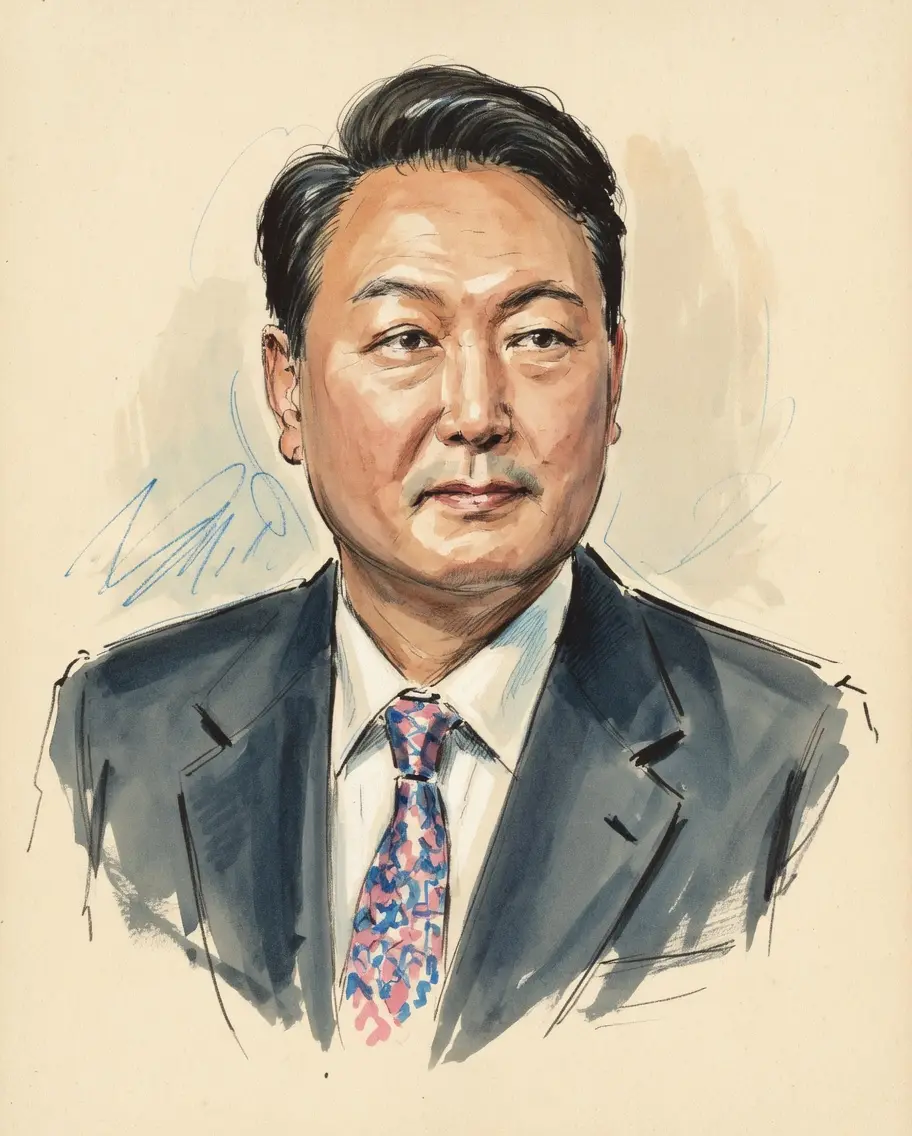
Yoon Suk Yeol on Kim Jong Un
TL;DR
Yoon Suk Yeol strongly opposed Kim Jong Un's regime, favoring a firm stance rooted in liberal democratic values over appeasement.
Key Points
During his election campaign, he stated he would teach Kim Jong Un some manners and make him "come to his senses completely".
His administration incorporated human rights advocacy into South Korean diplomatic activity and re-funded civil society work on North Korean human rights.
Tensions increased significantly under his government, leading to the suspension of the 2018 joint military agreement intended to defray border tensions.
Summary
Yoon Suk Yeol, during his presidency, maintained a decidedly hardline stance toward North Korean leader Kim Jong Un, prioritizing security and reciprocal action over the preceding administration's engagement policies. His core position emphasized that unification must be grounded in liberal democratic principles, making human rights a foundation rather than an obstacle to relations. This manifested in concrete policy shifts, such as describing North Korea as an “enemy” in defense white papers and increasing support for North Korean defectors, signaling a clear ideological contrast with the Kim regime, which itself has denounced South Korea as a primary foe.
His approach contrasted sharply with prior attempts at rapprochement, which he viewed as subservient and ultimately ineffective in curtailing North Korea's nuclear and missile advancements. Yoon sought to neutralize the nuclear threat through a strengthened alliance with the United States and enhanced South Korean defense capabilities, though he remained theoretically open to dialogue. This confrontation heightened tensions, with Kim Jong Un’s regime publicly rejecting reconciliation, halting communication channels, and ultimately casting Seoul as an adversary, particularly after Yoon’s brief imposition of martial law.
Frequently Asked Questions
Yoon Suk Yeol has adopted a strongly adversarial position toward Kim Jong Un and his regime, shifting away from engagement policies. He believes in a firm approach to counter North Korea's escalating nuclear threats. The President's policy was fundamentally rooted in liberal democratic values, which clash directly with the North Korean ideology.
Despite Yoon Suk Yeol's tough rhetoric, experts expressed skepticism that he could achieve meaningfully different results while North Korea prioritized its nuclear program. The North Korean leader responded to the hardline posture by intensifying military provocations and rejecting dialogue with the South. Ultimately, Pyongyang hardened its own stance, officially naming the South an enemy.
The President-elect focused on neutralizing the threats posed by Kim Jong Un's nuclear program by seeking a stronger security commitment from the United States. He also proposed enhancing South Korea's own missile strike capabilities. This approach was a direct response to the North's continuous weapons development despite international pressure.
Sources6
How South Korea's Next Leader Should Handle Kim Jong-un
Korea's Unification Debate: Diverging Views of Kim Jong Un and Yoon Suk-yeol
South Korea's president-elect faces North Korea's escalating nuclear threat
North Korea's Kim Jong Un warns South Korea, says US should end hostility
North Korea–South Korea relations - Wikipedia
North Korea tells South Korean President Yoon Suk-yeol to 'shut his mouth' after aid offer : r/northkorea
* This is not an exhaustive list of sources.