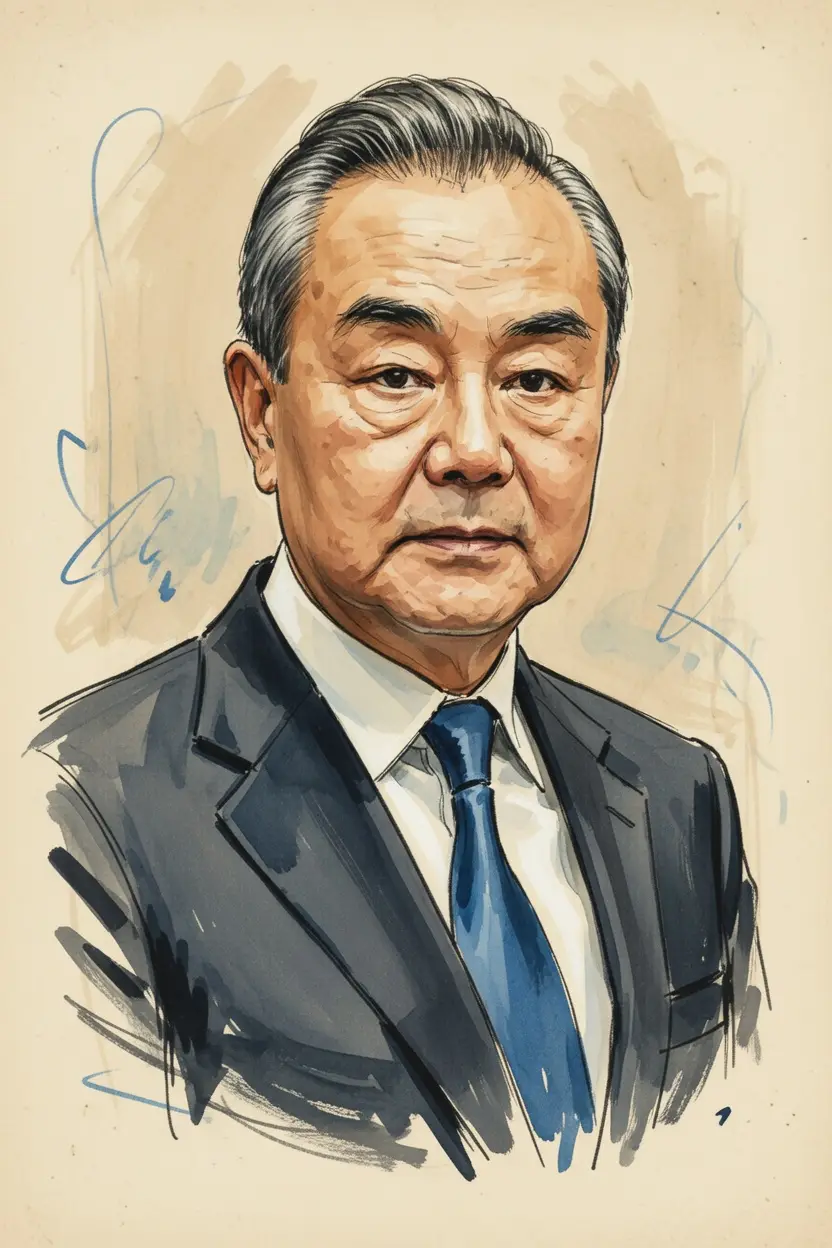
Wang Yi on Narendra Modi
TL;DR
Wang Yi views strengthening ties with Narendra Modi's India as essential for regional stability and achieving shared development goals.
Key Points
He conveyed President Xi Jinping's warm greetings to Narendra Modi and welcomed his anticipated attendance at the SCO Tianjin Summit in 2025.
He stated that the leaders' meeting in Kazan last October provided guidance for the resumption and a new start for China-India relations.
He emphasized the importance of continuing to properly manage and settle boundary questions so differences do not evolve into disputes, following the 2005 agreement on political parameters.
Summary
Wang Yi, representing China's foreign policy, has expressed a strong interest in fostering a positive and stable relationship with Indian Prime Minister Narendra Modi, particularly following a perceived turning point in late 2024. He emphasized the need to adhere to the strategic positioning of viewing India as a partner, not a rival, regardless of past disputes, including those along the boundary. This stance aligns with implementing common understandings reached by their respective leaders, aiming for a new course of improvement in bilateral ties characterized by mutual respect and sensitivity to each other's interests.
This engagement is framed within a broader context where both nations, as major developing countries, share the common task of accelerating development and contributing to a multipolar world order. Wang Yi views the steady, predictable, and constructive progress in relations as crucial for Asian stability and global benefit, underscoring a strategic imperative to manage differences prudently, especially concerning boundary issues, to ensure they do not derail the overall relationship. The recent high-level exchanges have focused on restarting dialogue mechanisms and deepening mutually beneficial cooperation across various fields.
Frequently Asked Questions
Wang Yi views the relationship as having entered a new course of improvement and development, guided by the consensus reached by the leaders. He stresses that both nations must adhere to the positioning of being partners, not rivals, for the steady long-term development of ties.
The visit, which included talks with the Prime Minister, served to prepare for high-level exchanges and implement prior understandings, notably reaching new consensus on normalized boundary management. He noted that the meeting in Kazan last October marked a turning point for better relations.
Yes, the recent engagement shows a pivot toward more pragmatic management, with both sides agreeing on conducting normalized management and control in border areas. He emphasized that boundary disputes must be prudently managed so they do not affect the overall bilateral relationship.
Sources7
Chinese Foreign Minister Wang Yi calls-on PM Narendra Modi
Indian Prime Minister Narendra Modi Meets with Wang Yi_Permanent Mission of the People's Republic of China to the UN
India's Modi meets China's top diplomat Wang as Asian powers rebuild ties | News | Al Jazeera
China and India Hold the First Meeting of China-India High-level People-to-People and Cultural Exchanges Mechanism Wang Yi and External Affairs Minister Sushma Swaraj of India Co-chair the Meeting
Wang Yi's visit turns the corner on relations with India - Friends of Socialist China
Wang Yi Speaks with Indian External Affairs Minister Subrahmanyam Jaishankar on the Phone
* This is not an exhaustive list of sources.