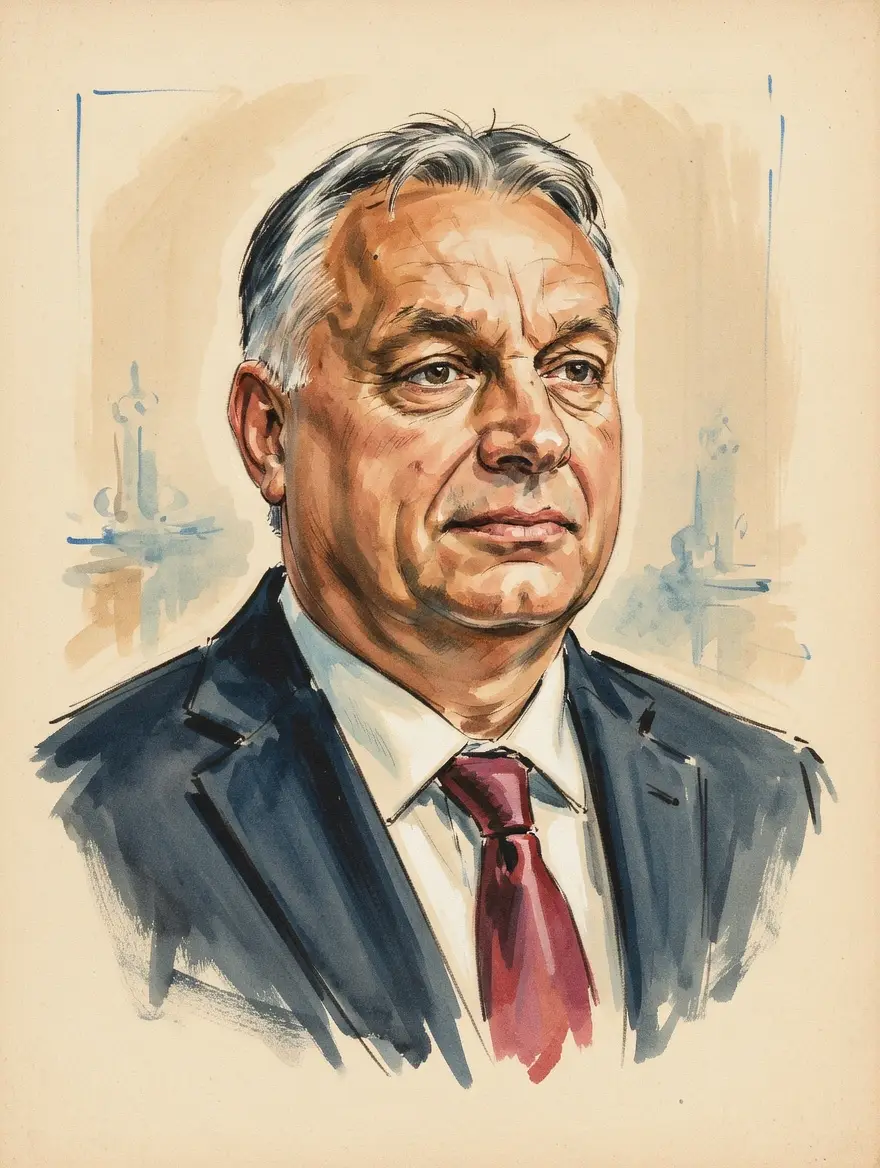
Viktor Orban on European Green Deal
TL;DR
Viktor Orban views the European Green Deal as detrimental to EU competitiveness and prefers national economic autonomy over strict centralized climate mandates.
Key Points
He argued that the Green Deal, implemented without an industrial policy, questions its meaning if it leads to production decline and job losses.
Hungary's political group, Patriots for Europe, strongly opposes the current aggressive green policies and seeks to revise the 2040 climate target.
In October 2024, during the Hungarian Presidency, he stressed that competitiveness, rather than the green transition alone, must be the Union's highest priority.
Summary
Viktor Orban consistently expresses skepticism regarding the pace and execution of the European Green Deal, arguing that its current trajectory negatively impacts European competitiveness and industry. He has asserted that decarbonization efforts, without corresponding industrial policy, risk leading to production decline and job losses, citing the automotive sector as a prime example. The Prime Minister contends that reliance on the Green Deal alone will not significantly lower energy prices before 2030, as fossil fuels will remain central, leading to unemployment instead of the promised green jobs.
His preferred approach is to prioritize national economic concerns, advocating for a policy of 'economic neutrality' that allows Hungary to conduct business based on efficiency regardless of ideological alignments. This stance positions him against the 'transatlantic' school of thought within the EU, which he suggests subordinates Europe to the United States, and also against a federalist vision of strategic autonomy. Instead, he pushes for national-basis strategic autonomy and has linked the competitiveness agenda with his Presidency's focus, seeking a competitiveness pact to counter the perceived decline.
Key Quotes
The President says that the political sense of the initiative – the European Green Deal, as an initiative – is called into question if decarbonisation leads to a decline in the industrialisation of Europe, because the result will be that we are actually relocating such jobs to other countries.
The Hungarian Presidency recommends that we should not delude ourselves into believing that a solution to this problem is offered by the green transition alone. This is not the case.
Patriots for Europe strongly oppose the EU's current green policies and have called for the suspension of the European Green Deal altogether.
Frequently Asked Questions
Viktor Orban is generally critical of the European Green Deal's current implementation, focusing on its negative impact on European industry and economic competitiveness. He advocates for a more pragmatic approach that prioritizes economic efficiency over potentially burdensome climate mandates.
His core critique—that environmental policy must be balanced with industrial and economic policy—appears consistent. However, his political group, Patriots for Europe, has gained influence, signaling an intensified opposition to the pace and stringency of the existing green agenda.
Viktor Orban, through his political allies in the Patriots for Europe group, has strongly opposed the proposed 90% emissions reduction target for 2040. He and his allies demand greater flexibility and less stringent measures than those currently proposed.
Sources7
Prime Minister Viktor Orbán's lecture at the National University of Public Service conference “European Competitiveness, Hungarian Economic Neutrality”
Orbán's Patriots to Lead EU 2040 Climate Target Talks - Hungarian Conservative
Address by Prime Minister Viktor Orbán at a plenary session of the European Parliament
The European Green Deal is facing consistent erosion from within
European Green Deal - Wikipedia
From “Returning to Europe” to “Occupying Brussels”: The EU was crucial to Viktor Orbán's rise — now, he wants to remake it in his own image
Open Letter to EU Decision-makers on the EU contribution to the UNFCCC COP29 and the advent of a Global Green Deal
* This is not an exhaustive list of sources.