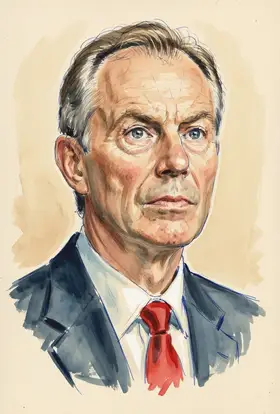
Tony Blair on Devolution
TL;DR
Tony Blair saw devolution as a necessary political act to prevent secession, but later admitted its weaknesses allowed independence calls to persist.
Key Points
In 2004 cabinet discussions, he claimed that devolution had “lanced the boil of separatism” in Scotland and Wales.
He admitted in 2021 that a weakness in the approach was failing to build cultural ties to emphasize what the component countries have in common.
He argued that had Labour not implemented devolution in 1997, the union would already be in tatters.
Summary
Tony Blair championed the establishment of devolved administrations for Scotland and Wales following referenda in 1997, viewing it as both a principled move to bring decision-making closer to the people and a vital political necessity to stave off the greater threat of secession, particularly from Scotland. The policy resulted in the Scottish Parliament and National Assembly for Wales being established in 1999, granting them executive authority over areas like health and education. He believed that without this reform, the union would already be in tatters, asserting in 2004 that the settlement had already “lanced the boil of separatism.”
However, since leaving office, the former Prime Minister has acknowledged significant shortcomings in the execution of the policy, admitting that the administration did not focus enough on building the cultural ties necessary to bind the UK together. He conceded that devolution had not ended the argument for independence, recognizing that it provided institutions nationalists could leverage, a view he held strongly when reflecting on the issue around 2019 and 2021. He maintained that the union can survive but needs active and passionate defense, and suggested that the subsequent political disruption caused by Brexit placed an unforeseen and severe strain on the constitutional settlement he put in place.
Key Quotes
The purpose of devolution was to bring about a new settlement between the constituent parts of the UK so that decision making was brought closer to the people who felt a strong sense of identity. And politically, also, to ward off the bigger threat of secession.
Frequently Asked Questions
Tony Blair’s primary purpose for devolution was to institute a new constitutional settlement within the UK. This was partly to bring decision-making closer to local populations and critically, to politically ward off the larger threat of secession in constituent parts like Scotland. He felt it was necessary politically to prevent the support for independence from becoming unstoppable.
Yes, the former Prime Minister has admitted that one weakness in the approach was not adequately focusing on building the cultural ties and emphasizing commonalities between the different nations of the UK. He conceded that this failure meant the argument for independence was not ended by the settlement as hoped.
He believes that Brexit poses an existential threat to the United Kingdom, adding a severe strain to the material holding it together. He has stated that a hard Brexit would particularly stimulate nationalist sentiment in Northern Ireland and Scotland, potentially making calls for independence much harder to resist.
Sources9
Blair's bombshell: How Scottish devolution blew up the British general election
Tony Blair said devolution lanced the boil of separatism in ...
Tony Blair said devolution lanced the boil of separatism in Wales : r/ukpolitics
Tony Blair: Devolution, Brexit and the future of the Union
Tony Blair admits 'weaknesses' of devolution failed to end calls for independence
Tony Blair believed he had 'lanced the boil of separatism' in Scotland
United Kingdom - Blair, Politics, Devolution | Britannica
Tony Blair is still deluded about devolution - UnHerd
After 20 years of Devolution, Can the Union Survive? – Tony Blair
* This is not an exhaustive list of sources.