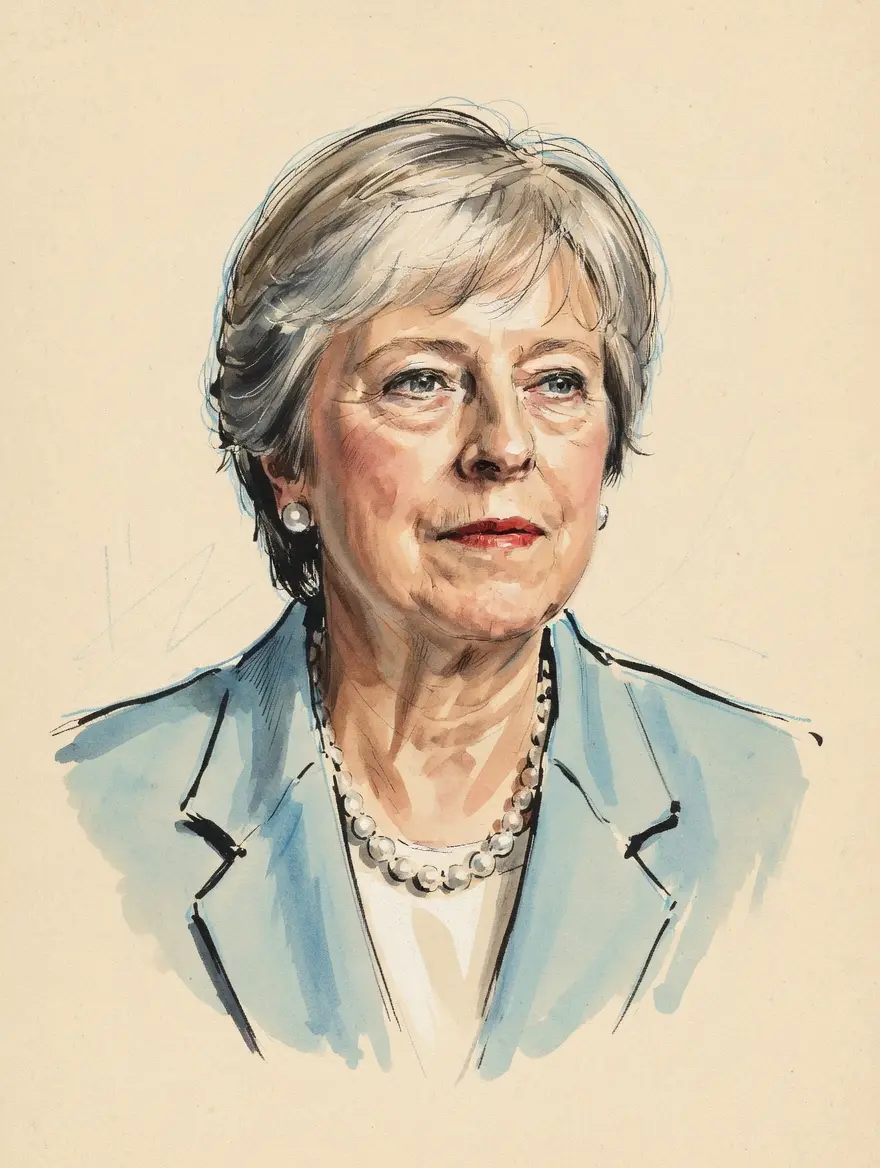
Theresa May on One-Nation Conservatism
TL;DR
Theresa May strongly asserted her commitment to One-Nation Conservatism as the philosophical core of her leadership and government agenda.
Key Points
She explicitly stated her intention to lead in the 'one-nation spirit' on July 13, 2016.
Theresa May identified 'just about managing' (JAMs) as a key demographic requiring governmental focus.
A group of moderate MPs later formed a 'One Nation Group' in March 2019 to counter a hard-Brexit faction.
Summary
Theresa May explicitly framed her approach to leadership and governance through the lens of One-Nation Conservatism upon assuming office in July 2016, asserting she would lead 'in that spirit' of her predecessor. Her initial speeches indicated a desire to break from the perceived individualism and market fundamentalism of the Thatcherite era, instead embracing the state's role in creating a fairer society and promoting social harmony. A key feature of her interpretation was focusing on the 'just about managing' families, whom she identified as being left behind by the political elite. This approach, which shared elements with Christian democracy, sought balance by supporting private enterprise while emphasizing the state's capacity to be a 'force for good' and intervene when markets failed to serve the general populace.
However, the practical application and consistency of May's One-Nation stance were often debated, particularly in the context of the consuming issue of Brexit and internal party opposition. While her rhetoric, such as the 'Shared Society' speech, championed community and tackling 'burning injustices,' her economic policies often remained tethered to fiscal discipline and deficit reduction, creating an attempt to square the circle between interventionism and austerity. Furthermore, her eventual hard-Brexit stance, which alienated more moderate One-Nation Tories, led many commentators to conclude that her initial One-Nation appeal was largely rhetorical or cosmetic, designed to unite the party and country following the referendum, rather than a fully implemented, enduring ideological structure.
Frequently Asked Questions
Theresa May strongly positioned herself as a champion of One-Nation Conservatism when she became Prime Minister, using it to frame her agenda for national unity post-Brexit. She expressed a belief in the state's role to intervene to help ordinary working people, which is central to the ideology. However, critics argue that her commitment was often more rhetorical than fully realized in policy.
Yes, Theresa May claimed to be leading her government in the 'one-nation spirit' in her first statement as Prime Minister on July 13, 2016. She consciously sought to distinguish her brand of Conservatism from the perceived individualism of the preceding decades. While she claimed this ideology, she was not a member of the official One Nation Group.
Theresa May linked the One-Nation concept to addressing the grievances of those left behind, specifically identifying the 'just about managing' (JAMs) group. Her focus was on demonstrating that government could be a force for good to promote fairness and opportunity for everyone, regardless of their background.
Sources5
Defining Mayism: one nation Conservatism with a hint of papal purple and a dash of Labour red
Was Theresa May a One Nation Conservative?
One-nation conservatism - Wikipedia
The Politics Shed - On Nation Conservatism
One Nation conservatism can make a success of Brexit | Members of the One Nation caucus of Conservative MPs
* This is not an exhaustive list of sources.