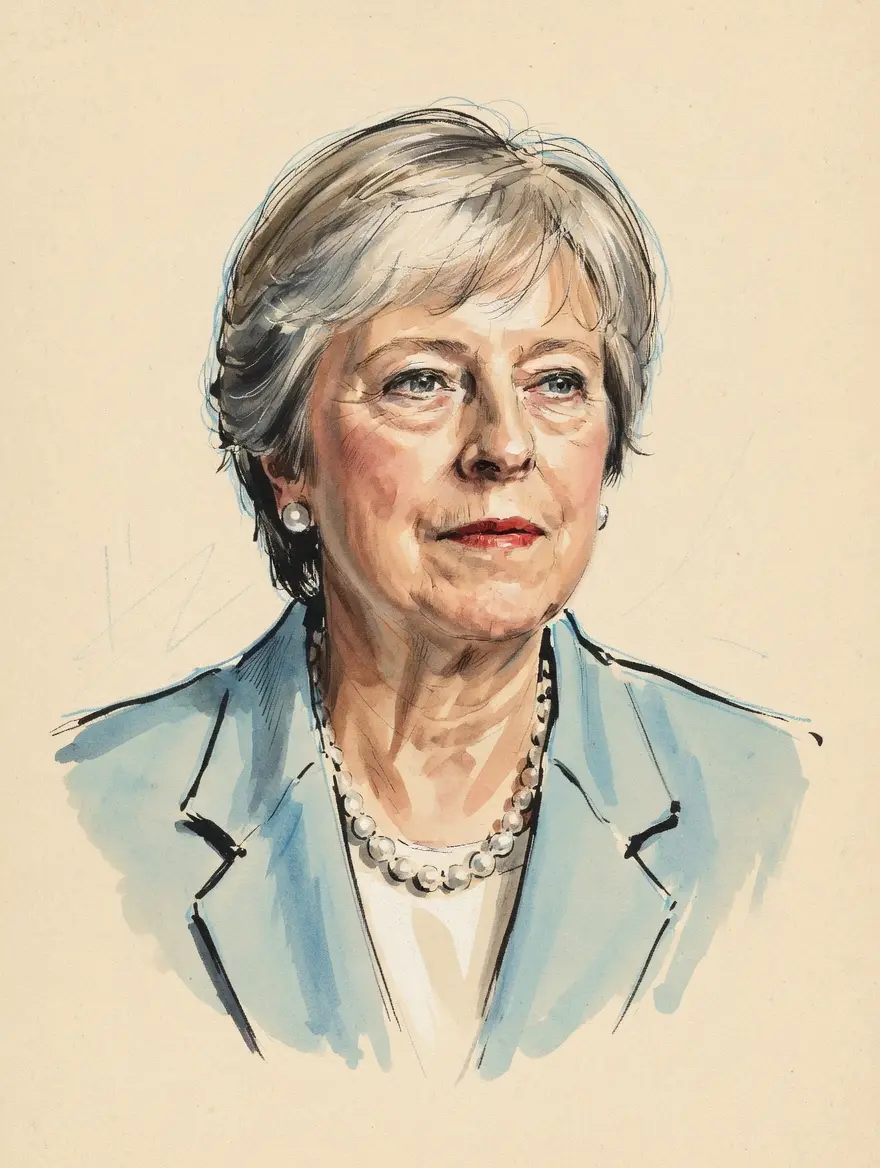
Theresa May on Brexit
TL;DR
Theresa May consistently aimed to deliver the 2016 referendum result through a negotiated Withdrawal Agreement with the EU.
Key Points
She triggered Article 50 in March 2017, formally beginning the two-year process of withdrawing the United Kingdom from the European Union.
Her final proposed Brexit deal in May 2019 included ten points of offer, such as committing the government to seek Alternative Arrangements for the Irish backstop by December 2020.
Her premiership was dominated by Brexit negotiations, which saw her Withdrawal Agreement defeated by Parliament three times before her resignation announcement on May 24, 2019.
Summary
Theresa May's core Brexit position was to implement the outcome of the 2016 referendum, which she accepted despite personally supporting the Remain campaign. Her central objective as Prime Minister was to secure a withdrawal agreement that honoured the vote while forging a new, deep and special partnership with the European Union. She insisted on leaving the Single Market and ending the jurisdiction of the European Court of Justice to regain sovereignty and control immigration, which led to significant domestic political challenges. The complexity of achieving this balance, often described as a 'two-level game,' resulted in her government's repeated failures to secure parliamentary ratification for her proposed deal.
Her approach evolved from a hardline stance to attempts at cross-party compromise, as the lack of a majority in the 2017 general election fatally weakened her negotiating hand domestically and in Brussels. She eventually offered a deal containing ten points, including compromises on workers' rights, environmental protections, and a vote on a second referendum, in a final bid to secure a consensus. Ultimately, her inability to reconcile the demands of Brexiteers, Remainers, and the border issue with Northern Ireland led to her resignation in May 2019, leaving the final Brexit outcome uncertain.
Frequently Asked Questions
Theresa May's main goal as Prime Minister was to deliver the result of the 2016 referendum, which meant taking the United Kingdom out of the European Union. She consistently sought to achieve this through a negotiated Withdrawal Agreement rather than a no-deal exit.
Yes, Theresa May's public stance on Brexit evolved. Although she had campaigned for Remain, upon becoming Prime Minister she adopted a firm line for a full exit, prioritizing ending the free movement of people over remaining in the Single Market.
The former Prime Minister announced her resignation after her central Brexit deal failed to gain support from Parliament on three separate occasions. She concluded that a new leader was needed to secure the necessary cross-party support to move the process forward.
Sources5
PM's speech on new Brexit deal: 21 May 2019
Theresa May - Wikipedia
Brexit endgame: A withdrawal agreement for Theresa May, but no clarity on Brexit | Brookings
How Brexit became a 'glass cliff' for Theresa May | PBS NewsHour
Brexit, or Theresa May's Headache - OpenEdition Journals
* This is not an exhaustive list of sources.