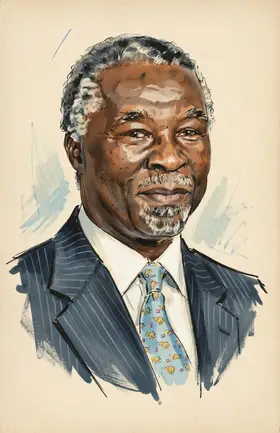
Thabo Mbeki on Zimbabwe
TL;DR
Thabo Mbeki strongly favored a policy of 'quiet diplomacy' and constructive engagement with Robert Mugabe's regime to encourage internal reform.
Key Points
He was the primary mediator between ZANU-PF and the Zimbabwean opposition during the 2000s political crisis.
Mbeki's government-endorsed observer missions controversially endorsed the results of the 2002 presidential election in Zimbabwe.
He mediated and brokered the Global Political Agreement (GPA) power-sharing deal signed on 15 September 2008.
Summary
Thabo Mbeki, during his presidency, adopted a policy of non-confrontational "quiet diplomacy" towards the escalating political and economic crisis in neighboring Zimbabwe under Robert Mugabe's rule. This stance involved refusing to condemn the ZANU-PF regime or implement sanctions, instead focusing on persuading Mugabe to accept gradual political reforms through mediation. Mbeki's approach, sometimes referred to as the "Mbeki doctrine," was rooted in an unwavering determination to respect the right of Zimbabweans to determine their own future and was deeply opposed to any external force, including South Africa, imposing solutions or pursuing regime change.
This policy attracted widespread domestic and international criticism, with opponents arguing it was passive and destructive, especially after South African observer missions endorsed contested election results. However, Mbeki maintained that his engagement, which included publicly criticizing some Zimbabwean actions, was the only contribution that would not lead to an end in dialogue, contrasting his approach with Western preference for regime change. Despite the controversy, he successfully mediated the 2008 Global Political Agreement power-sharing deal between ZANU-PF and the opposition MDC.
Frequently Asked Questions
Thabo Mbeki's core policy was one of 'quiet diplomacy' and constructive engagement with Robert Mugabe's government. He refused to issue public condemnations or support sanctions against the regime, preferring to work behind the scenes to persuade ZANU-PF towards political reform.
He strongly believed in the principle of African solidarity and the right of Zimbabweans to determine their own future without external imposition. He was firmly opposed to what he saw as Western-backed regime change efforts in the country.
Yes, his approach faced extensive criticism both in South Africa and internationally, with opponents labelling it passive or even complicit with human rights abuses. Critics argued it allowed the crisis to worsen before Mbeki finally mediated the 2008 power-sharing deal.
Sources6
South Africa's policy towards Zimbabwe: synopsis by Thabo Mbeki 22 February 2016
Thabo Mbeki's quietly destructive policy on Zimbabwe | ISS Africa
Former President Mbeki Claims Former Prime Minister Blair Pressured Him to Invade Zimbabwe
Thabo Mbeki
Zuma v. Mbeki On Zimbabwe - Foreign Policy Association
Zimbabwe/South Africa: President Mbeki should be more publicly active in resolving the Zimbabwean crisis
* This is not an exhaustive list of sources.