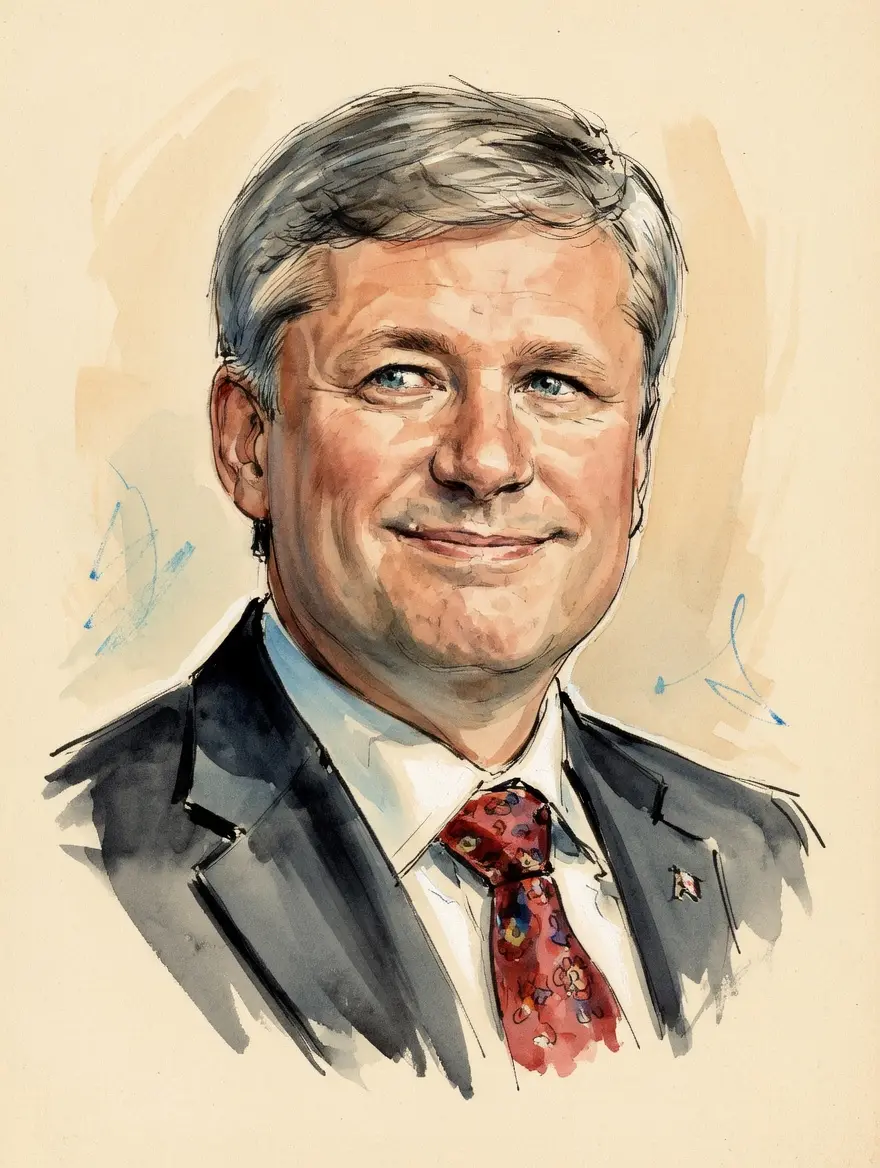
Stephen Harper on Immigration
TL;DR
Stephen Harper favored an activist immigration policy focused on labour market needs while strictly controlling illegal entry.
Key Points
Between 2006 and 2016, the percentage of immigrants admitted based on needed skills increased from 40% to about 66%.
The government introduced Conditional Permanent Residence for sponsored spouses, making their status revocable if the relationship ended within two years of arrival.
In June 2013, the Faster Removal of Foreign Criminals Act reduced eligibility for an appeal of removal orders to those sentenced to less than six months' imprisonment.
Summary
Stephen Harper, as Prime Minister, viewed Canadian immigration policy as needing to be more activist, moving beyond passively accepting applications to actively recruiting individuals to fill specific skill shortages within the economy. He noted that a significant portion of Canadian immigration, unlike in the United States, was historically based on skills and labour force considerations, and his government increased this percentage. A core belief was that maintaining public support for legal immigration relied heavily on successfully controlling illegal immigration, stating that a high percentage of undocumented immigrants would make the system unpopular.
His administration implemented institutional and procedural changes, such as introducing Ministerial Instructions and the Express Entry system, which increased executive authority in administering immigration programs and reduced predictability for applicants. Furthermore, his government employed a "discourse of distrust" regarding refugee and immigrant claimants, introducing measures that restricted access to refugee appeals and reduced health care benefits for certain claimants, though some of these legislative initiatives faced judicial challenges. He also vowed that temporary foreign workers would not be allowed to become a permanent underclass without a path to citizenship.
Key Quotes
We're … going to try and find ways that we can make our immigration policy more activist in nature… We've got to do more in the economy of the future than just passively accept applications. We have to recruit people to come to this country, particularly when there are specific skill shortages that are developing.
For over six decades, these malicious measures, aimed solely at the Chinese, were implemented with deliberation by the Canadian state," said the Prime Minister. "This was a grave injustice, and one we are morally obligated to acknowledge."
Frequently Asked Questions
Stephen Harper emphasized making immigration policy more activist to recruit immigrants specifically for skills needed in the labor market. He believed this connection between policy and economic needs was key to maintaining public support for immigration.
He expressed strong disapproval of illegal immigration, stating that a large presence of undocumented immigrants would negatively impact the popularity of the legal immigration system. He felt it was too easy in the U.S. to be an illegal immigrant and too difficult to be a legal one.
Yes, his government implemented the Express Entry system, which shifted away from a 'first come, first served' model to a pre-screening system based on a points-based Comprehensive Ranking System. This was implemented using Ministerial Instructions to shape priorities.
Sources8
Stephen Harper on America's Immigration Problem, Free Trade, and Fighting Tough
Draw it! Compare immigration numbers under the Liberals and Conservatives
A Failed Discourse of Distrust Amid Significant Procedural Change: The Harper Government's Legacy in Immigration and Refugee Law
Harper on immigration
Stephen Harper Vows Foreign Workers Will not Become 'Permanent Underclass'
Canada's Long-Standing Openness to Immigration Comes Under Pressure
'I have no time for illegal immigration,' Stephen Harper says on U.S. podcast
Prime Minister Harper Offers Full Apology for the Chinese Head Tax
* This is not an exhaustive list of sources.