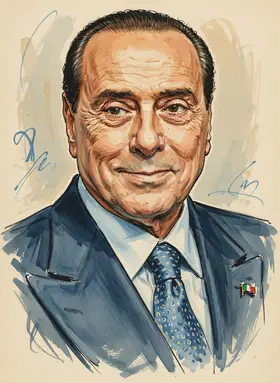
Silvio Berlusconi on Media Ownership
TL;DR
Silvio Berlusconi built and utilized a massive, concentrated media empire to gain and maintain significant political influence in Italy.
Key Points
He controlled three of the seven national television channels in Italy via his company Mediaset.
His media holdings, including Mediaset, were alleged to have given him significant political advantage during elections in 1994 and 2001.
Legislation passed in 1990 compelled him to divest from the publishing group Mondadori after he had gained a controlling interest post-1980s media industry liberalization.
Summary
Silvio Berlusconi's political power was deeply intertwined with his role as a media tycoon, culminating in an unprecedented concentration of media power in post-war Western democratic Italy. He founded Mediaset, a private broadcasting company that rapidly grew to command a significant portion of the Italian viewing audience, challenging the state monopoly held by RAI. This convergence of media and political power was enabled by legal decisions that allowed private, national networks and later, new media legislation that he supported as he entered politics. Berlusconi used his media assets, particularly television, to promote his political image and agenda, leading to widespread allegations of conflict of interest throughout his premierships.
His media empire extended beyond broadcast television to include print holdings, though the Italian press offered more diverse viewpoints due to a tradition of editorial autonomy. Despite criticism, Berlusconi was often able to maintain control over his media interests, sometimes by influencing legislation or management at the state broadcaster, RAI, which had a history of political partitioning called lottizzazione. The sheer scale of his combined private and indirect influence over the media landscape was a defining feature of his political reign, creating a situation critics viewed as harmful to democratic pluralism.
Frequently Asked Questions
Silvio Berlusconi's main media holding company was Fininvest, through which he controlled the Mediaset group. This group encompassed his major private broadcasting assets.
No, the former Prime Minister's promises to sell off his personal media assets to avoid conflicts of interest were reportedly never fulfilled during his time in office. This lack of divestment remained a source of controversy.
He was widely criticized for using his vast media empire to secure and maintain his political power, especially by giving himself highly favorable coverage on his television networks. This created a massive conflict of interest between his roles as a media mogul and as head of government.
Sources7
Learning From Silvio Berlusconi's Reign Over Media
Italy
Controversies surrounding Silvio Berlusconi
'Berlusconi's Italy': the media between structure and agency
Freedom of the Press 2013 - Italy
Media and Political Power in Silvio Berlusconi's Italy
Media Ownership Regulations: A Comparative Perspective
* This is not an exhaustive list of sources.