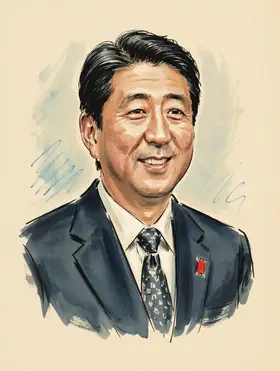
Shinzō Abe on Immigration
TL;DR
Shinzō Abe accepted the necessity of increasing foreign workers to combat labor shortages caused by Japan's demographic crisis.
Key Points
In 2018, his government passed legislation to accept up to 340,000 immigrant workers over five years to address labor shortages.
He maintained that these reforms were intended solely to combat labor shortages by accepting foreign workers for a limited time, not as formal immigration policy.
During his tenure, Japan received few refugees, with Abe stating in 2015 that Japan must "solve its own problems before accepting immigrants."
Summary
Shinzō Abe, while personally conservative and often distancing his policy from the term "immigration," recognized the severe economic threat posed by Japan's aging population and shrinking workforce. This recognition drove his administration to make notable, albeit carefully framed, shifts toward accepting more foreign labor. His core stance was that these workers were needed to keep the economy and infrastructure sustainable, often emphasizing that they would work for a limited time and then return home, rather than establishing long-term settlement policies. Key evidence of this shift was the 2018 legislation which aimed to bring in hundreds of thousands of blue-collar workers over five years to fill shortages in sectors like construction and agriculture.
The context for this policy evolution was Japan’s demographic crisis, which led Abe to champion reforms intended to boost the labor supply. However, critics noted that the reforms primarily served corporate interests seeking cheaper labor, exemplified by the structure of the visa types that often restricted family reunification or permanent residency for lower-skilled roles. Despite this pragmatism driven by economic necessity, Abe's government maintained a historically restrictive stance on refugees and asylum seekers, reflecting a broader political caution regarding large-scale, permanent immigration.
Key Quotes
“Abenomics is womenomics.”
“When I was prime minister, I had a direct conversation with President Xi of China. I specifically told him never to underestimate Japan's unwavering determination as to our right over the Senkaku Islands.”
Frequently Asked Questions
Shinzō Abe's position was one of pragmatic acceptance of an increased number of temporary foreign workers to alleviate critical labor shortages stemming from Japan's demographic decline. He was hesitant to use the term "immigration," preferring to frame the influx as a temporary measure to support the economy. While he pushed for reforms to attract skilled workers, his fundamental stance on large-scale, permanent immigration remained cautious.
Yes, Shinzō Abe oversaw a significant, albeit qualified, loosening of Japan's traditionally strict foreign worker rules. This was driven by economic necessity to counter the aging population and workforce shrinkage. While he had historically been resistant to immigration, his administration in 2018 introduced new visa categories to allow in hundreds of thousands of blue-collar workers.
In 2015, Shinzō Abe publicly stated that Japan must first focus on solving its domestic issues before accepting immigrants, specifically regarding refugees from Middle East and African conflicts. However, regarding economic migrants, his later policy clearly indicated that the labor shortage crisis necessitated bringing in foreign workers to sustain the economy.
Sources8
An Immigration Bill That Puts Immigrant Workers Last
Improved Immigration: Japan's Solution to Its Population Crisis
Japan's baby boom among foreign-born population spotlights demographic timebomb
Shinzo Abe - Wikipedia
Japan Times: Aging Population Needs Immigrants
On the Brink of Demographic Crisis, Governments in East Asia Turn Slowly to Immigration
Former Japanese Prime Minister Shinzō Abe Argues That Stability In The Indo-Pacific Region Depends On Compliance With Rule Of Law
How Shinzō Abe plans to save Japan's economy
* This is not an exhaustive list of sources.