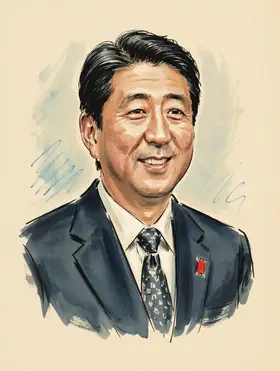
Shinzō Abe on Donald Trump
TL;DR
Shinzō Abe cultivated a strong, pragmatic personal and political alliance with Donald Trump centered on strengthening the US-Japan relationship.
Key Points
He met with President-elect Trump in November 2016 shortly after the election, cutting short an international summit to do so.
The two leaders engaged in 'golf diplomacy' during a formal meeting at Mar-a-Lago in February 2017 to discuss security.
He took the lead in reinstating the Trans-Pacific Partnership as the CPTPP after the president withdrew the US from the original agreement in early 2017.
Summary
Shinzō Abe's position regarding Donald Trump was characterized by a strong and visible effort to build a close personal and working relationship with the American president. Evidence of this commitment was apparent shortly after Trump's election in November 2016, when Abe cut short an international summit to meet the then president-elect at Trump Tower. Following the inauguration, the two leaders met formally at Mar-a-Lago in February 2017 to discuss security, with Abe pledging continued commitment to the Japan–United States relations. This relationship was often described as a unique bond between world leaders, sometimes involving shared leisure like golf.
The strategic implication of this closeness was multifaceted, serving Abe's core foreign policy goals while navigating Trump's unpredictable stance on multilateral agreements. Abe was noted for his willingness to put Japan's national interest above personal pride in cultivating the relationship. Crucially, when the president withdrew the US from the Trans-Pacific Partnership (TPP), Abe took the lead in salvaging the deal into the Comprehensive and Progressive Agreement for Trans-Pacific Partnership (CPTPP). This effort was seen as a way to counter protectionist pressures and maintain a broad free trade structure, even without the US.
Frequently Asked Questions
Shinzō Abe viewed Donald Trump as an essential partner for strengthening the US-Japan alliance and advancing his foreign policy goals. He actively worked to build a close, personal rapport with the American president. This pragmatic approach allowed Abe to secure US support for shared security interests despite Trump's transactional foreign policy.
No, Shinzō Abe did not agree with all of the president's positions, most notably when the US abandoned the Trans-Pacific Partnership. However, he pursued a policy of close engagement regardless of this disagreement. Abe worked to preserve the essence of the trade deal after the US withdrawal.
The former prime minister stressed the importance of the US-Japan relationship under the new administration, pledging Japan would be more committed. He reassured the president of this commitment during their early meetings. Abe even addressed the US Congress, referring to the alliance as the 'Alliance of Hope'.
Sources4
On Trump's meeting with Japanese Prime Minister Shinzō Abe
Shinzo Abe - Wikipedia
Plenty to talk about as Abe meets with Trump at Mar-a-Lago
Shinzō Abe and the Future of Japanese Democracy
* This is not an exhaustive list of sources.