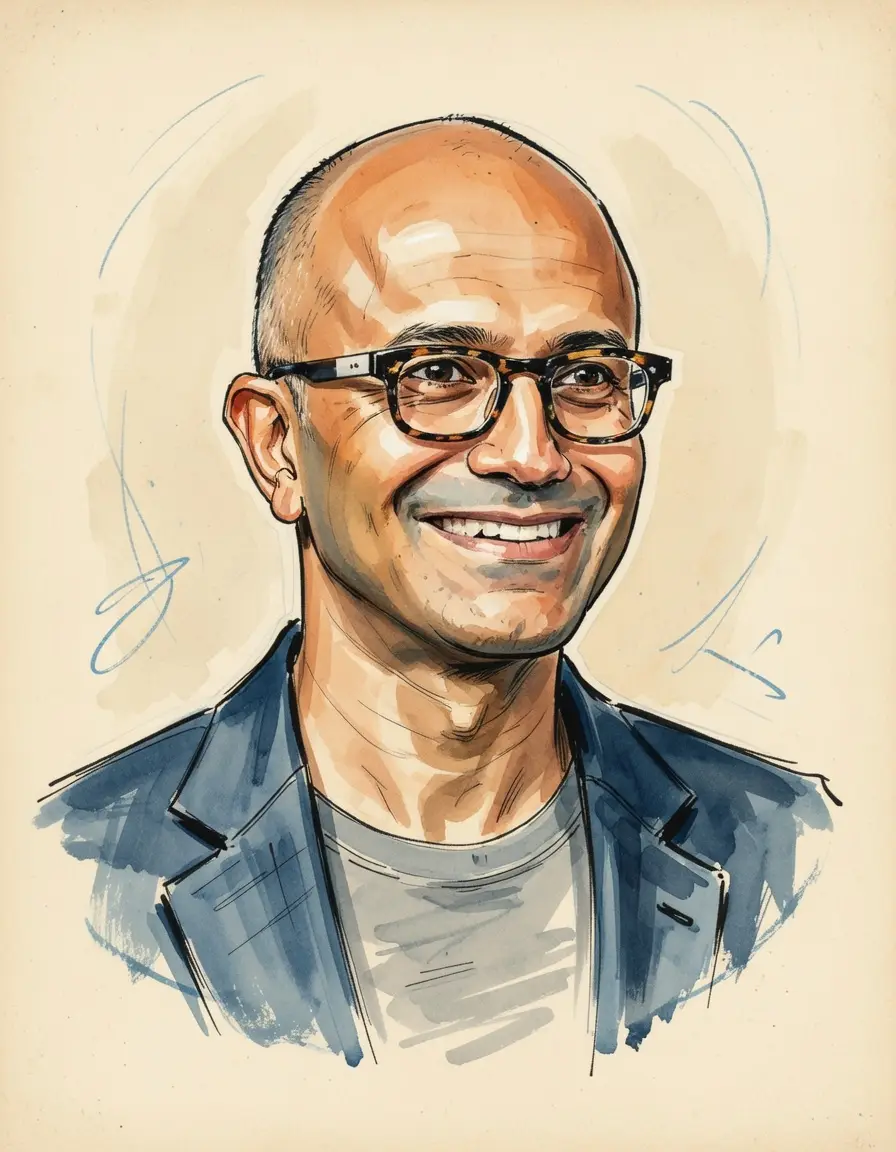
Satya Nadella on Immigration
TL;DR
Satya Nadella strongly advocates for an enlightened immigration policy that supports national interests and talent acquisition.
Key Points
He identified immigration reform as his top policy priority in a 2017 interview, emphasizing the need for an enlightened approach.
He advocated for countries to define their borders while simultaneously hoping for policies that support immigration to benefit the economy.
His personal history involves navigating the F-1 student visa, H-1B work authorization, and making a notable choice to relinquish a Green Card for family reunification.
Summary
Satya Nadella, whose own career trajectory was enabled by skilled immigration pathways, has been a vocal proponent of policies welcoming global talent to the United States. He asserts that immigration policy should align with a nation's long-term competitive interests, a position shaped by his personal journey from India to CEO of Microsoft. He has called for countries to define their borders and set policy, but expressed hope for enlightened approaches that retain and attract global innovators.
His views have often been framed in the context of necessary reforms to address backlogs in employment-based visa categories that impact highly skilled workers. He has publicly articulated his hope for an environment where immigrants can aspire to leadership roles, reflecting his belief in the economic benefit derived from such talent. The CEO identified immigration reform as a top policy priority in the past, framing it as essential for maintaining global competitiveness in technology and innovation.
Frequently Asked Questions
Satya Nadella's main stance is that immigration policy must be enlightened and align with a nation's long-term competitive interests. Having benefited from the US system himself, he advocates for retaining and attracting global talent to foster innovation and economic growth.
His fundamental support for policies that enable highly skilled immigration has remained consistent, rooted in his personal success story. However, his specific calls for reform may have evolved based on current bureaucratic challenges facing employment-based visas over time.
He has acknowledged that every country will and should define its borders, protect national security, and set immigration policy accordingly. His focus, however, has been on ensuring that the resulting policies are constructive for economic competitiveness.