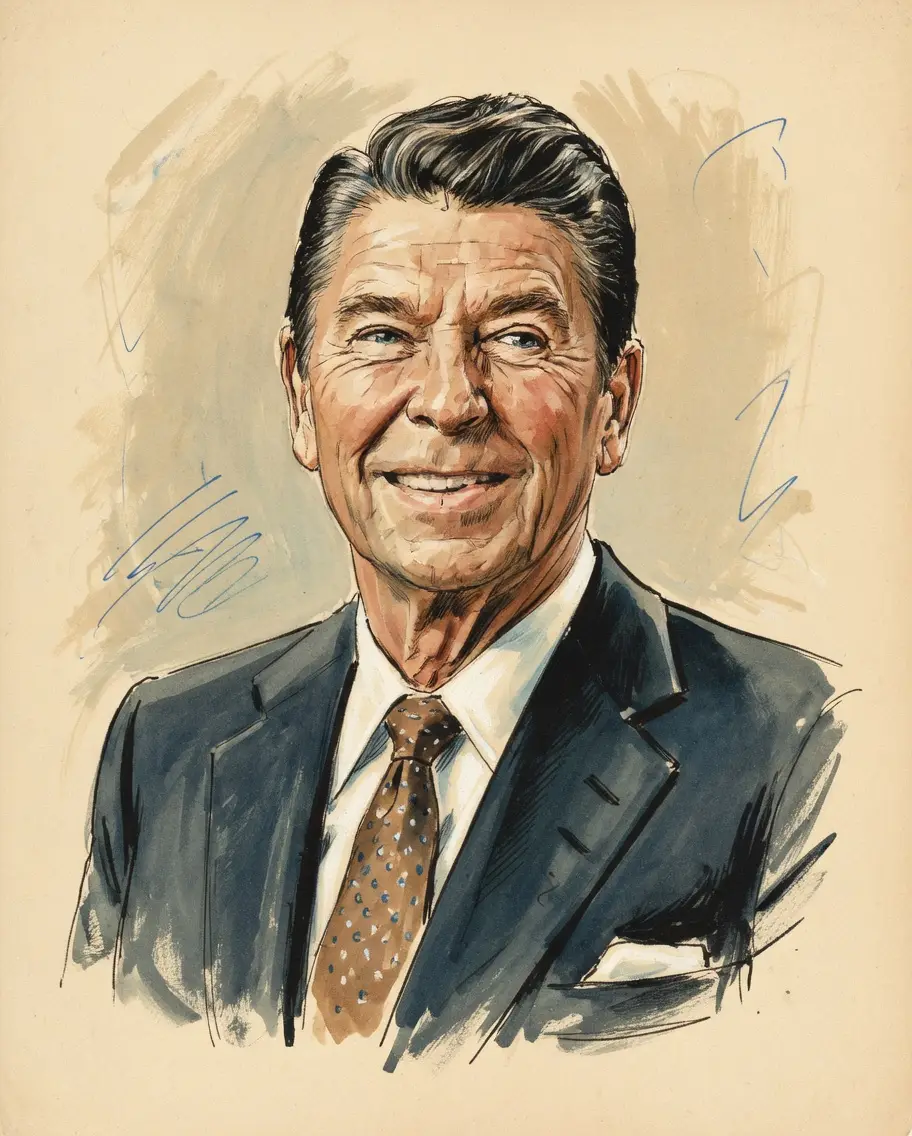
Ronald Reagan on Taxes
TL;DR
Ronald Reagan strongly advocated for radical simplification and substantial reduction of marginal tax rates across the board to spur economic growth.
Key Points
He signed the Economic Recovery Tax Act of 1981, which reduced individual income tax rates by nearly 25 percent.
His 1985 tax reform proposal sought to simplify the code by replacing 14 tax brackets with a three-bracket system (15, 25, and 35 percent).
He asserted that deficits resulted from excessive government spending rather than insufficient taxation, stating, "We don't have deficits because people are taxed too little."
Summary
Ronald Reagan consistently positioned himself as a champion for lower, simpler, and fairer taxes, viewing significant rate reductions as crucial for economic vitality and individual incentive. He argued that the existing system, modified numerous times, had become complicated, cluttered with loopholes favoring the powerful, and treated people's earnings unfairly, eroding trust in government. His core belief was that empowering families and firms with financial resources through tax cuts would unleash the entrepreneurial spirit, leading to job creation, lower inflation, and reduced interest rates, a philosophy labeled Reaganomics.
His proposals included moving from a system with 14 brackets to a simple three-bracket system with lower maximum rates, eventually aiming for the lowest overall marginal rates of any major industrial democracy. Furthermore, he sought to protect families by doubling personal exemptions and increasing the standard deduction, indexing them to inflation. While promoting broad cuts, he also reversed some earlier corporate tax breaks following revelations of widespread corporate tax avoidance, showing a willingness to close loopholes and ensure a minimum tax to maintain fairness.
Key Quotes
The most effective method of increasing revenues in the long term is to reduce taxes.
We don't have deficits because people are taxed too little. We have deficits because big government spends too much.”
Frequently Asked Questions
Ronald Reagan’s core philosophy centered on the idea that high taxes stifle economic activity and that lowering marginal rates incentivizes work, savings, and investment. He believed that reducing tax burdens would unleash the entrepreneurial spirit, leading to broader prosperity and job creation, a concept encapsulated in his supply-side economic policies.
Yes, despite championing broad tax cuts, Reagan's administration later pursued major tax reform that closed numerous loopholes. This was partly motivated by data showing profitable corporations were paying little to no federal income tax, which he felt undermined fairness.
During his presidency, Reagan implemented significant tax reductions, most notably the Economic Recovery Tax Act of 1981, which lowered individual income tax rates across the board. He also aimed to simplify the code and increased deductions for families and savings vehicles like IRAs.
Sources6
Address to the Nation on Tax Reform - May 1985
Economic Policy | The Ronald Reagan Presidential Foundation & Institute
Ronald Reagan's Legacy: Advocating for Lower Property Taxes
Address to the Nation on Tax Reform
A Surprising Idea from the Era of Reaganomics – ITEP
* This is not an exhaustive list of sources.