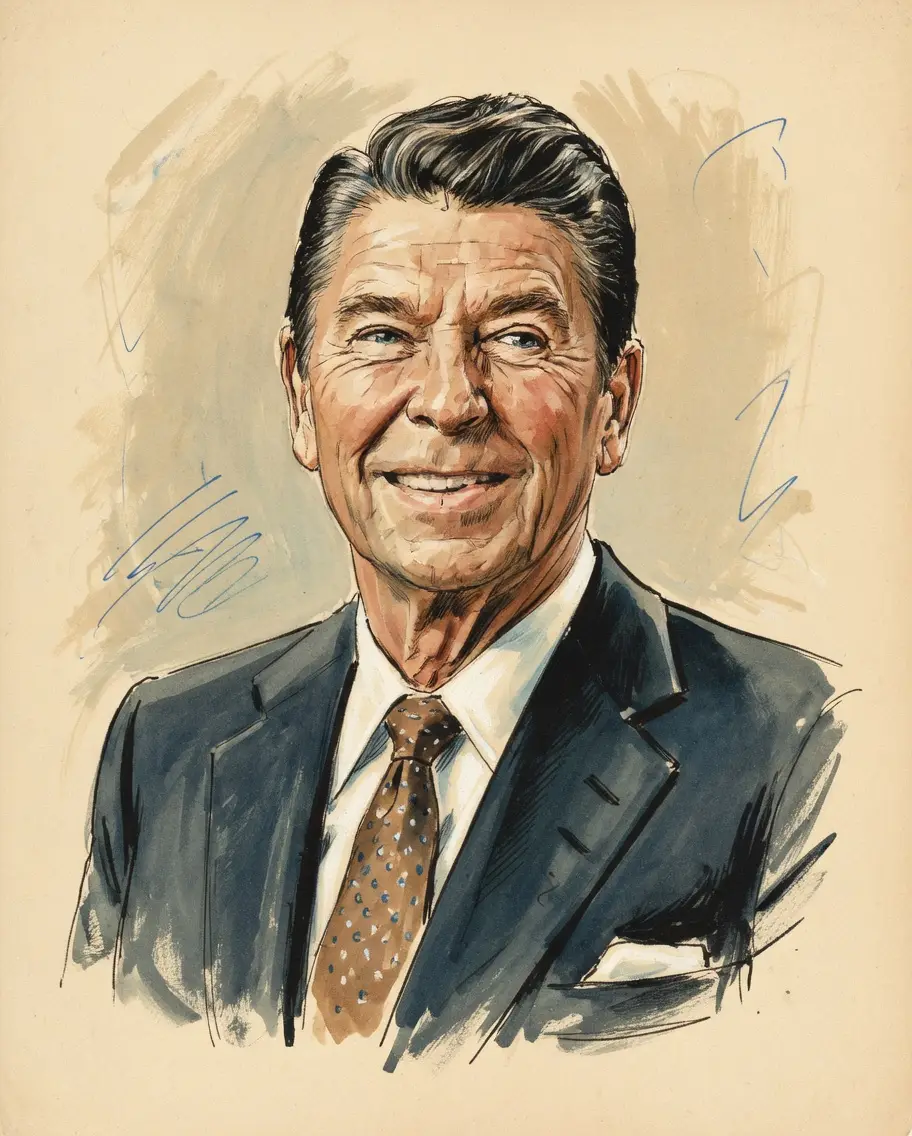
Ronald Reagan on Nicaragua
TL;DR
Ronald Reagan strongly supported military aid to Nicaraguan freedom fighters to prevent a Soviet-backed communist takeover.
Key Points
He asked Congress for a $100 million aid package for the Nicaraguan democratic resistance in a March 16, 1986, address to the nation.
In May 1985, he exercised authority to prohibit all imports of Nicaraguan origin and restrict exports from the U.S. to Nicaragua, exempting the organized democratic resistance.
He characterized the Contras as the 'moral equivalent of our Founding Fathers' while battling the Cuban-backed Sandinistas.
Summary
Ronald Reagan viewed the Communist government of Nicaragua, backed by the Soviet Union and Cuba, as an urgent threat to United States security located on the American mainland. His core position was to deny the Soviet Union a beachhead in the Western Hemisphere by providing military support to the democratic resistance, known as the Contras, who were fighting the Sandinista regime. He framed the conflict as a defense against the export of communist revolution, terrorism, and drug trafficking, which he argued the Sandinistas sponsored throughout the region. He repeatedly called upon Congress to approve aid packages for the freedom fighters to counter the Sandinistas' massive military buildup.
This commitment remained a high priority for Reagan, particularly after his re-election, as he was unwilling to be perceived as weak, contrasting his stance with his predecessor. His administration engaged in covert activities to circumvent congressional restrictions, such as the Boland Amendment, by diverting funds, leading to the Iran-Contra affair. While the administration claimed advisors operated without his full knowledge to protect the presidency, analyses suggest Reagan was the driving force, obsessed with controlling his public perception as a strong leader who successfully challenged Soviet expansionism.
Frequently Asked Questions
Ronald Reagan’s main goal was to prevent the Communist Sandinista government from remaining in power, viewing it as a Soviet beachhead threatening the entire Western Hemisphere. He sought to achieve this by providing military and logistical support to the anti-Sandinista forces, often referred to as freedom fighters or the Contras. This policy was framed as a vital national security imperative.
He stated that he still sought a negotiated peace and a democratic future in a free Nicaragua, but reported that ten previous attempts to reason with the Sandinistas were rebuffed. He argued that support for the resistance was necessary to bring pressure to bear on the regime to accept a political solution that included free elections.
The Iran-Contra affair involved members of his administration diverting funds from illegal arms sales to Iran to continue funding the Contras in Nicaragua, despite Congressional prohibitions like the Boland Amendment. This covert mechanism was established because the President was determined to maintain support for the resistance to achieve his policy goals. Some analysts suggest this was done to allow the President to invoke plausible deniability.
Sources5
Message to the Congress on Economic Sanctions Against Nicaragua
Address to the Nation on the Situation in Nicaragua
EXPLAINING REAGAN'S OBSESSION WITH NICARAGUA
The Iran-Contra Affair | American Experience | Official Site | PBS
* This is not an exhaustive list of sources.