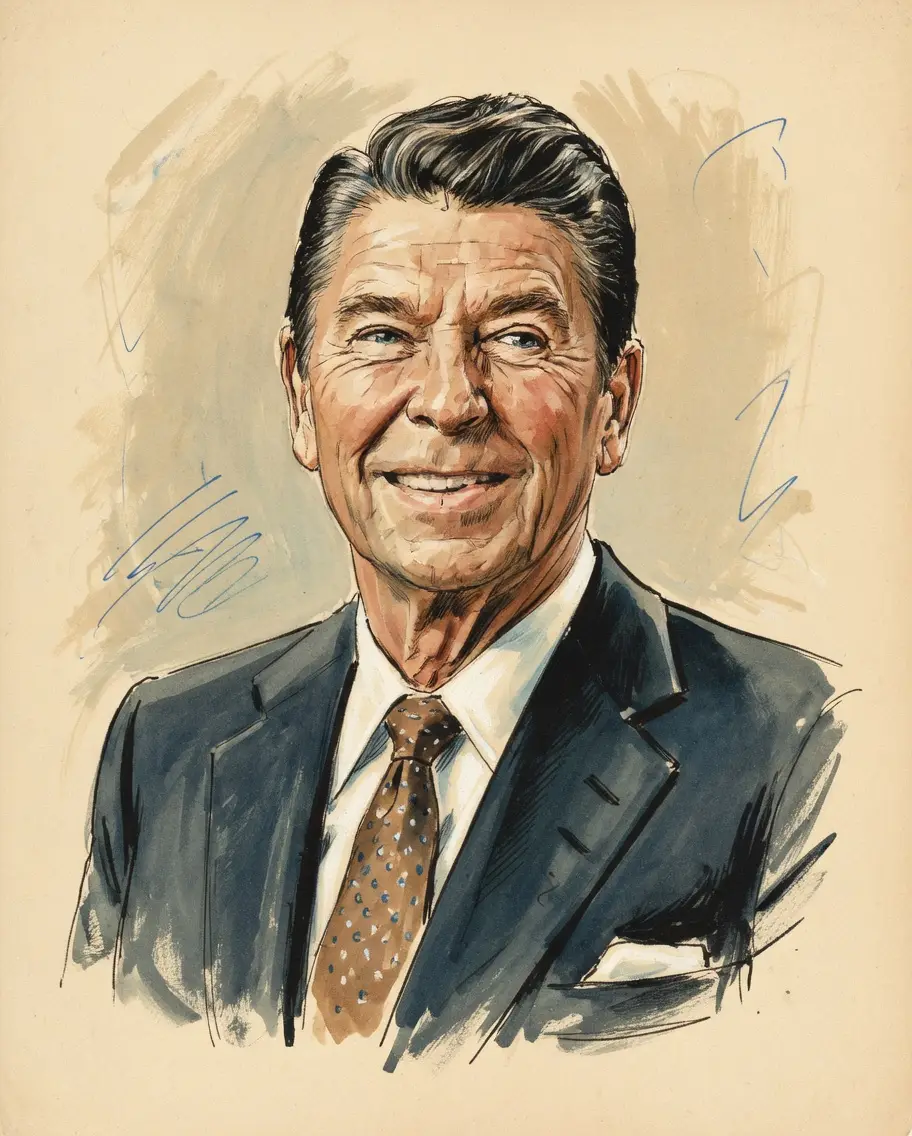
Ronald Reagan on Healthcare
TL;DR
Ronald Reagan focused on cutting waste and inefficiency in healthcare costs while supporting aid for the truly needy.
Key Points
He stated in 1983 it was time to cut away waste and inefficiency in healthcare costs, describing the growth as malignant.
He supported the Kerr-Mills Act, which provided federal money to states to care for the elderly who lacked funds.
His administration slashed Medicaid expenditures by over 18 percent during his first term in office.
Summary
Ronald Reagan's stated position on healthcare centered on controlling escalating costs, which he described as malignant and in need of cutting away waste and inefficiency in a 1983 address to the American Medical Association Delegates. He also connected personal responsibility to the economy's health, stating that success depended on individuals adopting healthy habits and the collective ability to improve the existing healthcare system, alongside continued medical research. During his presidency, his administration limited federal contributions to programs like Medicare and Medicaid, often pushing for state administration of these programs through block grants, while also limiting provider reimbursement to set fee schedules.
Despite these efforts to control federal spending and his earlier opposition to compulsory, universal government insurance, Reagan expressed a principle that no one who could not afford medical care should be denied it. This was reflected in his support for the Kerr-Mills Act, which provided federal money to states for indigent elderly care, and in later directing a report on affordable insurance for those facing catastrophic illness. However, his administration's broader cuts to public health initiatives and welfare programs during the 1980s led to documented negative effects on public health, including increased uninsured rates and slow down in infant mortality decline.
Key Quotes
“It's high time that we put health care costs under the knife and cut away the waste and inefficiency. The growth in medical costs is malignant and must be removed for the continued health of the American people.”
“No one in this country should be denied medical care for lack of funds.”
“Our success will depend on each person's willingness to adopt healthy habits, our collective ability to improve an already effective health care system, and our continued research and pioneer work in the kinds of medical technologies you're developing right here.”
Frequently Asked Questions
Ronald Reagan's primary stated focus regarding healthcare was aggressively controlling costs by cutting what he considered waste and inefficiency from the system. He often framed this as necessary for the continued health of the American people. He also affirmed that no citizen should be denied necessary medical care solely because of an inability to pay.
The former president opposed compulsory health insurance through a government bureau, arguing against subsidizing the wealthy. However, he also championed the principle that the government should help subsidize care for every American who could not otherwise afford it. This dual focus resulted in a mixed record of cost-cutting and support for aid to the genuinely needy.
The Reagan administration limited federal contributions to programs like Medicare and Medicaid and reduced the Department of Health and Human Services budget, which led to cuts in public health programs. Critics note that these budgetary restraints occurred while the HIV/AIDS epidemic was emerging, leaving public health agencies potentially underprepared.
Sources8
It's high time that we put health care costs under the knife and cut away the waste and inefficiency.
Ronald Reagan and AIDS - Wikipedia
Here's what happened when Reagan went after healthcare programs. It's not good.
Why Ronald Reagan Embraced Universal Coverage - FREOPP
Presidents on health care | Miller Center
An Anti-Medicare LP Gave Reagan His Political Start | The Rotation
Learning from Reagan on Healthcare - First Things
* This is not an exhaustive list of sources.