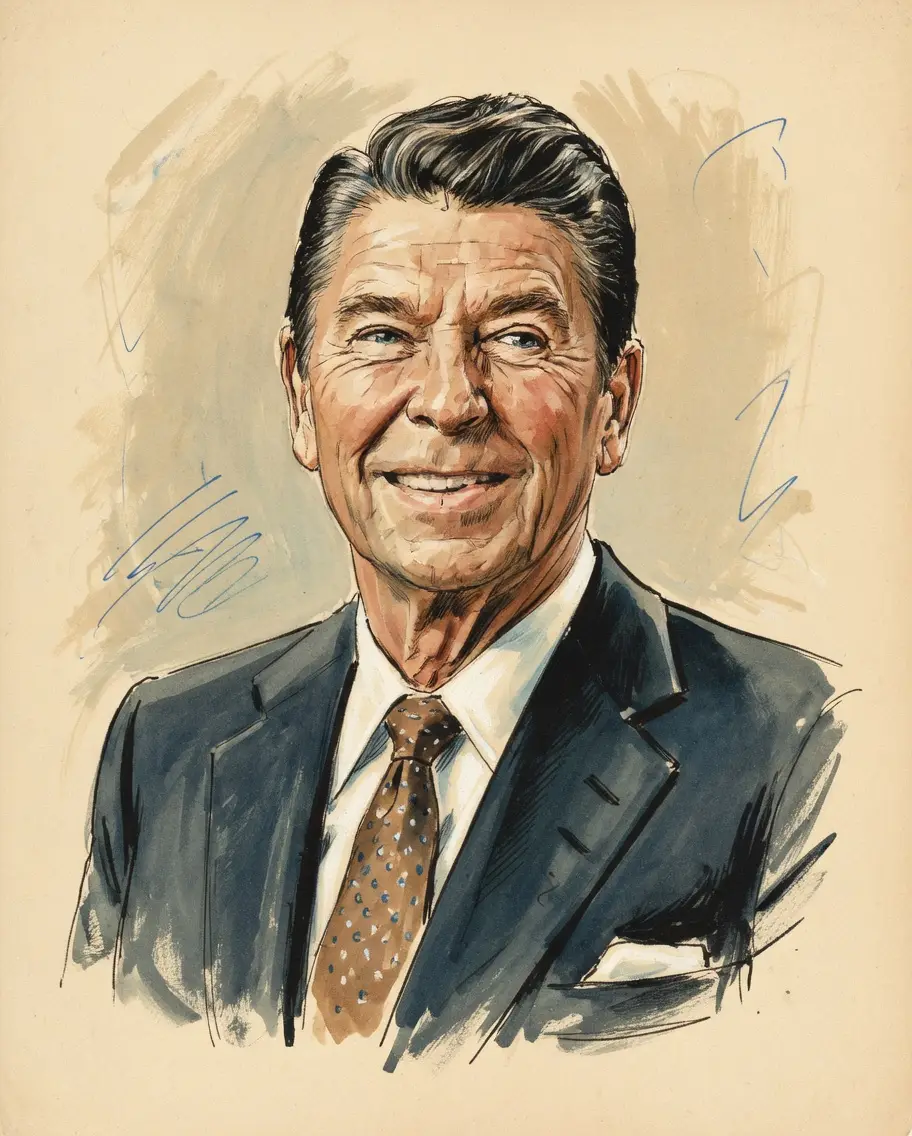
Ronald Reagan on Economy
TL;DR
Ronald Reagan advocated for supply-side economics, prioritizing tax cuts and deregulation to stimulate robust national economic growth.
Key Points
He announced plans in his February 1981 address to reduce the size of the federal budget and cut income taxes.
The economic program sought to control the money supply to conquer the high inflation inherited from the previous administration.
He pledged that the American economy could be a mighty engine for growth if excessive regulations were removed.
Summary
Ronald Reagan's economic philosophy, often termed "Reaganomics," centered on the belief that reducing the burden of government on the private sector would spur investment and productivity. His core platform involved significant reductions in marginal income tax rates, alongside measures to curb inflation and decrease domestic spending. The administration aimed to unleash the productive capacity of the economy by fostering an environment where businesses and individuals could keep more of their earnings and make investment decisions without heavy federal interference. This approach directly challenged prior economic consensus, positing that tax relief for businesses and high-income earners would ultimately benefit all economic classes through increased job creation and overall prosperity.
This policy framework was implemented through a combination of tax reform, deregulation, and tight monetary policy pursued by the Federal Reserve. The administration also sought to reduce the scope of federal government involvement in various sectors, viewing excessive regulation as a drag on innovation and market efficiency. While initial years saw a severe recession, proponents argue that the policies eventually led to a prolonged period of economic expansion marked by strong job growth and lower inflation rates by the mid-1980s. These economic actions fundamentally reshaped the fiscal and regulatory landscape of the nation for decades to follow.
Frequently Asked Questions
Ronald Reagan's primary economic philosophy was supply-side economics, commonly known as Reaganomics. He believed that reducing taxes and government regulation would stimulate production and investment, leading to broader economic benefits for the entire nation.
In his February 1981 address to the nation on the economy, Ronald Reagan outlined his administration's plans to combat stagflation. He called for reduced government spending and major tax relief to restore economic health and opportunity for all Americans.
Yes, Ronald Reagan sought to reduce the scope of federal involvement in the economy. He promoted deregulation and aimed to decrease domestic spending as part of his broader strategy to promote free-market principles.
Sources7
Address to the Nation on the Economy - February 1981
Economic Policy
Reaganomics - Concise Encyclopedia of Economics
Address to the Nation on the Economy
It's the Reagan Economy, Stupid
Ronald Reagan: Domestic Affairs
* This is not an exhaustive list of sources.