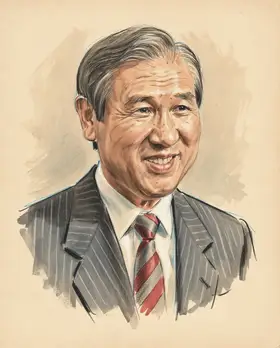
Roh Tae-woo
- Known for
- Sixth president of South Korea, direct election in 1987
- Born in
- Daegu, South Korea
- Education
- Bachelor of Science, Korea Military Academy
Roh Tae-woo was a pivotal figure in South Korea's transition, serving as the nation's sixth president from 1988 to 1993. Emerging from a military background that included involvement in the 1979 coup and the Gwangju Uprising, his presidency is defined by a dramatic pivot toward democracy and international engagement.
Signature Positions
Roh's tenure was characterized by significant policy shifts, particularly in foreign relations and domestic political structure:
- June 29 Declaration: Promised broad democratic reforms, including direct presidential elections, in response to massive public protests.
- Nordpolitik: Launched an aggressive foreign policy initiative that established diplomatic ties with the Soviet Union and China, fundamentally altering Cold War dynamics in East Asia.
- Korean Community: Pursued improved relations with North Korea, leading to the 1991 Agreement on Reconciliation.
- Party Merger: Orchestrated a controversial 1990 merger of his ruling party with opposition factions to secure a legislative majority.
- Economic Policy: Focused on "economic growth with equity," though facing challenges from rising labor demands and slower growth rates.
How Views Have Evolved
Roh's political journey shows a stark evolution from military strongman to democratizing leader. Initially a key supporter of Chun Doo-hwan's military rule, he later distanced himself to secure power.
He transitioned from being a figure associated with military crackdowns to the first directly elected president under the democratic constitution, a significant reversal of his earlier political alignment.
Notable Tensions
Roh's legacy remains deeply conflicted due to his early actions and subsequent legal issues:
- Gwangju Uprising: He played a supporting role in the violent crackdown, a historical fact that heavily shadows his democratic reforms.
- Post-Presidency Corruption: Roh and Chun were convicted for corruption and their roles in the coup, leading to a prison sentence for Roh, though both were later pardoned.
- State Funeral Debate: His 2021 state funeral was met with criticism from victims' groups, reflecting the ongoing national division over his complex legacy.