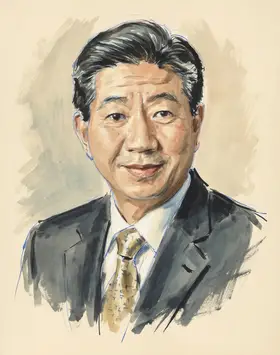
Roh Moo Hyun on Political Controversies
TL;DR
Roh Moo Hyun's presidency was marked by intense political opposition, culminating in a widely publicized impeachment attempt.
Key Points
The impeachment motion against him passed the National Assembly on March 12, 2004, for alleged illegal electioneering.
The Constitutional Court overturned the impeachment on May 14, 2004, asserting his violations were not severe enough to threaten the 'free and democratic basic order'.
His administration was also marked by constitutional disputes over the relocation of the national capital, which the Constitutional Court ruled unconstitutional in 2004.
Summary
Roh Moo Hyun, an activist lawyer, assumed the presidency in 2003 with a reformist agenda but immediately encountered staunch opposition from a hostile National Assembly. A major political controversy erupted in October 2003 following a corruption scandal concerning campaign contributions, which significantly eroded his support base. This opposition culminated in March 2004 when the National Assembly passed a motion to impeach him for technical violations of election law, specifically for urging support for his Uri Party in a by-election, which violated neutrality mandates for public officials. The impeachment motion, which passed the necessary two-thirds vote, suspended his executive powers pending a final ruling by the Constitutional Court.
Remarkably, public support for Roh surged after the impeachment vote, leading his party to win an absolute majority in the subsequent April 2004 parliamentary election. The Constitutional Court subsequently rejected the impeachment motion a month later, finding that while Roh had violated election law, the violation did not threaten the 'free and democratic basic order' to a degree warranting removal from office. This major political contest, though resulting in his reinstatement, defined much of his presidency and highlighted the deep political polarization he faced, which also affected his later efforts, such as the capital relocation plan, which was struck down by the Court.
Frequently Asked Questions
The most significant political controversy was the parliamentary attempt to impeach President Roh Moo Hyun in March 2004, as detailed in a 2004 ruling by the Constitutional Court. The primary charge stemmed from his violation of election neutrality provisions by campaigning for his party, according to academic analysis of the event. The impeachment was ultimately overturned by the Constitutional Court.
The Constitutional Court rejected the impeachment motion on May 14, 2004, despite finding that Roh Moo Hyun had violated election law neutrality mandates, according to legal scholarship. The court determined that the severity of the violation did not meet the high threshold of threatening the 'free and democratic basic order' required for removal. This decision restored him to office to complete his term.
Yes, Roh Moo Hyun's effort to relocate the national capital was deemed unconstitutional by the Constitutional Court in 2004, as it contradicted established constitutional custom, as noted in comparative legal studies. Furthermore, his administration dealt with disputes over his authority to dispatch troops to Iraq, which the court dismissed on political question grounds.
Sources8
Roh Moo-hyun - Wikipedia
Constitutional Courts in East Asia: Understanding Variation
Presidential politics and the judicial facilitation of dialogue between ...
Won Hee-ryong: "Choo reminds me of leading 'Roh Moo-hyun impeachment'... Abuse of power and political self-harm" - The Asia Business Daily
Evolution of Korea's Public Diplomacy | USC Center on Public Diplomacy
New PM nominee hard-hitting conservative journalist - The Korea Herald
Elections | FSI
The Peter and Katherine Tomassi Essay SOUTH KOREAN WEAPONS EXPORTS
* This is not an exhaustive list of sources.