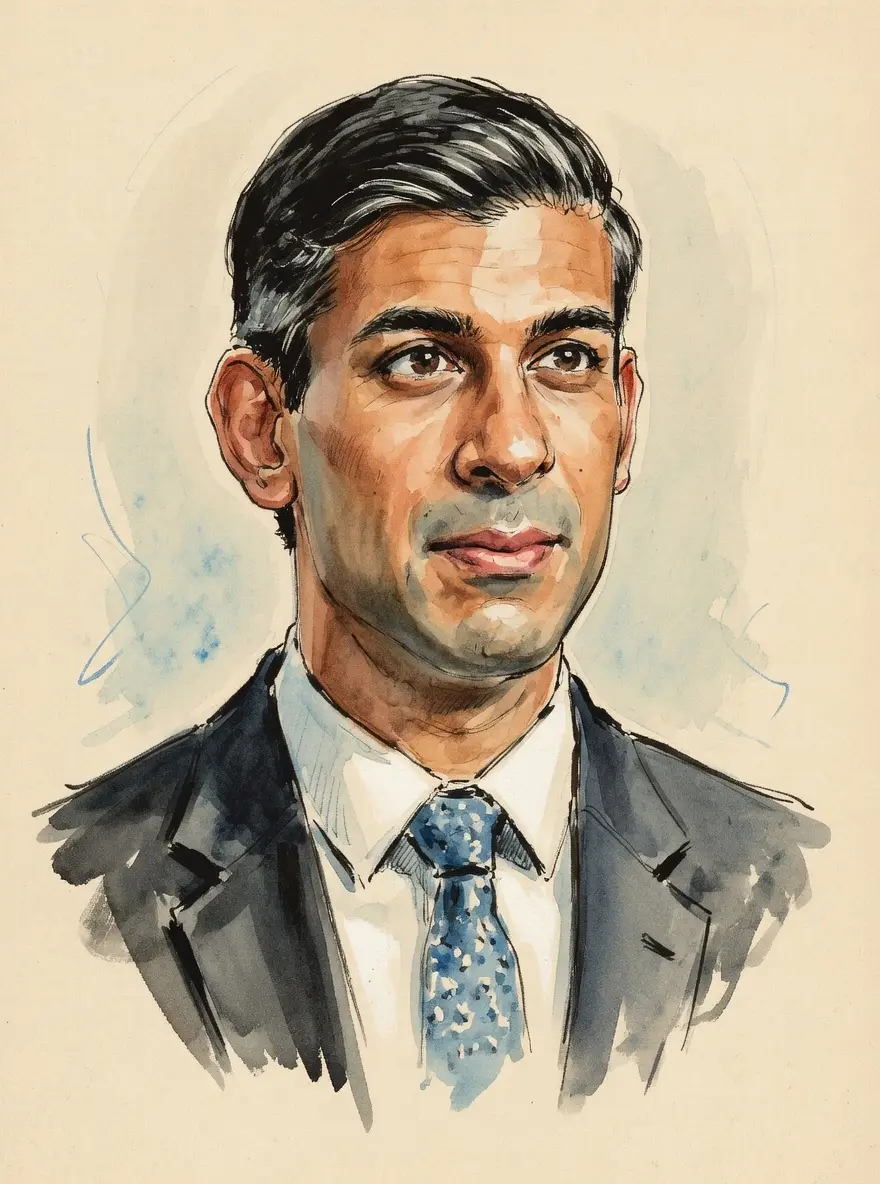
Rishi Sunak on Economy
TL;DR
Rishi Sunak prioritizes reducing inflation and national debt before responsibly cutting taxes to secure long-term prosperity.
Key Points
He committed to and delivered on the promise to halve inflation by the end of 2023, with CPI falling to 4.6% in October 2023.
His stated long-term economic plan includes reducing debt, cutting tax responsibly, building domestic energy, backing business, and delivering world-class education.
As Chancellor, he launched the furlough scheme, spending an unprecedented £70 billion to rescue households and businesses during the COVID-19 pandemic lockdowns.
Summary
Rishi Sunak's core economic position centers on achieving fiscal stability through the long-term decisions of reducing national debt, bringing inflation down, and cutting taxes responsibly after those conditions are met. As Prime Minister, he committed to halving inflation, which was officially confirmed to have been achieved by late 2023, marking a prerequisite for the next phase of his plan. He strongly advocates for growth to be driven by the dynamism of the private sector, emphasizing that government intervention should be limited, though he recognizes a state role during crises, referencing his furlough scheme as an example. He has also championed backing British businesses through lower taxes and simpler regulation while seizing post-Brexit freedoms to negotiate trade deals.
His economic stance evolved from his time as Chancellor, where he oversaw unprecedented state spending during the pandemic to protect jobs, contrasting with his later premiership focus on austerity and fiscal discipline to repair public finances damaged by the crisis and previous fiscal instability. His long-term plan includes building domestic, sustainable energy sources and delivering world-class education to equip the country for the future. The importance of this disciplined, private-sector-led approach is set against the backdrop of weak productivity growth since 2010, which he argues is the root of many fiscal problems.
Key Quotes
There is more to do, but the economy is turning a corner and inflation is back down to normal.
Frequently Asked Questions
Rishi Sunak's primary economic priorities, as stated during his premiership, were to halve inflation, grow the economy, and get national debt falling. He linked the first two to easing the cost of living and creating better-paid jobs.
Yes, his stance has evolved. He argued that tax cuts could only be delivered responsibly once inflation was controlled and debt was falling. Once inflation was halved, he stated the government could begin the next phase of responsibly cutting taxes.
Rishi Sunak believes economic growth should primarily come from the private sector, meaning government's role must be limited. However, he asserts the state must intervene during crises, citing his record as Chancellor for doing so.
Sources5
PM's speech on the economy: 20 November 2023 - GOV.UK
Rishi Sunak faces a very different economy to the one he left as chancellor – here's what he must tackle as prime minister
Rishi Sunak's five pledges: one year on
UK economy flatlines in blow to Rishi Sunak's hopes of recovery
Rishi Sunak - Wikipedia
* This is not an exhaustive list of sources.