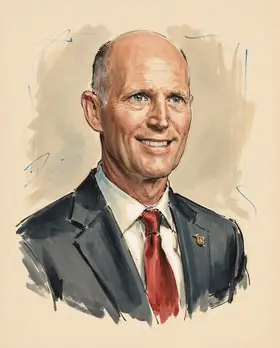
Rick Scott on Gun Control
TL;DR
Rick Scott has historically opposed broad federal gun control but signed significant state-level restrictions after a major Florida tragedy.
Key Points
Rick Scott signed a comprehensive school safety and gun control bill in Florida in March 2018 following the Parkland shooting.
He introduced a bill in September 2023 to prevent the President from using a public health emergency to impose gun control measures.
The 2018 Florida law he signed raised the minimum age to purchase a firearm from 18 to 21 and included a three-day waiting period.
Summary
Rick Scott, during his tenure as Governor of Florida, exhibited a complex position on gun control, marked by a significant shift following the 2018 Parkland shooting. Historically, he maintained a strong pro-gun rights record, including an 'A plus' rating from the National Rifle Association and opposing stricter background checks. However, in the immediate aftermath of the school shooting, he signed sweeping state legislation that notably raised the minimum age to purchase a firearm to 21 and implemented a three-day waiting period for most purchases. He also supported a 'guardian program' allowing certain armed school employees.
As a United States Senator, his focus has shifted back toward strongly opposing federal gun control measures, particularly those implemented via executive action. He introduced legislation in 2023 to prohibit the president from declaring an emergency to impose gun control. While the state law he signed included temporary restrictions based on court findings of danger, he has opposed federal background check bills and indicated he would vote no on federal gun legislation. This evolution demonstrates a history of supporting certain, targeted restrictions following high-profile events while maintaining opposition to broader federal gun control policies.
Frequently Asked Questions
As a U.S. Senator, Rick Scott has stated he will vote no on federal gun legislation, according to reports from The Hill. He has also actively worked to block executive actions related to gun control by introducing legislation to prevent such actions.
Yes, Rick Scott signed significant gun legislation in March 2018 after the Parkland shooting, marking a shift from his previous record. This law raised the minimum purchase age to 21 and imposed waiting periods, though he had historically opposed stricter background checks.
His position appears to have evolved, particularly in response to the 2018 mass shooting in Florida, leading him to sign state legislation that restricted firearm purchases. In his Senate role, he now generally opposes broad federal measures but defends against executive overreach regarding the Second Amendment.
Sources8
Gov. Rick Scott Signs Gun Control Bill Into Law | Tampa Criminal ...
CNN article on Gov. Scott signing gun bill
Sens. Rick Scott, Mike Braun & Colleagues Introduce Bill to Stop Biden From Using Public Health Emergency to Attack 2A Rights
FL Sen. Rick Scott opposes federal gun background check bill
Florida Gov. Rick Scott signs gun safety bill
Florida Gov. Calls For School Safety Measures And Some Gun Restrictions
Rick Scott says he’ll vote no on gun legislation
Gov. Rick Scott signs school safety, gun control bill
* This is not an exhaustive list of sources.