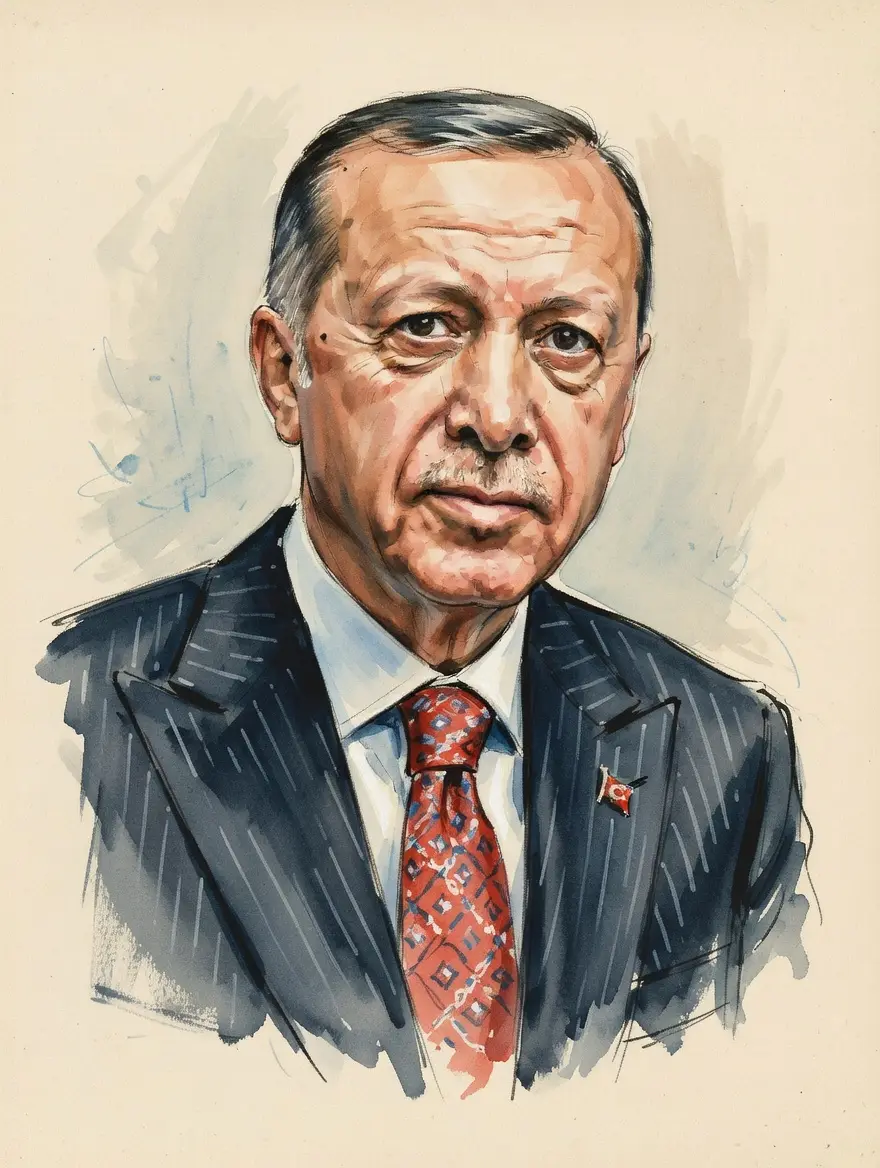
Recep Tayyip Erdogan on Government Actions
TL;DR
Recep Tayyip Erdogan champions expansive executive government actions to consolidate power and reshape the Turkish state based on nationalist principles.
Key Points
The president used the aftermath of the July 15, 2016, coup attempt to justify imposing a state of emergency and enacting sweeping changes to the state.
He has aggressively criticized international actors, for instance, labeling the Israeli government as "serial murderers" following actions in Gaza.
Government actions following a January 2021 academic statement on the Kurdish conflict included encouraging disciplinary action and investigations against signatories.
Summary
Recep Tayyip Erdogan’s approach to government action is characterized by a consolidation of executive power, often bypassing or reshaping established checks and balances. Following the July 15, 2016, coup attempt, he was granted expansive emergency powers, which were used to enact sweeping changes to the Turkish state and sideline political rivals. For him and his supporters, legitimacy for these majoritarian policies largely begins and ends at the ballot box, viewing institutions like a free press or independent judiciary as impediments to necessary reform. This style of governance has been described as moving toward a consolidating authoritarian regime where he exercises near-absolute control through his party and influence over the judiciary.
This drive toward centralized action is underpinned by a strategic political calculus, relying on aggressive populist tactics and identity politics to maintain his base, especially as economic growth has slowed. His actions often define an in-group against perceived external and internal enemies, using national crises, like the coup attempt, as a justification to advance his agenda, which includes reinforcing a defensive, nationalist self-perception for Turkey. This governing style marks a significant pivot from the early AKP vision of inclusive politics to one focused on enacting a conservative vision for the country, often in opposition to Western-defined liberal democracy.
Frequently Asked Questions
Recep Tayyip Erdogan generally favors the assertive use of government power, prioritizing the consolidation of executive authority to implement his political agenda. He has sought to reshape the Turkish state, often citing national security concerns or populist mandates as justification for extensive governmental action.
Yes, his approach has demonstrably evolved, shifting from an early emphasis on democratic reforms accompanying economic progress to a reliance on aggressive populist tactics and centralization of power after facing challenges like the Gezi Park protests. This evolution has seen the government become less constrained by liberal democratic norms.
Following the July 2016 attempted coup, Recep Tayyip Erdogan took extensive government action, including detaining tens of thousands and imposing a state of emergency. This response was framed as necessary to eliminate threats, though international bodies expressed concern over the scope of detentions and crackdowns on civil liberties.
Sources7
Letter to H. E. Mr. Recep Tayyip Erdoğan (President of the Republic of Turkey) on Turkish government’s actions following July 2016 attempted coup | New York City Bar Association
'Serial murderers': Turkish President Erdogan slams Israeli gov't for brutality against Palestinians
Turkey-Israel Relations After October 7: Layers of Complexity and Posturing | Wilson Center
AKParty Response to Criticism: Reaction or Over-Reaction?
Erdogan and the reinvention of the Turkish presidency
Contextualizing Erdogan's Attacks on Bogazici University - Georgetown Journal of International Affairs
Turkey's 'New Nationalism' Amid Shifting Politics | Stiftung Mercator
* This is not an exhaustive list of sources.