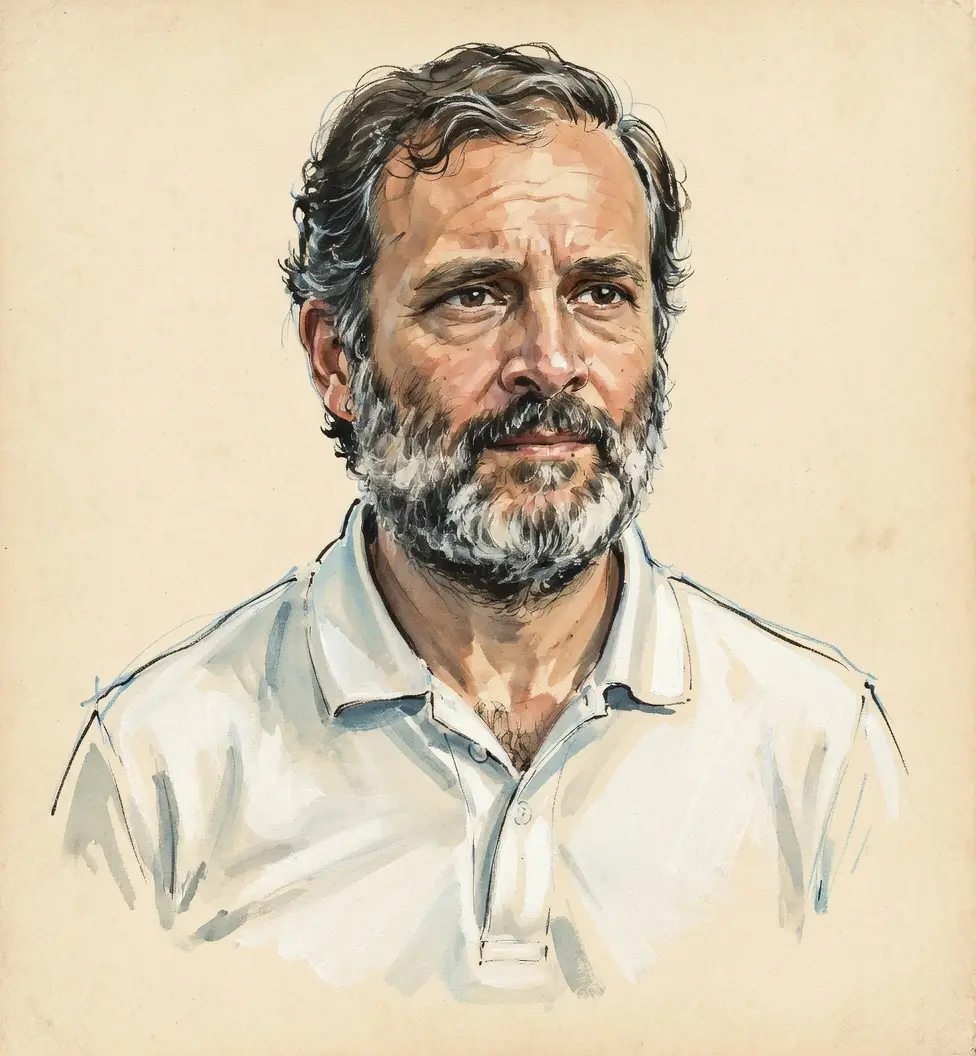
Rahul Gandhi
- Known for
- Indian politician, Nehru-Gandhi family
- Born in
- Delhi, India
- Education
- M.Phil. Development Studies, Trinity College, Cambridge
Rahul Gandhi, a scion of the Nehru-Gandhi dynasty, is a pivotal figure in India's opposition politics. As the current Leader of the Opposition in the Lok Sabha, he has dedicated his career to challenging the ruling BJP and revitalizing the Indian National Congress (INC). His political identity is increasingly defined by grassroots mobilization, notably through his long-distance marches across India.
Signature Positions
Gandhi's platform centers on socio-economic justice and countering what he views as divisive governance:
- Economy: Fiercely critical of crony capitalism, he opposes the privatization of PSUs and alleges that the Modi government favors a few billionaires.
- Farmers: A vocal critic of land acquisition policies, calling the government a "suit-boot government" that works against farmers and mazdoors.
- Women's Empowerment: Advocates for significant gender parity, proposing 33% reservation in Parliament and government jobs.
- Social Justice: Successfully pressured the government to announce a nationwide Caste Census, which he views as a crucial step toward social reform.
- Democracy/Elections: Recently alleged "vote chori" (vote theft) in electoral processes, demanding scrutiny of voter rolls and polling procedures.
How Views Have Evolved
Gandhi’s political strategy has evolved significantly from his early tenure as a national general secretary. Initially known for focusing on internal party restructuring and youth wing growth (IYC and NSUI), his recent leadership is characterized by direct, sustained public engagement.
His two major Yatras—the Bharat Jodo Yatra and Bharat Jodo Nyay Yatra—marked a shift toward broad-based national mobilization, which contributed to the INC regaining Official Opposition status in 2024. This contrasts with the earlier general election defeats in 2014 and 2019.
Notable Tensions
Gandhi’s public statements have often drawn sharp criticism and legal challenges:
- National Security: Statements regarding Hindu extremists posing a greater threat than Muslim militants (leaked in 2010) drew heavy fire from the BJP for allegedly dividing the country.
- Defamation Case: His comment linking Narendra Modi to economic offenders led to his conviction and temporary disqualification from Parliament in 2023, highlighting the high legal risks associated with his sharp rhetoric.
- Counter-Terrorism: His claim about the ISI attempting to recruit disillusioned youth after the Muzaffarnagar riots was officially denied by security agencies and led to criticism that he was exploiting communal sentiments.