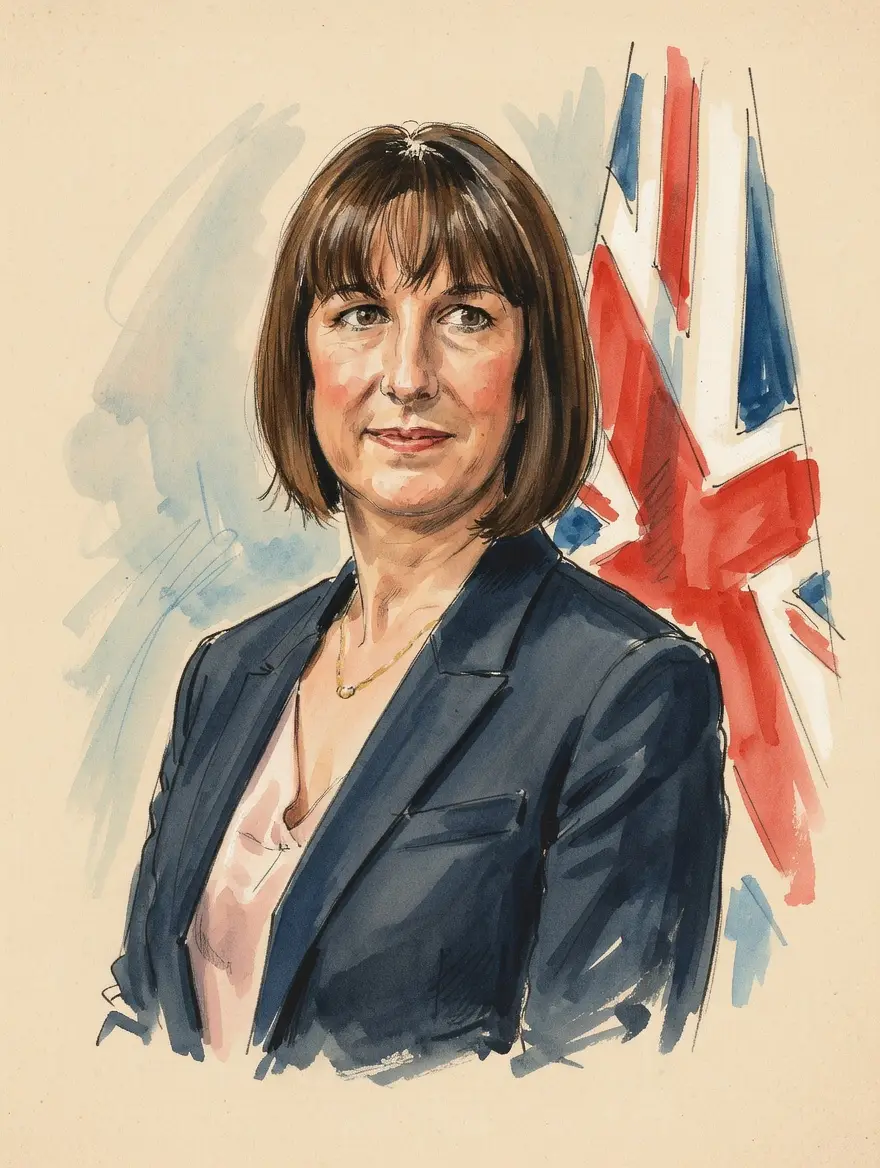
Rachel Reeves on Economy
TL;DR
Rachel Reeves prioritises restoring economic stability through cautious fiscal management amidst global uncertainty.
Key Points
She committed to charting a course through global uncertainty to secure the economy against shocks.
The OBR projected unemployment would rise to a peak of 5.3% in 2026, up from a previous 4.9% estimate.
Reeves highlighted the importance of her policies, like shifting green levies and freezing prescription charges, given the unstable global situation.
Summary
Rachel Reeves, in her role as Chancellor, has centred her economic approach on restoring what she terms 'economic security in an uncertain world,' delivering a Spring Statement that prioritised stability over substantive policy shifts. This stance was taken against a backdrop of surging energy prices and rising government borrowing costs, exacerbated by conflict in the Middle East. The core of her message was to reassure financial markets, reflected in a deliberately low-key statement that contained no major fiscal surprises, aiming to meet the independent Office for Budget Responsibility's (OBR) fiscal rules.
Her economic context involves responding to new OBR forecasts that showed downgraded GDP growth for the near term, though predicting stronger growth in future years. Despite the fragility of these forecasts, especially given external shocks, she emphasized that her required 'headroom' had increased. Her overall implication is a continuation of policy designed to please bond markets, adhering to fiscal rules, which critics argue risks stagnation and amounts to a form of renewed austerity by not pursuing necessary investment in public services and infrastructure.
Frequently Asked Questions
Rachel Reeves's current economic focus is on restoring and maintaining economic stability for families amid high global uncertainty. She delivered a Spring Statement designed to reassure financial markets by avoiding major policy changes or fiscal surprises. This cautious approach is framed as necessary to navigate challenges like surging energy prices.
The Chancellor acknowledged that the OBR's GDP growth forecast for the current year was slightly slower, downgraded to 1.1% from 1.4%. However, she pointed to stronger projected growth in 2027 and 2028 as evidence of the right economic plan. Critics argue this near-term downgrade shows the economy is stagnating.
While she instructed the OBR not to judge her against her fiscal rules for the specific Spring Forecast, Rachel Reeves emphasized that her 'headroom'—the buffer against the rules—had increased to £23.6bn. This improvement was partly credited to lower government borrowing costs before recent market shifts.
Sources4
Rachel Reeves will get it all wrong today
Spring forecast: Reeves insists Labour has 'right economic plan' as 2026 growth downgraded
Reeves set for careful UK budget update as Iran conflict alarms investors
Reeves focuses on UK living costs, growth amid uncertain world
* This is not an exhaustive list of sources.