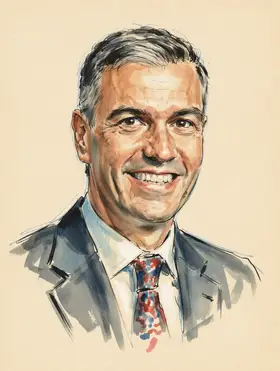
Pedro Sánchez on Donald Trump
TL;DR
Pedro Sánchez is one of the few European leaders openly rejecting the demands of the US president over military action in Iran.
Key Points
Refused the US permission to use jointly operated bases in Andalucía to strike Iran in March 2026.
Resisted the demand to increase NATO defence spending to 5% of GDP, unlike most allies.
His government categorically denied White House claims in March 2026 that Madrid had agreed to cooperate with the US military action.
Summary
Pedro Sánchez has positioned himself as a solitary European voice openly and emphatically rejecting the demands of the US president, particularly regarding military actions in the Middle East. This stance was highlighted when he refused permission to use jointly operated Spanish bases to strike Iran, arguing that another war would destabilize the world and cause dire economic consequences. The Spanish Prime Minister stated that a government’s overriding duty is to protect its citizens, not to profit from global conflicts, refusing to be complicit out of fear of reprisals. This position stands in stark contrast to many of his European counterparts who have adopted a more pragmatic or conciliatory approach toward the American leader.
This confrontation over military action is consistent with a pattern where Sánchez has bucked global trends, previously condemning the US-backed toppling of a leader in Venezuela and the conduct in Gaza. Furthermore, he notably refused to accept the demand to raise NATO defence spending to 5% of GDP, prompting threats of trade penalties which were countered by Spain's membership in the EU trade bloc. While his political opponents in Spain accused him of partisan politics, his language echoes the anti-war sentiment previously mobilized against the 2003 invasion of Iraq, seeking to revive a patriotic defense of Spanish sovereignty against foreign pressure.
Frequently Asked Questions
Pedro Sánchez is a vocal critic of Donald Trump’s foreign policy, especially concerning military interventions. He has publicly rejected the American leader's demands, particularly regarding the use of Spanish military bases for strikes against Iran. This strong opposition places him in a lonely position compared to many other European leaders.
Sánchez's firm opposition to the US President's unilateral actions appears consistent across various international incidents. He has maintained a stance defending international law, which is seen in his positions on conflicts in Venezuela and the Middle East. His current position seems to be an extension of his long-standing defense of multilateralism.
The Spanish Prime Minister directly addressed the trade threat by stating Spain would not be complicit in actions contrary to its values simply out of fear of reprisals. He compared the growing conflict situation to playing Russian roulette with the destiny of millions. His government reaffirmed that their 'No to war' stance remained clear and unequivocal.
Sources4
A lone battle: Why is Pedro Sánchez the only European leader to take on Trump?
Spain Shows Europe How to Oppose Trump's Illegal War in Iran
Sánchez's principled stand against Trump matters. So does Merz's silence
* This is not an exhaustive list of sources.