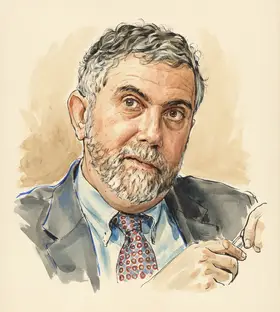
Paul Krugman on Socialism
TL;DR
Paul Krugman views modern American "socialism" as synonymous with social democracy, largely supporting its policies while cautioning against the label itself.
Key Points
He stated that Americans supporting "socialism" actually desire what the rest of the world calls social democracy, characterized by a market economy and strong safety nets.
He expressed concern that self-describing as a socialist gives the Republican campaign unnecessary ammunition, even while supporting the underlying progressive policies (pre-2020).
He acknowledged the existence of socialized medicine within the U.S. system, citing Medicare for all citizens over 65 as an example of a successful, if partial, government provision.
Summary
Paul Krugman argues that what many Americans supporting “socialism” truly desire is social democracy: a market economy balanced by a strong social safety net and progressive taxation, citing Scandinavian nations like Denmark as the aspirational model rather than, for instance, Venezuela. He contends that this approach aligns with achieving social justice and worker empowerment without endorsing the historical definition of socialism involving government seizure of the means of production or central planning. He frequently critiques using the term "socialist" in U.S. politics, seeing it as giving unnecessary ammunition to opponents who equate it with extreme, failed regimes like those under Stalin.
He has expressed support for specific policies often associated with the left, such as universal healthcare, arguing that many advanced countries already practice aspects of socialized medicine or robust welfare states. However, he often focuses on the political feasibility of incremental change, suggesting pragmatic routes like a public option over immediate, large-scale systemic overhauls like abolishing all private health insurance. Despite his support for the policies, Krugman’s opposition to the political branding of "democratic socialist" suggests a nuanced, pragmatic stance focused on achievable, social democratic outcomes within a capitalist framework.
Key Quotes
What they want is social democracy – the kinds of basic guarantees of health care, protection against poverty that every other advanced country provides.
What Americans who support “socialism” actually want is what the rest of the world calls social democracy: a market economy, but with extreme hardship limited by a strong social safety net and extreme inequality limited by progressive taxation.
“most people would gain more from the elimination of insurance premiums than they would lose from the tax hike.”
Frequently Asked Questions
Paul Krugman believes that most Americans who express support for "socialism" are actually advocating for social democracy, meaning robust social safety nets and market economies, not state ownership of industry. He strongly opposes equating these policies with authoritarian historical regimes like that of Stalin.
No, he did not fully support the label. He argued that calling oneself a socialist was politically self-indulgent because it provided opponents with easy scare tactics, even though he supported the progressive policies Sanders advocated.
He associates the aims with policies like universal healthcare, universal child care, and stronger protections for workers, which he sees as characteristic of social democracies in Europe. He advocates for achieving these through pragmatic political steps.
Sources6
Paul Krugman on This Bernie Sanders and Socialism Thing
Sanders & Socialism: Debate Between Nobel Laureate Paul Krugman & Socialist Economist Richard Wolff | Democracy Now!
What Americans who support “socialism” actually want is what the rest of the world calls social democracy: a market economy, but with extreme hardship limited by a strong social safety net and extreme inequality limited by progressive taxation. They want us to look like Denmark or Norway, not Venezuela. Paul Krugman, Arguing with Zombies: Economics, Politics, and the Fight for a Better Future
Paul Krugman on democratic "socialism": There are hardly any people in the U.S. who want the government to seize the means of production... What they want is social democracy – the kinds of basic guarantees of health care, protection against poverty that every other advanced country provides.
Socialism is the American Way in Krugman's America
Sanders and Socialism: Debate Between Economists Paul Krugman and Richard Wolff - RDWolff
* This is not an exhaustive list of sources.